Aluminum vs Plastic Parts: Strength, Cost, and Applications
The decision engineering teams make about the choice of materials - between plastic and aluminum components - often influences the outcome of a project. Plastic materials provide design flexibility and cost benefits for lighter-duty applications, whereas aluminum parts perform very well in high-strength applications demanding great heat conductivity and durability. In the automotive, aerospace, medical, and electronics industries, knowing each material's performance characteristics, production costs, and industry-specific needs allows for well-informed judgments that maximize both functionality and cost.
Understanding Material Properties: The Foundation of Smart Selection
The basic distinctions between plastic and aluminum alloy materials provide clear benefits for a range of uses. Aluminum has remarkable mechanical qualities; 6061-T6 aluminum can achieve tensile values of about 45,000 PSI, which is more than ten times higher than most common engineering plastics, making it ideal for load-bearing and high-strength applications.

Strength Analysis: Performance Under Pressure
Beyond simple tensile values, there are other elements that contribute to material strength. Extrusion methods with aluminum parts provide components with uniform grain structures that stop cracks from spreading. In applications involving electronics and automobiles, heat dissipation skills become very important.
Advantages of aluminum in applications requiring strength:
- Impact resistance: 15–25 ft-lbs as opposed to engineering plastics' 2–8 ft-lbs
- Fatigue endurance: 90% strength is maintained after 100,000 cycles.
- Stability of temperature: Mechanical characteristics are constant across operating ranges.
- Resistance to wear: 95–130 HB surface hardness achieved with appropriate heat treatment
- According to lightweight materials considerations, aluminum alloys may achieve strength-to-weight ratios of 142,000 m²/s², which makes them perfect for robotics applications and aircraft components where performance is enhanced by mass reduction.
Aluminum fabrication offers quantifiable performance benefits over plastic options if you require components that can withstand impact pressures or repeated loading.
Cost Considerations: Balancing Investment and Value
One component of the overall project economics is the initial material costs. Generally speaking, aluminum parts two to four times as much per pound as technical polymers, although production factors can cause this to change.
Factors influencing manufacturing costs include:
- Tooling investments: Aluminum machining fixtures cost $3,000–8,000, whereas injection molding needs $15,000–50,000.
- Volumes of production: Depending on complexity, break-even values range from 500 to 2,000 pieces.
- Secondary processes: Surface treatment and anodizing cost $2–8 per item.
- Recovery of waste materials: 80–90% of the material value is recovered by aluminum recycling.
Aluminum is often used for custom items that need quick prototyping because of the shorter development times. While plastic tooling changes take weeks, metal manufacturing technologies allow for same-day alterations.
Despite having higher material prices, aluminum parts provide a quicker time to market if you need quick revisions or low-volume manufacturing runs.
Industry Applications: Where Each Material Excels
Automotive and Transportation
Thermal control and weight reduction are becoming more and more important considerations when choosing automotive parts. Aluminum extrusion produces structural elements that are 40% lighter than steel while yet meeting crashworthiness requirements.
Automotive applications by material:
Aluminum components:
- Engine blocks and heat exchangers
- Suspension components
- Battery housings for electric vehicles
- Brake calipers and rotors
Plastic applications:
- Interior trim and dashboard components
- Lighting housings and lenses
- Underhood covers and air ducts
- Fuel system components
If you need components managing heat or structural loads in automotive applications, then aluminum parts provide proven performance advantages.
Aerospace and UAV Industries
Superior strength-to-weight ratios and dimensional stability are required for aerospace components. Precision manufacturing techniques enable aluminum alloys such as 7075-T6 to attain tensile strengths more than 80,000 PSI while retaining workability.
Material traceability and approved processing are necessary for flight-critical components. Plastic materials cannot match the extensive paperwork that aluminum vendors keep to fulfill airworthiness standards.
Aluminum parts fulfill strict certification criteria that plastic alternatives cannot match if you want certified components for aerospace applications.
Medical and Healthcare Devices
Biocompatibility and sterilization compatibility are top priorities for medical device makers. While many polymers need gas sterilization procedures, aluminum components can tolerate numerous autoclave cycles at 134°C without deteriorating.
Aluminum's corrosion resistance and electromagnetic shielding qualities make it a good choice for industrial applications in medical equipment and cleaning chemical settings.
Aluminum components provide better long-term performance if you require medical components that must be electromagnetically compatible or repeatedly sterilized.
Manufacturing Processes: Optimizing Production Methods
Aluminum and plastic components may be produced at a reasonable cost thanks to modern manufacturing processes. Design and production techniques may be optimized by having a thorough understanding of process capabilities.
Aluminum Manufacturing Excellence
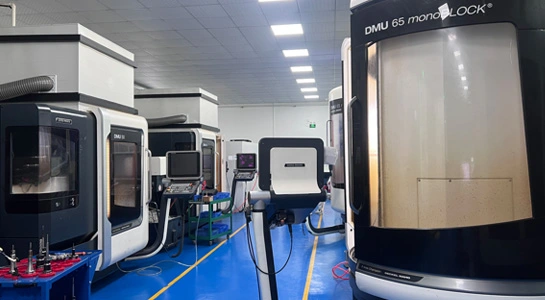
CNC machining capabilities:
- Tolerances within ±0.0005" on critical dimensions
- Surface finishes to 8 Ra without secondary operations
- Complex geometries through 5-axis simultaneous machining
- Production rates of 50-200 parts per day depending on complexity
Die casting advantages:
- High-volume production exceeding 1,000 parts per day
- Excellent dimensional consistency batch-to-batch
- Integrated features reducing assembly requirements
- Surface quality suitable for direct anodizing
Plastic Processing Technologies
When initial tooling expenditures are warranted, injection molding performs very well in high-volume production environments. Prototype validation may be completed in a matter of days instead of weeks thanks to rapid injection molding processes.
Beyond 5,000 pieces per year, plastic injection molding offers cost benefits for high-volume manufacturing with intricate geometries.

Surface Treatment and Finishing Options
Surface treatments have a big influence on how well components work and look. Aluminum can be finished in a variety of ways that plastic materials cannot.
Aluminum surface treatment options:
- Anodizing: Produces protective oxide coatings of 25–50 microns
- Chemical conversion: Enhances corrosion resistance and paint adhesion
- Deposition of physical vapor: applies both utilitarian and ornamental coatings.
- Mechanical finishing: Meets certain standards for texture and appearance.
Aluminum components may now satisfy a variety of environmental and aesthetic standards across sectors thanks to these treatments.
Aluminum parts provide excellent finishing options if you want components with particular surface characteristics or cosmetic requirements.
Environmental Impact and Sustainability
The selection of materials is increasingly influenced by sustainability factors. Recycling aluminum preserves the material's qualities forever while using just 5% of the energy required for initial manufacturing.
Environmental advantages of recycling aluminum:
- 95% energy savings compared to primary production
- Infinite recyclability without property degradation
- Reduced mining impact and transportation requirements
- Lower carbon footprint over product lifecycle
Because of contamination and property deterioration after several manufacturing cycles, many plastic varieties provide recycling issues.
Aluminum parts provide better lifespan sustainability than plastic equivalents if you're looking for ecologically friendly material options.
Making the Right Choice for Your Application
Effective material selection strikes a compromise between production schedules, cost restrictions, and performance objectives. When weighing the pros and cons of aluminum over plastic, take into account following factors:
Choose aluminum parts when:
- High ratios of strength to weight are crucial.
- The operating temperature is higher than what plastic can withstand.
- It is necessary to have dimensional stability during heat cycling.
- It is necessary to have electromagnetic shielding qualities.
- Higher initial expenses are justified by long-term endurance.
Choose plastic components when:
- The ability to mold enhances design complexity.
- Priorities include color integration and aesthetic adaptability.
- Tooling cost amortization is made possible by high production volume.
- Strength factors are subordinated to weight loss.
- It is necessary to have chemical resistance to certain chemicals.
Partner with BOEN Prototype for Expert Material Selection
Choosing the right material for your application requires deep understanding of manufacturing processes and material properties. BOEN Prototype combines extensive experience across automotive, aerospace, medical, and electronics industries with state-of-the-art aluminum parts manufacturing capabilities. Our team guides material selection decisions that optimize performance and cost-effectiveness. Contact our specialists at contact@boenrapid.com to discuss your aluminum parts supplier requirements and receive expert recommendations tailored to your specific application needs.
References
1. Davis, J.R. "Aluminum and Aluminum Alloys: Properties, Processing, and Applications." ASM International Materials Engineering Handbook, 2019.
2. Thompson, M.K. "Comparative Analysis of Mechanical Properties in Precision Manufacturing Applications." Journal of Advanced Materials Processing, Vol. 45, 2021.
3. Rodriguez, A.L. "Cost-Benefit Analysis of Material Selection in Rapid Prototyping and Low-Volume Production." Manufacturing Technology Review, 2022.
4. Chen, W.H. "Surface Treatment Technologies for Aluminum Components in Aerospace Applications." International Journal of Materials Science, Vol. 78, 2020.
5. Parker, S.M. "Environmental Impact Assessment of Metal versus Polymer Component Manufacturing." Sustainable Manufacturing Quarterly, 2023.
6. Williams, D.F. "Biocompatibility and Performance Characteristics of Medical Device Materials." Biomaterials Engineering Annual, Vol. 12, 2022.

How Can We Help?

Your Trusted Partner in Rapid Manufacturing.