Metal Stamping vs CNC Machining for Low-Volume Component Production
There are times when it's not easy to choose between metal stamping and CNC machining when making a small number of parts. In metal stamping, blanking, punching, and progressive die operations are some of the dies and tools that are used to make sheet metal into specific shapes. On the other hand, CNC machining tools are used in CNC machining to exactly remove material and make parts. There are good results from both ways, but it's important to know which one works best for your production volume, design complexity, and budget. This will help you make a good manufacturing relationship and avoid costly delays.
Understanding Metal Stamping and CNC Machining
What Is Metal Stamping?
Metal stamping is a cold-forming method that changes the shape of metal pieces forever by using presses and dies to apply a lot of force. The technical term includes a number of different forming methods. For example, blanking is used to cut pieces from sheets, punching makes holes and openings, embossing adds designs that are raised or sunken, and progressive die stamping moves parts through several forming stations. A sintered metal filter, which is made by pressing metal powder granules and then sintering them at high temperatures, shows how specialized uses go beyond simple sheet making. Aluminum, copper, stainless steel, brass, and titanium are some of the most common materials used. Each has its own unique qualities that make it useful for different tasks.
Core Metal Stamping Techniques
For different production needs, different pressing methods are used. Progressive die stamping uses several dies one after the other, which makes it possible for deeper draws and more complicated geometries than single-stage processes. This makes it perfect for making parts for cars that need to have more than one feature. Deep draw stamping makes parts with deep holes, like squares that are filled in. This is done by severely deforming the metal and forcing its structure into a more rigid, crystalline shape. Fourslide stamping is a great way to make complicated electronics parts like battery plugs because it can shape parts from four directions at the same time instead of just one. High-pressure oil bladders are used in hydroforming to press metal sheets into smaller die forms. This lets many parts be made at once and with great accuracy.
What Is CNC Machining?
CNC machining uses CNC machining tools to take material from rigid blocks, bars, or sheets. Tool tracks that have been set control the process and make sure that drills, mills, lathes, and other cutting tools work very precisely. In contrast to pressing, which forms, cutting removes material to get the shape that is wanted. This basic difference changes how much material is used, how much tools cost, and how flexible the design can be. CNC machining is great at making complicated three-dimensional shapes, tight tolerances, and detailed internal features that stamping tools would not be able to do or would not be useful for.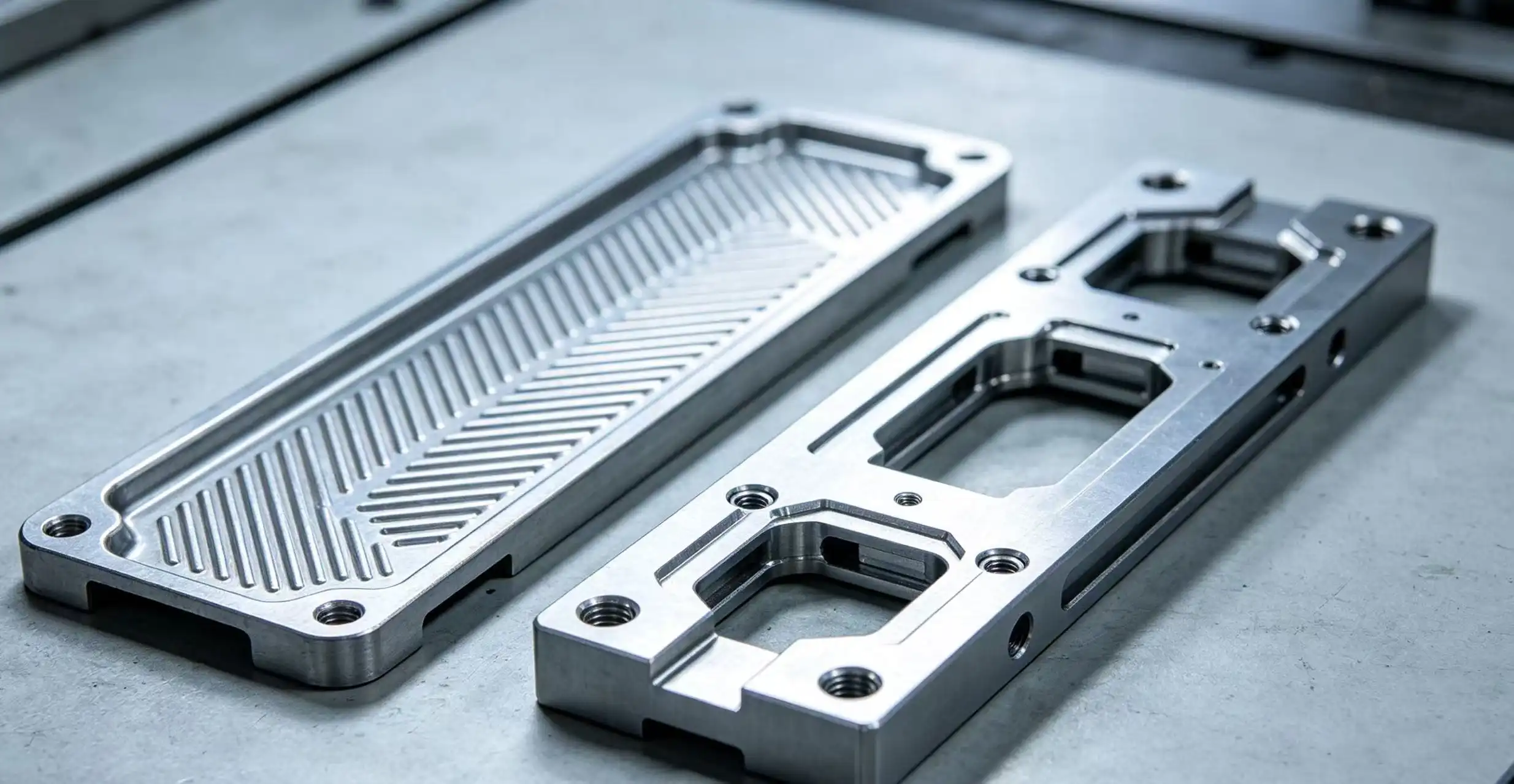
Comparing Metal Stamping and CNC Machining for Low-Volume Production
Production Efficiency and Setup Time
Depending on your number goals, the efficiency factor changes a lot between these two methods. When you do metal stamping, you have to pay for the die design and manufacturing up front, which can make the initial setup time longer. Stamping makes parts quickly—often hundreds or thousands per hour, depending on how complicated they are—as long as the dies are ready. Setting up CNC machining is different; it usually takes hours instead of weeks and includes setting tool paths and securing workpieces. Then, cutting time for each part is different and can be anywhere from minutes to hours, depending on how complicated it is.
For runs of less than 100 pieces, CNC machining is often better because it's hard to justify buying a die for pressing. The choice is between 100 and 1,000 pieces, depending on how complicated the part is and how much the materials cost. Above 1,000 units, stamping's per-piece efficiency usually beats the cost of the tools, especially for shapes that aren't too complicated.
Cost Structure Analysis
Knowing how the costs are broken down helps you figure out when each step makes financial sense. When buying teams compare these ways of making things, these are the main cost factors they should look at:
Stamping Cost Components: The biggest upfront cost is the tooling, which includes designing the die, making it, and testing it. Stamping makes the best use of materials by nesting designs on sheets, which lowers the cost of materials. Once the cost of the tools is spread out over the production run, the cost per piece drops by a large amount. Small costs are added by secondary processes like deburring or finishing. For longer production runs, costs keep going up for things like maintenance and die repair.
CNC Machining Cost Components: The costs of programming and setting are pretty low and stay the same for all jobs. The cost of materials may be higher because cutting starts with stock that is too big and ends up as trash chips. The cost of making a piece stays pretty steady no matter how many are made. Tool replacement and wear and tear cause known ongoing costs. If close standards are reached during machining, there may not be many secondary processes needed.
Material Compatibility and Selection
Both methods can be used with similar types of metals, but each has its own benefits. Stamping works very well with aluminum alloys, different types of steel (including stainless steel), copper, brass, and bronze. Through a process called "work hardening," cold working makes some materials stronger. Thickness limits apply; fineblanking can work with thicker sheets, but pressing works best with materials that are less than 0.25 inches thick.
CNC machining can work with even more materials, even metals that are hard to shape, like titanium, Inconel, and harder steels. Thickness doesn't really matter because robots can cut blocks that are several inches thick. This adaptability is useful when the qualities of the material need to meet strict requirements, like when biocompatible titanium is used in medical devices or aerospace-grade aluminum is used to make parts for unmanned aerial vehicles.
Design Complexity and Geometric Capabilities
Most of the time, design needs are the most important factor in choosing a process. Stamping is great for making surfaces with contours, flanges, raised details, and holes that are spread out evenly on flat or slightly curved surfaces. Progressive die processes work best with complicated three-dimensional forms that have more than one bend angle. Most of the time, pressing can't do undercuts and internal pockets without other processes.
CNC machining can work with almost any shape that a cutting tool can reach, including pockets with very tight tolerances, complex curves, internal spaces, and exact angles. In the grinding process, thread cutting, precision boring, and surface textures are all done at the same time. Because it can work with any shape, CNC is great for making prototypes when plans are still being worked on or when making parts with complex three-dimensional features that can't be done well with pressing.
Tolerance and Surface Finish Capabilities
Process selection is greatly affected by the need for precision. For most uses, modern pressing can get within 0.005 inches of accuracy, and fineblanking can get as close as 0.002 inches on important measurements. Surface finishes range from 32 to 125 microinches Ra, depending on the state of the die and the qualities of the material. Coining processes make some features flatter and better in terms of surface quality.
Tolerances of ±0.001 inches are common for CNC machining, and ±0.0005 inches or less are possible for some tasks. From 16 to 125 microinches Ra, surface finishes are made directly by cutting, and smaller finishes can be made with special tools. This level of accuracy is very important for connecting surfaces, closing gaps, and putting together parts that need very close tolerances, which is common in medical devices and aircraft uses.
When to Choose Metal Stamping Over CNC Machining (And Vice Versa)
Ideal Scenarios for Metal Stamping
In some business situations, metal stamping is the best way to get the most value. Die amortization works best for quantities over a few hundred pieces, especially when design specs are set in stone and won't change. Stamping works great for parts with fairly simple shapes, like frames, panels, covers, and housings. Stamping's speed edge is useful for tasks that need to be completed quickly, like making parts for the inside of cars or cases for consumer electronics.
When working with expensive metals, material economy is important. Stamping's low waste greatly lowers material costs compared to machining's subtractive method. The cold-forming process is useful for making things that need to be work-hardened to make them stronger. Lighting housings for cars are a great example of a good pressing project because they are moderately complicated, have clear specs, are made in large quantities (thousands), and are cost-conscious.
Ideal Scenarios for CNC Machining
Under different conditions, CNC machining makes the most sense. The freedom of CNC setting and the ability to make changes to designs help with prototyping and making sure they work. When making less than 100 pieces, it's usually not worth it to invest in pressing tools. Machining is useful for making parts with complicated three-dimensional shapes, deep internal pockets, or complicated designs.
When limits of less than ±0.003 inches are required for more than one feature, CNC always gives accurate results. Material flexibility is important for parts that need to be made from more than one type of material or from special metals that are hard to shape. CNC's ability to quickly make changes to complex organic shapes helps medical device companies make ergonomic testing samples. Parts for UAVs that need to be certified for materials and have tight limits depend on the precision and tracking that can be proven through machining.
Hybrid Approaches for Optimal Results
In manufacturing, you don't always have to choose between two options. Hybrid techniques use both methods together in a smart way. The basic shape is quickly made by stamping, and then CNC machining adds fine details, threads, or surfaces with tight tolerances as needed. This mix cuts costs by putting each process to use where it does its best.
Progressive die pressing could be used to make a complicated bracket with many turns. Next, CNC operations could be used to add precise mounting holes that are held to very close tolerances. A lot of the time, consumer electronics casings start out as stamped shells with machined features for the gear that goes inside. We've helped robotics companies put sensors on cast metal plates with machined precision surfaces, which saved them money and got the job done right.
Procurement Considerations for Low-Volume Metal Components
Evaluating Manufacturing Partners
Picking the right method is just as important as picking the right supplier for a project. Evaluate technical capabilities first—does the manufacturer have experience with your specific material and application? Check out their list of tools. New CNC machines and well-kept metal stamping presses show that they can meet your needs. It's important to have certifications, like ISO 9001 for quality control and standards relevant to your business, like ISO 13485 for medical devices or AS9100 for aerospace.
Lead times and communication are affected by where things are located. Shipping is faster and site visits are easy with domestic suppliers, but working with foreign partners may save you money on larger orders. Find out about the quality control steps—in-process checks, final checks, and written measurement reports will keep your requirements safe. Ask for samples from related projects to compare what the project actually can do with what it says it can do.
Understanding the Quote Process
For accurate rates, you need a lot of information. Give full detailed sketches that clearly show the sizes, tolerances, material requirements, and surface finish needs. Provide information about the expected numbers, such as the first sales and the total amounts that will be needed each year. This helps suppliers suggest the most cost-effective process. List reasonable lead times and let us know if you need faster shipping.
Quotes that are complete should split the costs of tools from the costs of making each piece. This makes it easy to compare the different methods. Find out the minimum order quantity, how to pay, and how much it costs to make changes to the plan after the tooling investment. Knowing these financial facts ahead of time helps you avoid shocks and make accurate budget plans.
Quality Assurance and Testing
Verifying the quality of your work keeps your project from needing expensive repairs or assembly problems. Talk about the supplier's testing capabilities when you're evaluating them. Coordinate Measuring Machine (CMM) equipment lets you check dimensions to very tight margins. Ask for material certificates that prove the alloy's properties and makeup. Functional testing is important when parts need to meet performance standards that go beyond their basic measurements.
Before full production starts, the first item inspection (FAI) gives people trust. This careful checking of the first parts against the specs finds problems early, when fixing them costs the least. We give thorough FAI reports that include all important measurements, material approvals, and measurements of the surface finish. This gives buying teams peace of mind before they approve full production runs.
Building Long-Term Supplier Relationships
Strategic relationships are an important part of the most successful procurement plans. When manufacturers know your uses, quality standards, and preferred ways of communicating, they can give you reliable results with less supervision. When people are kept up to date on future projects, it's easier to plan for their resources and give them better schedule options during busy times.
By sharing product roadmaps, providers can suggest ways to improve processes or find cheaper materials that don't hurt performance. Innovations often come from working together with others. When you mix your knowledge of design with your supplier's knowledge of manufacturing, you can make design-for-manufacturing changes that are good for both of you.
Emerging Trends and Future Outlook in Low-Volume Component Production
Automation and Smart Manufacturing
Manufacturing technology is still changing very quickly. Robots now do most of the work that used to be done by people, like adding materials, moving parts between metal stamping steps, and checking the quality. These automatic systems lower the cost of labor while improving regularity. This means that stamping can be done cheaply at lower numbers than was previously possible. The same is true for CNC machining: automated pallet changers make it possible for machines to run all night without any workers, which doubles their output.
Smart production systems keep an eye on how worn out tools are, guess when they will need to be serviced, and instantly find the best cutting parameters. These features make quality more consistent and cut down on unplanned downtime. IoT monitors keep track of production data, which lets everyone know how things are going with production and lets people know ahead of time about possible delays.
Hybrid Manufacturing Technologies
As companies carefully mix technologies, the line between stamping and machining becomes less clear. Stamping lines are getting more and more CNC finishing units that add precise features right after the metal is formed. This unified method gets rid of the need to handle tasks separately while making the most of the benefits of each. Some factories use pressing for large quantities of parts and keep CNC machines for smaller amounts. This gives both parties to the manufacturing relationship more options.
When it comes to tooling, additive manufacturing comes into play. 3D-printed dies and fittings cut down on tooling costs and wait times for low-volume stamping jobs. While printed casting can't completely replace traditional tool steel dies for large amounts, it does make it possible to stamp items in large quantities that were previously only possible to machine.
Customization and Small-Batch Demand
Changes in production are driven by market changes. More and more, smaller amounts of customized parts are needed for consumer goods, medical devices, and specific automotive uses. This change supports production methods that are adaptable and can quickly change to fit new designs and different customer needs. When companies buy flexible machinery, quick-change tools, and skilled code, setup times go down. This makes low-volume production more cost-effective.
EV companies are a good example of this trend because they are quickly changing the designs of their battery housings, trying different engine combinations, and making parts that fit specific vehicle models. This iterative development method works better with manufacturing partners that can do both pressing and CNC machining and can switch between them quickly.
Conclusion
For low-volume part production, you need to carefully think about your wants before choosing between metal stamping and CNC machining. Stamping is the most cost-effective way to make simple shapes once the quantity is high enough to justify buying tools, but CNC machining is the most flexible way to make complex shapes in very small amounts. A lot of projects that are successful use both methods in smart ways, using each one where it has its own benefits. When procurement experts know the pros and cons of each manufacturing method, they can make choices that save money, keep quality high, and meet product development deadlines in fields like healthcare, aerospace, robotics, and consumer electronics.
FAQ
Is metal stamping cost-effective for very low production volumes?
Stamping usually stops being cost-effective after 500 to 1,000 pieces, but this number can change based on the complexity of the part and the cost of the tools. Below these numbers, CNC machining generally has better economics because the investment in metal stamping tools can't be amortized well. For very simple items, common dies can lower the cost of tools, which could bring the break-even point down to 200 to 300 pieces.
What materials work best with each process?
Both methods work well with popular metals like steel, aluminum, and stainless steel. Stamping works best with materials that are easy to shape, like copper, brass, softer aluminum alloys, and some types of steel. With CNC machining, almost any metal can be cut, even tough ones like titanium, Inconel, and strengthened steels that don't bend easily. The thickness of the material is also important. Stamping works best with pieces that are less than 0.25 inches thick, while cutting can handle materials of any useful thickness.
How do I decide between these processes for prototyping?
Most of the time, CNC machining is better for prototyping because it takes less setup time, makes it easy to make changes to designs, and makes working parts quickly. It's hard to justify the cost of buying tools for stamping samples unless you're testing the stamping process itself or going straight into production numbers. Some makers offer soft tooling or 3D-printed dies for making stamp samples, which lowers costs and lets you see if the idea will work.
Partner with BOEN Prototype for Your Low-Volume Component Needs
BOEN Prototype is an expert in both metal stamping and precise CNC machining, so your team can use the right manufacturing method for each stage of the project. Our technical team looks at your requirements, the amount of work that needs to be done, and the time frame you give them to suggest the most cost-effective method, which could be pressing, machining, or a smart mix of the two. We've helped OEMs, testing labs, device makers, and design teams in the medical, aircraft, robotics, automotive, and consumer electronics industries with fast prototyping and low-volume production that meets strict requirements. As a skilled metal stamping source that can also do a wide range of machining tasks, we provide high-quality parts quickly and with strict quality control. Get in touch with our team at contact@boenrapid.com to talk about your project needs and get a full price that shows you the best way to make things.
References
Kalpakjian, S., & Schmid, S. R. (2014). Manufacturing Engineering and Technology. Pearson Education Limited.
Groover, M. P. (2020). Fundamentals of Modern Manufacturing: Materials, Processes, and Systems. John Wiley & Sons.
Society of Manufacturing Engineers. (2018). Tool and Manufacturing Engineers Handbook: Forming. SME Publishing.
American Society of Mechanical Engineers. (2019). Manufacturing Processes Reference Guide. ASME Press.
Boothroyd, G., Dewhurst, P., & Knight, W. A. (2011). Product Design for Manufacture and Assembly. CRC Press.
Bralla, J. G. (2007). Handbook of Manufacturing Processes: How Products, Components and Materials Are Made. Industrial Press Inc.

How Can We Help?

Your Trusted Partner in Rapid Manufacturing.