Rapid prototyping has changed the way items are made in all areas by making plan forms quicker and more proficient. This in-depth instructional exercise covers everything there is to know almost rapid prototyping, from its essential thoughts to more complex strategies and employments. This article will offer assistance you get it why rapid prototyping can speed up development, cut costs, and make your thoughts come to life, whether you're an experienced build or a inquisitive business visionary. Learn almost the distinctive innovations, materials, and strategies that make rapid prototyping an basic portion of making things and planning unused items nowadays.
Understanding Rapid Prototyping Technologies
Additive Manufacturing Techniques
Additive manufacturing, widely known as 3D printing, has revolutionized rapid prototyping by enabling designers to create complex and customized parts directly from digital models. This layer-by-layer handle kills the require for tooling, making it speedier and more cost-effective for early-stage plan approval. Among the most commonly used technologies are Fused Deposition Modeling (FDM), which builds parts from melted thermoplastic filament, and Stereolithography (SLA), which cures liquid resin with ultraviolet light to achieve high-resolution surfaces. Fast cycles and creative planning opportunities are made possible by these tactics, which aid in company progress.
Subtractive Manufacturing in Rapid Prototyping
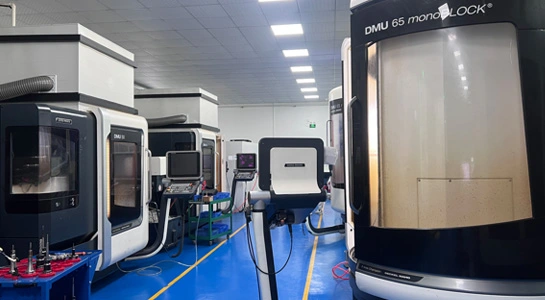
Despite the popularity of additive techniques, subtractive manufacturing remains vital in the rapid prototyping landscape. CNC machining, a core subtractive method, removes material from a solid block with exceptional accuracy and repeatability. Parts requiring tight resistances, high quality, and a smooth surface wrap up are well suited to this method. Materials that are difficult to 3D print, such specific metals or creating polymers, are ideal candidates for subtractive techniques. Consequently, computer numerical control (CNC) machining remains a popular option for practical prototypes and parts that are intended for use in actual testing.

Hybrid Approaches
In many advanced prototyping workflows, combining additive and subtractive manufacturing techniques offers the best of both worlds. A part might be initially created using a 3D printer for speed and design flexibility, then refined through CNC machining to achieve precise dimensional tolerances, improved surface finish, or critical functional features. This hybrid strategy minimizes material waste, reduces overall production time, and enhances the final product’s performance. Particularly in aerospace, automotive, and medical sectors, hybrid prototyping allows engineers to iterate quickly while maintaining strict quality and performance requirements.
Materials and Applications in Rapid Prototyping
Plastics and Polymers
Because of their adaptability and affordability, plastics have taken over the rapid prototyping industry. With the wide variety of plastics available, such as engineering-grade resins in SLA and ABS and PLA in FDM printing, it is possible to create prototypes that are nearly identical to the real thing. Consumer electronics, automobile components, and medical gadgets all make use of these materials, which range in hardness, pliability, and heat resistance.
Metals in Rapid Prototyping
Metal prototyping has seen significant advancements, with technologies like Selective Laser Melting (SLM) and Direct Metal Laser Sintering (DMLS) enabling the creation of complex metal parts. These techniques are highly versatile since they may be used on a wide range of metals, including aluminum, stainless steel, and titanium. The aircraft industry, the automobile industry, and the medical implant industry are all examples of businesses that demand high-performance metal prototypes.

Emerging Materials and Composites
The rapid prototyping field continually evolves with the introduction of new materials. Exciting possibilities arise when multiple components' characteristics are combined in composite materials. Carbon fiber-reinforced polymers, for instance, are great for aeroplanes and high-performance cars because of their high strength-to-weight ratios. Biocompatible materials are also revolutionizing medical prototyping by opening the door to personalized prosthetics and implants.
Optimizing the Rapid Prototyping Process
Design Considerations for Rapid Prototyping
Successful rapid prototyping begins with thoughtful design. Engineers must consider the limitations and strengths of their chosen prototyping method. For additive manufacturing, this might involve designing parts to minimize support structures or orienting prints to optimize strength along critical axes. In subtractive processes, designers must account for tool access and fixturing requirements. Leveraging Design for Manufacturing (DFM) principles early in the process can significantly streamline prototyping and eventual production.
Workflow Integration and Automation
Integrating rapid prototyping into existing design and manufacturing workflows can dramatically improve efficiency. Advanced CAD software now offers direct links to prototyping equipment, allowing for seamless transitions from digital designs to physical parts. Automation in areas such as build preparation, post-processing, and quality control helps reduce lead times and improve consistency. Implementing these automated workflows requires initial investment but can lead to substantial long-term gains in productivity and quality.

Quality Control and Iteration
Quality control is paramount in rapid prototyping, especially as prototypes increasingly serve as functional parts rather than mere visual models. Prototypes are guaranteed to fulfill design criteria by the implementation of stringent testing processes, which encompass dimensional accuracy checks, material property verification, and functional testing. Rapid prototyping's iterative nature makes it easy to make quick adjustments depending on test results, which in turn makes development more agile. By iteratively creating, testing, and refining prototypes, problems can be found and fixed earlier in the design phase, which speeds up product development.
Conclusion
Rapid prototyping is swiftly displacing more conventional methods of product development due to its speed, flexibility, and low cost. Rapid prototyping and an understanding of the many materials, technologies, and optimization techniques available to companies allow them to speed up innovation, reduce time-to-market, and produce better items. It is vital to maintain a level of awareness regarding the most recent technological developments and best practices in order to keep up with the ever-evolving industry and profession.
Trusted Rapid Prototyping Manufacturers Since Day One | BOEN
What sets BOEN apart is our deep understanding of materials and our integrated production processes, allowing us to tackle even the most complex prototyping challenges. Your product development cycle will stay on schedule with our short response times guaranteeing high-quality work. When companies need dependable, high-quality prototyping solutions, they turn to BOEN because of our dedication to innovation and excellence.
Get in touch with us at contact@boenrapid.com if you have any questions regarding our services or would want to discuss how we might assist you with your prototyping requirements.
References
Gibson, I., Rosen, D., & Stucker, B. (2021). Additive Manufacturing Technologies: 3D Printing, Rapid Prototyping, and Direct Digital Manufacturing. Springer.
Chua, C. K., & Leong, K. F. (2020). 3D Printing and Additive Manufacturing: Principles and Applications. World Scientific Publishing Company.
Hopkinson, N., Hague, R., & Dickens, P. (2019). Rapid Manufacturing: An Industrial Revolution for the Digital Age. Wiley.
Kamrani, A. K., & Nasr, E. A. (2020). Engineering Design and Rapid Prototyping. Springer.
Gebhardt, A. (2018). Understanding Additive Manufacturing: Rapid Prototyping, Rapid Tooling, Rapid Manufacturing. Carl Hanser Verlag GmbH & Co. KG.
Bak, D. (2019). Rapid Prototyping: Theory and Practice. Springer.