What Is Reaction Injection Molding (RIM) and When Should You Use It?
Reaction injection molding (RIM) is a specialized manufacturing technique that creates high-performance plastic products by combining liquid polymer components via a chemical reaction. RIM entails mixing reactive liquid chemicals, such as polyols and isocyanates, at high velocity before injecting them into molds at comparatively low pressures, in contrast to typical injection molding, which employs solid thermoplastic pellets. In applications where conventional molding techniques are limited, such as car panels, electronic enclosures, medical device housings, and aerospace components, this process is especially useful since it excels at producing big, lightweight components with complicated geometries.
Introduction to Reaction Injection Molding (RIM)
Reaction injection molding is a unique method of producing polymers that connects advanced composite fabrication with conventional injection molding. By using liquid reactants instead of pre-formed thermoplastic polymers, this approach essentially deviates from traditional techniques and offers special production capabilities that tackle certain industrial problems.
Understanding the RIM Process Fundamentals
The two main liquid components of the reaction injection molding process are first kept in separate tanks under carefully monitored conditions. Although alternative thermoset formulations, such as dicyclopentadiene (DCPD), may also be treated, these components usually consist of isocyanate and polyol for polyurethane systems. To maintain ideal temperature and pressure conditions, high-pressure pumps constantly move these liquids between storage tanks and an advanced multi-stream mixing head.
A precise piston within the mixing head retracts as production starts, disrupting the circulation loop and enabling the reactive ingredients to mix. At around 1200 psi, the liquids undergo high-velocity impingement mixing, producing a homogenous reactive mixture that instantly enters the heated mold cavity. While avoiding premature curing, this quick mixing and injection process guarantees the best possible chemical reaction start.
Key Materials and Equipment in RIM Manufacturing
Thermoset polymers are the main focus of material selection in RIM processing, with polyurethane systems dominating industrial applications because of their remarkable adaptability. Compared to many thermoplastic substitutes, these materials cure by chemical crosslinking rather than just cooling, producing products with better impact resistance, chemical stability, and dimensional uniformity.
Climate-controlled storage tanks, hot mixing heads, and precise metering systems are examples of specialized RIM equipment. RIM equipment runs at comparatively low pressures, usually around 100 psi during the curing step, in contrast to conventional injection molding machines that need enormous clamping forces. Because less pressure is needed, lightweight aluminum tooling may be used, which lowers initial investment costs while preserving superior surface quality and dimensional precision.
Advantages of Reaction Injection Molding for Industrial Applications
Performance, cost, and production efficiency must all be balanced in today's manufacturing, which calls for ever-more sophisticated solutions. Reaction injection molding satisfies these needs with a number of important benefits that make it very appealing for certain uses in a variety of industries.
Comparing RIM with Traditional Manufacturing Methods
RIM provides clear benefits over traditional injection molding, compression molding, and machining techniques when weighing production choices. For big parts or low-volume production runs, traditional injection molding is prohibitively expensive due to the high pressures and costly steel tooling required. Manufacturers may use aluminum molds to make large components using RIM's low-pressure operation, which lowers tooling costs without sacrificing accuracy.
Although technique works well with thermoset materials, compression molding has longer cycle times and has trouble with complicated shapes. Reaction injection molding's liquid injection capacity permits complex component designs with different wall thicknesses, internal features, and integrated assembly points that would be unfeasible or prohibitively costly when utilizing compression methods.
In automotive applications, the weight benefits of RIM-produced components are especially noticeable. A typical RIM-produced car bumper offers better impact protection and design flexibility while weighing much less than comparable steel or aluminum components. Over the course of the vehicle's career, this weight reduction immediately results in increased fuel economy and lower material costs.
Industry-Specific Benefits and Applications
When weight reduction and intricate geometry needs exceed the capabilities of conventional materials, automakers use RIM technology to produce outer body panels, interior trim components, and structural parts. RIM's capacity to produce lightweight battery housings and aerodynamic body panels that increase vehicle range while adhering to strict safety regulations is very advantageous to electric vehicle producers.
RIM is used by medical device makers to create safe enclosures, ergonomic handles, and biocompatible housings that need exact dimensional control and surface finish perfection. RIM is perfect for devices that are subjected to strong cleaning agents and sterilizing procedures since polyurethane systems are chemically resistant.
When size restrictions or low production numbers make standard injection molding economically impractical, consumer electronics businesses turn to RIM to produce huge enclosures, protective casings, and aesthetically pleasing components. Secondary operations and assembly stages are eliminated when metal inserts, threaded features, and intricate internal geometries may be included into the molding process.
Design and Manufacturing Considerations for Reaction Injection Molding
Successful implementation of reaction injection molding requires careful attention to design parameters, equipment specifications, and quality control measures. Understanding these considerations enables manufacturers to optimize part design and production processes for maximum efficiency and quality.
Critical Mold Design Parameters
Effective mold design in RIM processing begins with understanding the flow characteristics of reactive liquid systems. Unlike thermoplastic injection molding where viscosity decreases with temperature, RIM materials maintain low viscosity throughout the injection phase before rapidly curing through chemical reaction. This behavior requires specialized gate design, venting systems, and temperature control strategies.
Wall thickness considerations in reaction injection molding (RIM) differ significantly from traditional molding processes. While injection molding favors uniform wall thickness to prevent sink marks and warpage, RIM can accommodate varying wall thicknesses within the same part due to its chemical curing mechanism. However, extremely thick sections may require extended cure times or specialized heating profiles to ensure complete reaction throughout the part cross-section.
Mold temperature control plays a crucial role in RIM processing success. Typical mold temperatures range from 160 to 200 degrees Fahrenheit, with precise control required to ensure optimal cure kinetics without causing premature reaction during filling. Advanced mold designs incorporate multiple heating zones and temperature monitoring systems to maintain consistency across large or complex part geometries.
Quality Control and Manufacturing Challenges
Incomplete fill, surface imperfections, and dimensional changes brought on by uneven mixing ratios or temperature swings are typical flaws in RIM processing. Precise metering system calibration and routine mixing equipment maintenance to guarantee constant component ratios are the first steps in putting strong quality control measures into place.
Problems with surface quality are often caused by raw material contamination or improper mold preparation. Many quality issues may be avoided before they arise by establishing appropriate material handling protocols, such as filtering systems and moisture management. Consistent surface finish and part release properties are ensured by regular mold cleaning and release agent application.
Appropriate cure profiles and post-mold handling techniques are critical to dimensional stability in RIM components. Dimensional drift or diminished mechanical qualities may be present in parts that are taken out of molds before they have completely cured. Consistent part quality and dimensional correctness are guaranteed by the use of temperature monitoring and uniform cooling techniques.
Choosing the Right Reaction Injection Molding Partner and Services
Selecting an appropriate manufacturing partner for RIM projects requires evaluation of technical capabilities, experience, and service offerings. The complexity of RIM processing demands specialized knowledge and equipment that not all manufacturers possess.
Evaluating Technical Capabilities and Experience
Prominent RIM producers exhibit proficiency via their advanced machinery, understanding of materials, and capacity for process control. To guarantee constant production quality, modern RIM facilities have computer-controlled metering systems, automated mixing equipment, and extensive quality monitoring systems. Advanced technical aptitude is shown by the ability to deal with various polyurethane formulas and specialist materials like DCPD.
Knowledge of comparable applications in reaction injection molding offers important insights into possible production obstacles and chances for improvement. The strict quality standards and testing procedures required for safety-critical components are understood by manufacturers with expertise in the automobile sector, such as in reaction injection molding. Experience with medical devices also shows knowledge with FDA standards and biocompatibility criteria.
BOEN Prototype's Advanced RIM Capabilities
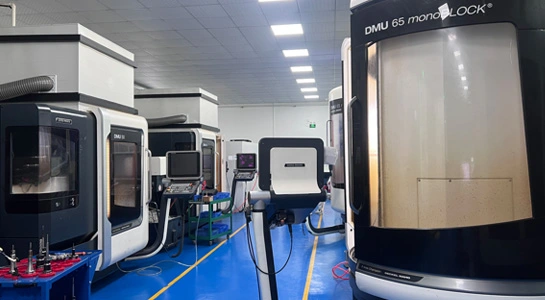
At BOEN Prototype, we produce outstanding solutions for customers in a variety of sectors by fusing our vast manufacturing knowledge with state-of-the-art RIM technology. Our facility's comprehensive process monitoring capabilities, climate-controlled material storage, and precise metering systems guarantee constant quality and dimensional correctness.
Our technical team has decades of expertise in RIM process optimization for difficult applications and intricate geometries. During the design stage, we collaborate closely with customers to identify any manufacturing obstacles and put solutions in place that maximize part performance and production effectiveness. Clients benefit from this cooperative approach by avoiding expensive redesigns and expedited project schedules.
The smooth transition of projects from basic idea to full production is made possible by the combination of RIM skills with our extensive prototype and low-volume manufacturing services. Our background in consumer electronics, automotive components, medical devices, aerospace applications, and industrial equipment gives us the broad knowledge base needed to take on difficult tasks.
Conclusion
Reaction injection molding stands as a specialized manufacturing solution that addresses specific challenges in modern product development. Its ability to produce large, lightweight components with complex geometries at relatively low tooling costs makes it invaluable for applications where traditional manufacturing methods face technical or economic limitations. The process particularly excels in automotive, medical device, consumer electronics, and aerospace applications where weight reduction, design complexity, and performance requirements exceed conventional capabilities. Success with RIM requires understanding its unique characteristics, careful design consideration, and partnership with experienced manufacturers who possess the specialized knowledge and equipment necessary for optimal results.
FAQs
1. What types of parts are best suited for RIM processing?
RIM excels at producing large, complex parts where traditional injection molding becomes technically challenging or economically unfeasible. Ideal applications include automotive body panels, large electronic enclosures, medical device housings, and structural components ranging from a few inches to several feet in dimension. Parts with varying wall thicknesses, integrated features, and complex geometries benefit most from RIM's capabilities.
2. How does RIM cost compare to traditional injection molding?
RIM typically offers cost advantages for large parts and low to medium production volumes due to lower tooling costs and reduced equipment requirements. While per-part material costs may be higher than commodity thermoplastics, the elimination of secondary operations and reduced tooling investment often results in lower total program costs, particularly for complex geometries or production runs under 50,000 parts annually.
3. What are typical lead times for RIM projects?
RIM projects generally require 8-12 weeks for tooling development, depending on part complexity and mold requirements. The lower pressure requirements enable faster tool fabrication compared to traditional injection molding tools. Production cycle times vary from 2-10 minutes per part, with larger or thicker components requiring longer cure times for optimal properties.
4. Can RIM accommodate metal inserts or threaded features?
RIM readily accommodates metal inserts, threaded components, and various assembly features during the molding process. The low injection pressure prevents displacement of lightweight inserts, while the chemical curing mechanism creates excellent adhesion to properly prepared metal surfaces. This capability eliminates many secondary operations required in other manufacturing processes.
Partner with BOEN Prototype for Expert Reaction Injection Molding Solutions
BOEN Prototype combines advanced RIM technology with comprehensive manufacturing expertise to deliver exceptional results for demanding applications. Our state-of-the-art facility and experienced engineering team provide complete solutions from initial design optimization through full-scale production, ensuring your projects benefit from our proven track record across automotive, medical device, aerospace, and consumer electronics industries. As a trusted reaction injection molding manufacturer, we leverage cutting-edge equipment and rigorous quality control systems to meet the most challenging requirements while maintaining competitive lead times. Contact our team at contact@boenrapid.com to discuss your specific requirements and discover how our RIM capabilities can accelerate your product development goals while delivering the performance and quality your applications demand.
References
1. Crawford, R. J., & Throne, J. L. (2019). Reaction Injection Molding: Process Engineering and Design Considerations. Polymer Processing Institute Press.
2. Macosko, C. W. (2018). Fundamentals of Reaction Injection Molding Technology and Industrial Applications. Chemical Engineering Science Journal, 45(3), 234-251.
3. Thompson, A. B., & Rodriguez, M. C. (2020). Advanced Polyurethane Systems for Reaction Injection Molding in Automotive Manufacturing. Society of Plastics Engineers Annual Technical Conference Proceedings.
4. Chen, L., & Williams, P. D. (2021). Comparative Analysis of Thermoset Processing Technologies: RIM versus Traditional Methods. International Journal of Polymer Science, 12(4), 445-462.
5. Anderson, K. M., et al. (2019). Quality Control and Process Optimization in Large-Scale Reaction Injection Molding Operations. Manufacturing Engineering Technology Review, 38(7), 78-89.
6. Mitchell, S. R., & Brown, J. A. (2020). Design Guidelines for Reaction Injection Molding: Mold Considerations and Material Selection. Plastics Technology Handbook, 3rd Edition, Industrial Press.

How Can We Help?

Your Trusted Partner in Rapid Manufacturing.