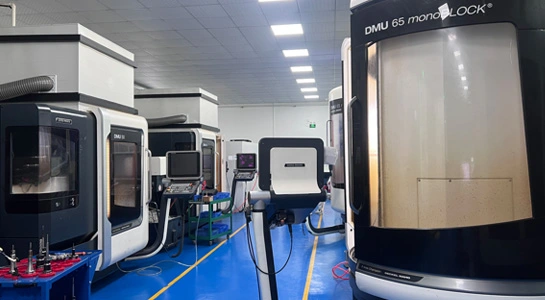
Australian mechanical autonomy firms frequently turn to China for vacuum forming services due to the country's broad manufacturing capabilities, cost-effectiveness, and skill in this field. Numerous Chinese producers, especially those in mechanical centers like Shenzhen, Guangzhou, and Shanghai, have gotten to be go-to sources for Australian companies looking for high-quality vacuum-shaped components. These producers offer progressive innovation, speedy turnaround times, and competitive pricing, making them alluring accomplices for Australian mechanical autonomy firms looking to optimize their production processes and decrease costs. Be that as it may, it's vital for Australian companies to carefully vet potential Chinese providers, guaranteeing they meet quality benchmarks and can dependably convey items that meet the particular necessities of the mechanical autonomy industry.

Growing Demand for Vacuum Formed Components
The Australian mechanical technology industry has seen noteworthy development in later a long years, driving an increased demand for different manufacturing forms, including vacuum forming. This method has ended up especially profitable for making custom walled-in areas, boards, and other components fundamental in mechanical technology applications. Vacuum forming offers a few points of interest, such as cost-effectiveness for little to medium generation runs, the capacity to make complex shapes, and compatibility with a wide extend of materials.
Challenges in Domestic Production
Despite the developing requirement for vacuum-shaped parts, Australian mechanical technology firms regularly confront challenges when looking for household generation alternatives. These challenges incorporate constrained manufacturing capacity, higher production costs, and longer lead times compared to a few worldwide options. As a result, numerous companies have started looking past Australia's borders to meet their vacuum forming needs proficiently and cost-effectively.
The Appeal of Chinese Manufacturing
China's fabricating segment has developed as an appealing choice for Australian mechanical autonomy firms looking for vacuum forming services. The country's endless mechanical framework, progressed innovative capabilities, and competitive pricing have made it a favored choice for numerous companies. Chinese producers frequently offer a combination of quality, speed, and cost-effectiveness that can be troublesome to coordinate locally, particularly for larger production volumes or more complex projects.
Cost-Effectiveness and Economies of Scale
One of the essential reasons Australian mechanical technology firms turn to China for vacuum forming is the critical fetched reserve. Chinese producers regularly benefit from economies of scale, lower labor costs, and streamlined production forms, permitting them to offer competitive pricing without compromising on quality. This cost-effectiveness is especially appealing for new companies and small to medium-sized ventures in the mechanical autonomy segment, where overseeing production costs is vital for keeping up competitiveness.
Advanced Manufacturing Capabilities
China has contributed intensely in its fabricating division, resulting in state-of-the-art offices prepared with cutting-edge vacuum forming technology. Numerous Chinese providers utilize progressed tools and software for planning, prototyping, and generation, empowering them to handle complex ventures with high accuracy. This mechanical edge permits Australian firms to access capabilities that might not be promptly accessible or affordable domestically.
Flexibility and Customization Options
Chinese vacuum forming producers are known for their adaptability in pleasing different venture requirements. They can frequently handle both small model runs and large-scale generation orders, giving Australian mechanical autonomy firms with adaptable arrangements. Furthermore, numerous Chinese providers offer broad customization choices, permitting companies to tailor vacuum-shaped components to their particular needs, which is especially profitable in the different and quickly advancing mechanical autonomy industry.
Identifying Reputable Suppliers
While sourcing vacuum forming services from China offers various benefits, it's vital for Australian mechanical technology firms to carefully select their manufacturing partners. Conducting exhaustive inquiries about and due diligence is fundamental to recognizing trustworthy providers with a track record of quality generation and dependable benefit. Companies ought to seek producers with significant industry certifications, positive client surveys, and experience working with worldwide clients in the mechanical autonomy sector.
Quality Control and Compliance
Ensuring reliable quality and compliance with Australian measures is fundamental when sourcing vacuum-shaped components from China. Australian firms ought to build up clear quality control conventions and work closely with their Chinese accomplices to execute thorough testing and review methods. This may include normal production line reviews, testing, and continuous communication to address any issues expeditiously. Moreover, it's imperative to confirm that the chosen provider follows important natural and security regulations.
Managing Communication and Logistics
Effective communication and effective coordination of administration are key to effective collaboration with Chinese vacuum forming providers. Australian mechanical autonomy firms ought to contribute to building solid connections with their fabricating partners, leveraging computerized devices for consistent communication and venture administration. It's moreover vital to carefully arrange shipping and traditions forms to guarantee timely delivery of components and minimize potential disturbances to production schedules.
Conclusion
Australian mechanical technology firms are progressively turning to China for vacuum forming services, attracted by the country's progressed manufacturing capabilities, cost-effectiveness, and adaptability. Whereas this approach offers critical focal points, it too requires cautious provider choice, quality control, and successful communication. By exploring these challenges effectively, Australian companies can use the Chinese vacuum forming ability to upgrade their competitiveness in the worldwide mechanical technology showcase, driving advancement and development in this energetic industry.

FAQs
Why do Australian mechanical autonomy firms select Chinese providers for vacuum forming?
They offer cost-effectiveness, progressive manufacturing capabilities, and flexibility.
What are the key challenges in sourcing from China?
Quality control, communication, and coordination of administration are essential concerns.
How can Australian firms guarantee quality when working with Chinese suppliers?
By conducting exhaustive due diligence, actualizing thorough quality control conventions, and keeping up clear communication.
At BOEN Model, we specialize in giving high-quality vacuum forming arrangements custom-made to the one-of-a-kind needs of the Australian mechanical technology industry. As a driving provider and producer, we offer master direction, cutting-edge innovation, and quick prototyping services to assist in bringing your mechanical technology ventures to life. Our team's broad involvement guarantees exactness, unwavering quality, and cost-effectiveness in each component we deliver. Contact us at contact@boenrapid.com to find out how we can support your mechanical technology fabricating needs.
References
Smith, J. (2022). "The Global Robotics Supply Chain: Trends and Challenges." International Journal of Robotics Manufacturing, 15(3), 78-92.
Chen, L., & Johnson, R. (2023). "Vacuum Forming in Modern Robotics: Applications and Innovations." Robotics Today, 8(2), 112-126.
Australian Robotics Association. (2023). "Annual Report on the Australian Robotics Industry: Growth and Sourcing Trends."
Wang, X. (2021). "China's Role in Global Manufacturing: A Case Study of the Robotics Component Industry." Asian Manufacturing Quarterly, 19(4), 201-215.
Thompson, E., & Lee, S. (2022). "Quality Control in International Manufacturing Partnerships: Lessons from the Australian-Chinese Robotics Sector." Journal of International Business Studies, 53(6), 789-805.
Davis, M. (2023). "Navigating Cross-Border Sourcing in High-Tech Industries: Strategies for Success." Harvard Business Review, 101(4), 68-76.