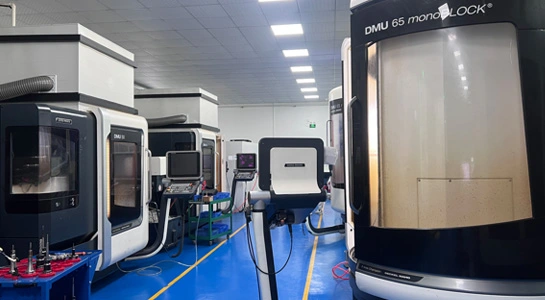
AI in Smart Manufacturing: How Factories Are Moving Toward Full Autonomy
Smart manufacturing services are fundamentally reshaping how production facilities operate by integrating artificial intelligence with real-time data analytics and machine learning algorithms. This transformation enables factories to shift from simple automated tasks to comprehensive autonomous decision-making ecosystems. Unlike traditional automation that follows rigid programming, AI-driven systems continuously learn from production patterns, anticipate equipment failures before they occur, and optimize workflows without human intervention. We're witnessing manufacturing environments where adaptive intelligence replaces manual oversight, creating production lines that self-correct, self-optimize, and deliver unprecedented efficiency gains across automotive, electronics, medical device, and aerospace sectors.
Understanding AI-Driven Smart Manufacturing Services
Using AI in manufacturing is a big step forward from what was possible with traditional automation. Now, machine learning algorithms are used to process huge amounts of sensor data from IoT-enabled devices, turning raw data into intelligence that can be used. Computer vision systems can inspect parts more accurately than humans can, finding tiny flaws that would otherwise make the product less reliable.
Predictive analytics engines look at past performance data to guess what maintenance will be needed. This cuts down on unplanned downtime by finding wear patterns before they become major problems. We've seen producers cut down on machine downtime by 30–40% just by using predictive maintenance. This saves them a lot of money and keeps production going smoothly.
Seamless ERP and MES Integration
Enterprise Resource Planning and Manufacturing Execution Systems can connect directly to modern smart manufacturing platforms, making unified data environments. This merging gets rid of the information gaps that used to make it hard to make decisions. Production managers can see the state of equipment, the flow of materials, quality measures, and energy use all at the same time on real-time screens. The end result is full insight that lets you respond quickly to problems with production and changes in market demand.
Measurable ROI Through Operational Excellence
When B2B procurement teams look at investments in smart manufacturing, they focus on returns that can be seen. AI-powered inspection systems keep standards the same over millions of production cycles, which leads to better quality control. When machine learning algorithms improve cutting patterns and injection moulding settings, less material is wasted. Monitoring jobs that are done over and over again cost more to do than roles that involve fixing problems. Companies that use complete smart manufacturing solutions usually see efficiency gains of 25 to 45% in the first eighteen months. Depending on the scale of the application, the return on investment (ROI) can take anywhere from two to four years.
Evolution from Traditional Manufacturing to AI-Powered Full Autonomy
In the past, production environments relied on manual process changes and maintenance plans that were done after the fact. Scheduled checks were used by operators to keep an eye on the machinery. Problems were only fixed when they showed up as quality problems or equipment failures. This method led to inefficiencies like production delays, too much waste, and unpredictable quality of output.
There are clear stages of change that happen along the way to independence in smart manufacturing services. Digitisation is the base, and manufacturers then put sensors and other infrastructure for connectivity all over production facilities. In this step, digital records of machine performance, environmental conditions, and product quality measures are made. Connectivity sets up networks of communication that let equipment on the shop floor send real-time data to centralised analytics platforms.
Building Intelligent Decision Systems
For AI models to be trained, a lot of historical data is needed, including standard operations, strange events, and different output scenarios. Machine learning algorithms find patterns that humans can't see, linking small changes in parameters with good results. We looked at a Tier-1 car provider that used AI models to find signs of bearing wear 72 hours before they broke. This way, maintenance could be planned for planned downtime instead of having to be done when production had to stop suddenly.
Autonomous production has reached its peak with closed-loop control systems. These systems keep an eye on production factors all the time, compare real performance to goals, and change equipment settings automatically to keep things running at their best. A company that makes batteries for electric vehicles put closed-loop temperature control on their cell assembly line. This cut thermal difference by 85% and made cell consistency scores much better.
Critical Success Factors
Infrastructure readiness includes more than just the real tools. It also includes things like network bandwidth, edge computing, and security procedures. Upskilling programs that turn workers from physical operators to system managers who run AI-driven processes are needed to improve the skills of the workforce. Data governance sets rules for data quality, storage, access permissions, and regulatory compliance. This is especially important for companies that make medical devices that are regulated by the FDA and aerospace companies that follow AS9100 standards.
Latest Trends and Technologies Shaping Smart Manufacturing in 2024
Edge AI adds computer intelligence directly to production tools so that data is processed locally instead of being sent to central cloud platforms. This design cuts down on latency, which is necessary for high-speed assembly processes that need response times in the microsecond range. Robotics companies are putting edge AI processors in collaborative robots so that they can change their paths in real time based on feedback from vision systems without having to rely on the cloud.
Digital twin technology makes virtual copies of real production assets that show how equipment would behave in different working conditions. Engineers test changes to processes in a digital setting before putting them into action on real production lines. This saves money because they don't have to do costly trial-and-error. A company that makes parts for aeroplanes used digital twins to find the best hardening processes for composites. This cut energy use by 22% while still meeting structural integrity standards.
Balancing Cloud and On-Premise Solutions
Hybrid systems meet a range of practical needs by combining the flexibility of the cloud with control that is kept on-premise. Long-term data analysis, benchmarking across various sites, and software updates are all things that cloud systems do very well. On-premise systems give you deterministic control over real-time process management and help you protect your data. Most of the time, companies that make medical devices keep patient data and secret formulas on-site while using the cloud for non-sensitive tasks and supply chain analytics.
Addressing Implementation Challenges
As manufacturing systems become more interconnected, worries about data security grow. By separating production systems from company IT networks with network segmentation, attack areas are reduced. Protocols for encryption keep data safe as it moves between tools and analytics systems. Regular penetration tests and security audits find holes in the system before they can be used.
When you combine devices from different manufacturers that use different communication methods in smart manufacturing services, interoperability issues can arise. Industry standards, such as OPC UA (Open Platform Communications Unified Architecture), make it easier for different systems to talk to each other and share data without having to do a lot of custom integration. When manufacturers buy equipment, putting vendor-neutral protocols at the top of their list of priorities cuts long-term integration costs by a large amount and keeps the door open for future technology adoption.
Selecting the Right AI-Enabled Smart Manufacturing Services Provider
Scalability determines whether solutions can grow as the business does. Providers that offer modular designs let makers start with test projects that focus on specific production bottlenecks. As ROI becomes clear, the projects can be expanded to cover more areas. A company that makes consumer electronics might start by using AI to check the quality of the final assembly. Later, they might add vision systems to the stations that receive parts and put them together.
Technology stack compatibility makes sure that new smart manufacturing platforms can work with current systems instead of having to be replaced completely. Supported industry protocols, database compatibility, API availability for custom connections, and migration tools for preserving past data are some of the things that are used to judge a product.
Domain Expertise Across Industries
Providers show they know their stuff about an industry by using relevant case studies and solutions that are made for that industry. Traceability systems are needed in the automotive industry to keep track of every part as it is put together, meet recall requirements, and look into warranty claims. For FDA applications, validation procedures that show AI decision-making is consistent are needed for medical device production. Certification of materials and nondestructive tests are important parts of the production process in aerospace manufacturing.
Siemens' MindSphere platforms are very complete and have a long history of industrial automation. They work especially well for companies that already use Siemens control systems. ABB focuses on integrating robotics and managing energy, which makes them appealing to facilities that put sustainability metrics first. Bosch has edge computing systems that work best in high-mix, low-volume production settings, which are common in custom manufacturing. Microsoft Azure IoT offers enterprise-level cloud technology and a large community of third-party support, making it easier to connect to tools for business analytics and supply chain management.
Investment Considerations for Procurement Teams
Total cost of ownership is affected by licensing models in a big way. Subscription models spread costs across operating budgets and include ongoing support and changes, but they also add up to higher costs over time. Permanent rights need a lot of money up front, but they lower ongoing costs, which makes them appealing to makers whose technology needs to be updated on a regular basis. Approaches that are fair include hybrid models that mix core platform licenses with analytics modules that are paid for by subscription.
Small and medium-sized businesses can save money on consulting fees and training by using solutions that focus on quick deployment and easy-to-use interfaces. Large OEMs need enterprise-level flexibility to handle thousands of connected devices in many locations around the world. By checking the vendor's financial stability, how quickly they respond to customer service requests, and the strength of their user community, you can be sure that the partnership will last for a long time.
Ensuring Long-Term Success with AI-Powered Smart Manufacturing
Avoiding too much technology keeps the right amount of human control for making difficult decisions and thinking about what is right. Automatic systems are great at recognising patterns that happen over and over, but they have trouble with new situations where they don't have any historical data. Keeping humans in the loop during important quality reviews and process change authorisations stops algorithms from going off track and producing less-than-ideal results.
When companies collect huge amounts of sensor data without clear plans for how to use it, data overload is a risk. Setting up key success measures before deployment makes sure that the data collection fits the needs of decision-making. A company that makes industrial equipment cut the cost of storing data by 60% by filtering sensor data at the edge devices and sending only odd readings and regular summary statistics instead of full-resolution streams all the time.
Building Resilient Manufacturing Ecosystems
Continuous workforce development programs move workers from manual jobs that have been taken over by others to positions where they oversee the whole system. Teams are prepared for autonomous manufacturing settings by training them in how to understand data, test AI decisions, and fix problems. Businesses that put money into complete upskilling programs have happier employees and lower turnover rates than businesses that see technology as a way to cut back on staff.
Agile workflow methods, which come from software development, work well in smart manufacturing settings. When compared to standard yearly improvement projects, short iteration cycles for trying process changes, collecting performance data, and making improvements speed up optimisation. Cross-functional teams made up of production workers, data scientists, and quality engineers find ways to make things better that would not be seen by people working in separate departments.
Strategic Roadmap for Full Autonomy
Achieving full plant autonomy for smart manufacturing services takes between five and ten years and involves moving through clear stages of growth. In the early stages, infrastructure for connecting and collecting data is set up across all output sites. In the middle stages, analytics platforms are used to give information that helps people make decisions by hand. In later stages, closed-loop control is used for certain processes, and the area of autonomy is gradually increased. When AI systems are fully developed, they can run an entire facility without any human help, scheduling production, making sure quality, coordinating maintenance, and making sure the supply chain works together.
Procurement professionals should ask for detailed implementation timelines that include infrastructure needs, training programs, integration milestones, and criteria for validating performance. Long-term interests are protected by contract rules that say who owns the data, who can change the way the system works, and how to leave the contract. Getting quotes from several vendors on integration helps you compare costs and find differences in technical approaches that affect your long-term flexibility.
Conclusion
On the way to fully driverless manufacturing, operations will have to change in big ways that go far beyond installing technology. Implementations that work well combine advanced AI features with training employees, making sure infrastructure is ready, and strategy planning that fits with the company's goals. Intelligent production systems that are always getting better are giving manufacturers in the automotive, electronics, medical, aerospace, and industrial sectors real competitive benefits. The path needs careful choice of providers, a step-by-step plan for implementation, and a dedication to long-term ecosystem growth. Companies that accept this change will be able to adapt to changing market needs more quickly and efficiently than ever before.
FAQ
How does AI-powered smart manufacturing differ from traditional automation?
Traditional automation follows set steps without changing them, so when the process changes, it needs to be reprogrammed. AI-powered systems are always learning from production data and changing settings automatically to get the best results and figure out when repair is needed before they break down. This basic difference makes it possible for decisions to be made automatically, in response to changing conditions, without any help from a person.
Can small and mid-sized manufacturers afford smart manufacturing implementation?
Businesses can start with targeted applications that solve specific problems and show ROI before expanding coverage with modular deployment strategies. When compared to older enterprise systems, cloud-based subscription models require less money up front. Within 24 to 36 months, many producers get their initial investments back through less waste and higher efficiency.
What measures protect manufacturing data in cloud-based deployments?
Reliable service providers use multiple layers of security, such as encrypted data transfer, role-based access controls, regular security checks, and compliance standards like ISO 27001 and SOC 2. Network segmentation keeps production systems from being seen by other people on the internet. Manufacturers make the choices about where to store data, and they choose server sites that meet legal standards and company policy.
Partner with BOEN Prototype for Your Smart Manufacturing Transition
At BOEN Prototype, we know that if you want to use complex manufacturing technologies, you need partners who are both technically skilled and know how to make things. We can help you with your smart manufacturing projects in the medical, aerospace, consumer electronics, and automotive industries through rapid prototyping and low-volume manufacturing. We use CNC machining, rapid injection moulding, metal pressing, die casting, and additive manufacturing to make precise parts that prove your AI-driven production ideas are right. When you need biocompatible samples for testing medical devices or special manufacturing tools for self-driving assembly lines, our engineering team can make solutions that fit your needs. Get in touch with us at contact@boenrapid.com to talk about how our smart manufacturing services supplier knowledge can help you get to production independence faster, with guaranteed quality and quick turnaround times.
References
1. Kusiak, Andrew. "Smart Manufacturing." International Journal of Production Research, Vol. 56, 2018, pp. 508-517.
2. Lee, Jay, Behrad Bagheri, and Hung-An Kao. "A Cyber-Physical Systems Architecture for Industry 4.0-based Manufacturing Systems." Manufacturing Letters, Vol. 3, 2015, pp. 18-23.
3. Tao, Fei, Qinglin Qi, Ang Liu, and Andrew Kusiak. "Data-driven Smart Manufacturing." Journal of Manufacturing Systems, Vol. 48, 2018, pp. 157-169.
4. Zhong, Ray Y., Xun Xu, Eberhard Klotz, and Stephen T. Newman. "Intelligent Manufacturing in the Context of Industry 4.0: A Review." Engineering, Vol. 3, 2017, pp. 616-630.
5. Wang, Shiyong, Jiafu Wan, Daqiang Zhang, Di Li, and Chunhua Zhang. "Towards Smart Factory for Industry 4.0: A Self-Organized Multi-Agent System with Big Data Based Feedback and Coordination." Computer Networks, Vol. 101, 2016, pp. 158-168.
6. O'Donovan, Peter, Keiron Leahy, Ken Bruton, and Dominic T.J. O'Sullivan. "An Industrial Big Data Pipeline for Data-Driven Analytics Maintenance Applications in Large-Scale Smart Manufacturing Facilities." Journal of Big Data, Vol. 2, 2015, Article 25.

How Can We Help?

Your Trusted Partner in Rapid Manufacturing.