Are ABS Parts Suitable for Functional Prototypes?
ABS parts are ideal for practical prototypes in a variety of fields. These thermoplastic parts are great for prototyping because of their high mechanical strength, dimensional stability, and chemical resistance. Engineers are able to do thorough performance tests because ABS parts may endure functional validation with little structural damage. They enable quick iteration cycles, which are crucial in developing prototypes, because to their adaptability in manufacturing methods like 3D printing and injection molding. This material is highly favored for prototyping automotive, consumer electronics, and medical device components because to its remarkable ability to exactly mimic the behavior of the final product.
Understanding ABS Material Properties for Prototyping Applications
One of the most adaptable engineering thermoplastics for creating working prototypes is ABS, or Acrylonitrile Butadiene Styrene. The balanced polymer structure of this material—which combines the toughness of polybutadiene rubber with the strength and stiffness of acrylonitrile and styrene—makes it an excellent choice for demanding prototype conditions.
Mechanical Characteristics That Drive Prototype Success
Functional testing scenarios greatly benefit from ABS due to its intrinsic mechanical qualities. ABS parts retain their structural integrity during several testing cycles because to their high tensile strength (40–50 MPa) and exceptional impact resistance (even at low temperatures). When it comes to validation, the material's exceptional dimensional stability is vital for creating prototypes that faithfully portray the final product's geometry.
The constant performance of ABS prototypes over typical real-world temperature ranges is a boon to engineers working with these materials. Testing may be conducted at increased temperature settings while preserving mechanical qualities important for functional assessment, thanks to the glass transition temperature of about 105°C.
Chemical Resistance and Environmental Durability
ABS is very resistant to a wide range of chemicals that are prevalent in the automotive, electronics, and industrial sectors. Prototype parts are chemically stable, so they keep their characteristics even when tested in environments with lubricants, mild acids, and alkaline solutions. Studies validating prototypes over extended periods of time may rest easier knowing that the material is resistant to environmental stress cracking.
Manufacturing Processes Optimized for ABS Prototype Production
The material qualities of ABS parts aren't the only thing that make it versatile; it also supports quick prototype development across a variety of production processes. The needs of the project, the available time, and the desired level of performance will determine which manufacturing technique is most suited.
Injection Molding for High-Volume Prototype Testing
If you need a lot of test units for your ABS prototype, injection molding is still your best option. With this method, you may get components with surface finishes and dimensions that are almost identical to those of production parts. Automotive interior components, consumer electronics housings, and medical device enclosures are perfect candidates for injection molding due to its ability to accommodate complicated geometries, undercuts, and delicate features.
Part quality remains constant during production cycles because to the rigorous optimization of ABS injection molding process parameters. The completed prototypes are made with optimal material flow and dimensional stability by maintaining mold temperatures between 40 and 80°C and melt temperatures between 220 and 260°C.
CNC Machining for Precision Prototype Components
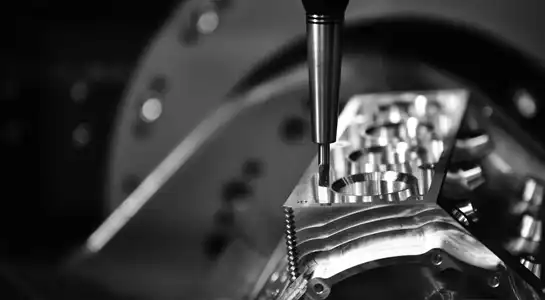
When producing prototypes of ABS parts with precise tolerances is essential for functional validation, computer numerical control machining provides unmatched accuracy. Components that need an exact fit and finish for assembly testing are perfect candidates for this subtractive manufacturing method, which can attain tolerances within ±0.1mm.
CNC machining proves especially valuable for creating prototype tooling, fixtures, and test components where dimensional accuracy directly impacts functional performance. Without the lengthy delays caused by tooling changes in injection molding, this method enables quick design revisions.
Additive Manufacturing Revolution in ABS Prototyping
By removing the limitations of conventional manufacturing processes and facilitating quick iteration cycles, 3D printing has revolutionized the fabrication of ABS prototypes. Functional prototypes appropriate for mechanical testing and assembly validation may be produced using Fused Deposition Modeling (FDM) printers using ABS materials.
3D printed ABS components, with the right printing settings, may attain layer adhesion strengths that are comparable to injection molded parts. The best conditions for layer bonding and the least amount of warping when printing with ABS are print bed temperatures of 100–110°C and nozzle temperatures of around 230–250°C.
Industry-Specific Applications Driving ABS Prototype Adoption
Different industries leverage ABS prototypes to address unique challenges in product development cycles. Understanding these applications provides insight into the material's versatility and performance capabilities across diverse market segments.
Automotive Sector Innovation and Validation
When it comes to developing interior components, validating lighting housings, and employing ABS prototypes for under-hood applications where temperature resistance is critical, automotive manufacturers depend significantly on them. This material may be used to test door panels, dashboard components, and trim pieces thoroughly before investing in costly production tooling since it can mimic production-grade performance.
Battery housing prototypes and charging port components made of ABS are highly prized by electric car manufacturers for their electrical insulating and chemically resistant qualities, which are crucial for safety validation. The tough testing requirements of the automobile sector are well-suited to ABS, which has a history of success in such environments.
Consumer Electronics and Smart Device Development
Device housings, internal brackets, and thermal management components rely on ABS prototypes in the consumer electronics sector. Because of its colorability and high surface polish qualities, this material is perfect for both functional and aesthetic validation tests. To ensure that smart home devices have adequate heat dissipation and electromagnetic interference shielding, manufacturers use prototypes of ABS parts.
When it comes to consumer electronics, ABS's quick-turn production capabilities are a great fit for the short product development cycles. Using the same material from prototype to production makes the changeover much smoother.
Medical Device Prototyping and Biocompatibility
In cases where biocompatibility standards are less strict, medical device makers use ABS for non-implantable prototype components. During the prototype validation stages, the chemical resistance and dimensional stability of ABS make it an ideal material for housing diagnostic equipment, therapeutic devices, and laboratory instrument components.
This material is great for prototyping parts that need to be cleaned between testing cycles since it can survive sterilizing procedures. To assess the usability of the device's interface and its operating capabilities, ergonomic testing of portable medical equipment often use ABS prototypes.
Quality Considerations and Performance Validation
Ensuring prototype quality requires understanding the factors that influence ABS part performance and implementing appropriate validation methods throughout the development process.
Material Grade Selection and Property Optimization
Different ABS grades offer varying property profiles optimized for specific applications. High-impact grades provide enhanced toughness for structural components, while flame-retardant grades meet safety requirements for electronics applications. Heat-resistant formulations extend the operational temperature range for automotive under-hood components.
Selecting the appropriate ABS parts during prototype development ensures that functional testing accurately represents production component performance. Material suppliers provide comprehensive technical data sheets that guide grade selection based on specific application requirements.
Validation Testing Protocols for ABS Prototypes
Comprehensive prototype validation involves multiple testing protocols designed to evaluate mechanical properties, environmental resistance, and functional performance. Impact testing, tensile strength evaluation, and thermal cycling provide quantitative data on prototype performance under various conditions.
Long-term aging studies help predict production component behavior over extended service life. Accelerated testing protocols compress years of real-world exposure into weeks or months of laboratory testing, providing confidence in design decisions before production commitment.
Cost-Effectiveness and Supply Chain Advantages
ABS prototypes offer significant economic advantages throughout the product development cycle, from initial concept validation through production preparation phases.
Economic Benefits of ABS Prototype Development
The relatively low material cost of ABS parts , combined with its processability across multiple manufacturing methods, creates favorable economics for prototype programs. The ability to produce functional prototypes quickly and cost-effectively enables more thorough design validation and reduces the risk of expensive design changes late in development cycles.
Tooling costs for ABS prototype production are generally lower than those required for other engineering plastics, particularly when injection molding is employed. The material's forgiving processing characteristics reduce scrap rates and improve overall program efficiency.
Supply Chain Reliability and Global Availability
ABS enjoys widespread availability from multiple global suppliers, ensuring reliable material supply for prototype programs. The material's established supply chain reduces procurement risks and enables consistent material properties across different suppliers when necessary.
The extensive recycling infrastructure for ABS supports sustainability goals while maintaining cost competitiveness. Prototype programs can incorporate recycled content when appropriate, supporting corporate environmental objectives without compromising performance.
Conclusion
ABS parts demonstrate exceptional suitability for functional prototypes across diverse industries, offering an optimal combination of mechanical properties, manufacturing versatility, and cost-effectiveness. The material's proven track record in automotive, electronics, medical, and industrial applications provides confidence for prototype validation programs. With manufacturing options ranging from injection molding to 3D printing, ABS enables rapid iteration cycles essential for modern product development. The material's chemical resistance, dimensional stability, and temperature performance ensure that prototypes accurately represent production component behavior, reducing development risks and accelerating time-to-market objectives.
FAQ
1. What temperature ranges can ABS prototypes withstand during testing?
ABS prototypes typically perform well across temperature ranges from -20°C to 80°C in continuous operation, with short-term exposure capabilities up to 100°C. The material maintains its mechanical properties within these ranges, making it suitable for most prototype validation scenarios. Heat-deflection temperatures around 90-100°C under standard testing loads provide additional confidence for elevated temperature applications.
2. How do 3D printed ABS prototypes compare to injection molded versions?
3D printed ABS prototypes offer faster turnaround times and design flexibility but may exhibit slightly reduced mechanical properties compared to injection molded components. Layer adhesion in FDM printing typically achieves 80-90% of the strength found in injection molded parts. Surface finish and dimensional accuracy favor injection molding, while 3D printing excels in complex geometries and rapid iteration capabilities.
3. What post-processing options are available for ABS prototype components?
ABS prototypes accept various post-processing treatments including mechanical finishing, chemical smoothing with acetone vapor, painting, and electroplating. Machining operations can refine critical dimensions and surface finishes. Ultrasonic welding enables assembly of multiple ABS components into complex prototype systems. Heat staking and threaded inserts provide additional assembly options for functional testing requirements.
Partner with BOEN Prototype for Superior ABS Prototype Solutions
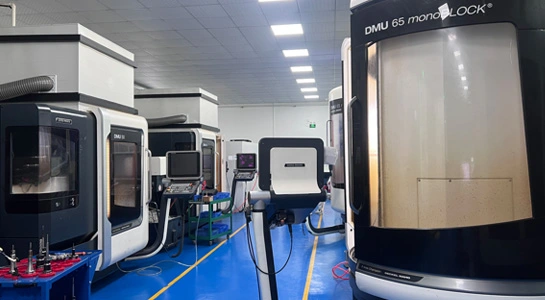
BOEN Prototype stands as your trusted ABS parts supplier, delivering exceptional prototyping solutions across automotive, electronics, medical, and aerospace industries. Our comprehensive manufacturing capabilities including CNC machining, injection molding, and advanced 3D printing technologies ensure your ABS prototypes meet the most demanding functional requirements. With extensive experience in material selection and process optimization, we guide your projects from concept through validation with unmatched precision and reliability. Our commitment to quality, combined with rapid turnaround times and competitive pricing, makes us the preferred choice for discerning engineers and procurement professionals. Contact our expert team at contact@boenrapid.com to discuss your specific ABS prototyping needs and discover how our proven expertise can accelerate your product development timeline while maintaining the highest standards of excellence.
References
1. Strong, A. Brent. "Fundamentals of Composites Manufacturing: Materials, Methods and Applications." Society of Manufacturing Engineers, 2018.
2. Crawford, R.J. and Martin, P.J. "Plastics Engineering: A Comprehensive Introduction to Processing, Design, and Applications." Elsevier Science, 2020.
3. Osswald, Tim A. and Rudolph, Natalie. "Polymer Rheology: Fundamentals and Applications in Engineering Design." Hanser Publications, 2019.
4. Goodship, Vannessa and Jacobs, Georg. "Practical Guide to Injection Molding: Materials, Design, and Manufacturing." Smithers Rapra, 2017.
5. Gibson, Ian, Rosen, David, and Stucker, Brent. "Additive Manufacturing Technologies: 3D Printing, Rapid Prototyping, and Direct Digital Manufacturing." Springer Science, 2021.
6. Mallick, P.K. "Materials, Design and Manufacturing for Lightweight Vehicles." Woodhead Publishing, 2019.

How Can We Help?

Your Trusted Partner in Rapid Manufacturing.