CNC Machining Aluminum 6061 vs 7075: Material Selection Guide for Engineers
Selecting between aluminum 6061 and 7075 for CNC machining projects directly impacts part performance, production costs, and manufacturing timelines. Both alloys offer unique mechanical properties suited to distinct applications across aerospace, automotive, medical devices, and robotics industries. Understanding their chemical compositions, machinability characteristics, and performance trade-offs enables engineers to make informed decisions that align technical requirements with budget constraints while ensuring optimal outcomes for rapid prototyping and low-volume production needs.
Understanding Aluminum 6061 and 7075 for CNC Machining
The main difference between these aluminum alloys is how their chemicals are made. Magnesium and silicon are the main alloying elements in Aluminum 6061. Together, they make a balanced material that is moderately strong and easy to shape. Because of its composition, it is perfect for housings for consumer electronics, medical devices, and robotic parts that need to be flexible more than strong.
In contrast, Aluminum 7075 is mostly made up of zinc, with smaller amounts of magnesium and copper also being present. With a tensile strength close to some steel types, this recipe makes one of the strongest aluminum alloys on the market. A lot of the time, aerospace engineers and UAV makers use 7075 for high-stress situations where weight loss can't hurt the structure's strength.
Machinability Characteristics in CNC Operations
When we machine 6061 aluminum, it responds normally to cutting tools and doesn't chip weld much. Because the alloy is softer, it can handle higher feed rates and faster production cycles. This means that prototypes and small batches of parts can be made for less money. OEMs and Tier-1 providers like how efficient this process is when they have to make fast targets for lighting housings or powertrain parts for cars.
To machine 7075, you have to be more careful when choosing the parameters. Because the metal is hard and sharp, it needs carbide tools and slow cutting speeds to keep the tools from wearing out too quickly. This makes each part take longer to machine, but the parts that are made are more stable in their dimensions when they are loaded. Companies that make drones and airplane parts are okay with these longer cycle times because the material's strength-to-weight ratio makes the investment worth it.
The level of the surface finish varies between these metals as well. 6061 naturally makes smoother finishes right off the CNC Machine, so prototypes for market items that need to look good often only need a little post-processing. The harder 7075 can get a similar surface quality, but it usually needs more work to get to the same level of visual quality.
Real-World Application Scenarios
Medical device makers who are making ergonomic testing samples often choose 6061 because, after the right surface treatments, it is biocompatible. The material can be easily machined into the complicated shapes needed for the housings of mobile tools and diagnostic equipment. The alloy's predictable behavior during rapid prototyping iterations helps labs that are doing functional validation tests.
On the other hand, AGV and AMR makers who are making CNC Machining frames for self-driving cars choose 7075 when structural parts need to be able to handle repeated stress cycles. The fatigue strength of the metal makes sure that the robot frame and mounting parts stay perfectly aligned for long periods of time. When creating industrial automation solutions where downtime costs a lot, system designers value this level of dependability.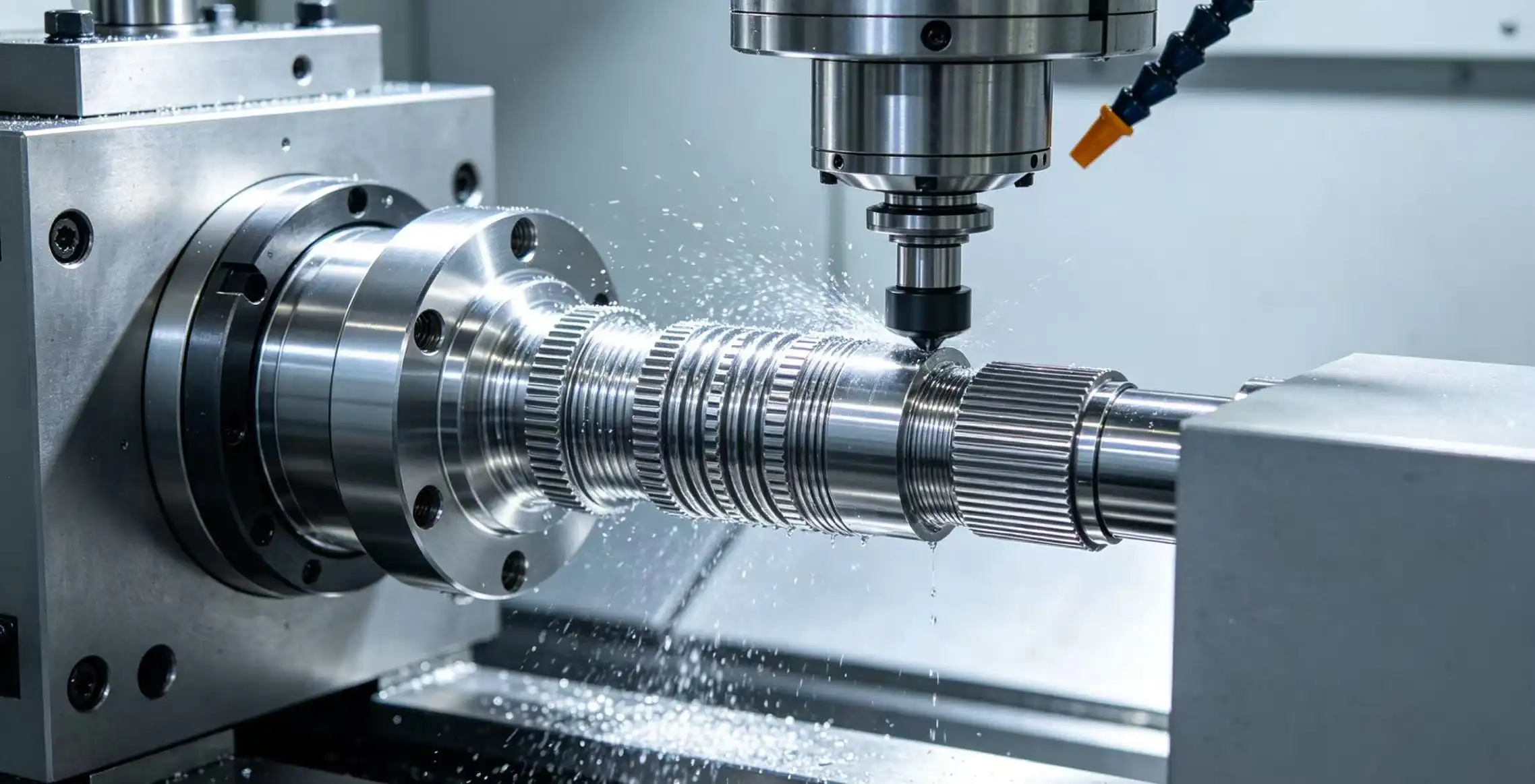
Performance Comparison: CNC Machining Aluminum 6061 vs 7075
The main difference in performance between these materials can be seen in their tensile strengths. The tensile strength of Aluminum 6061-T6 is usually 45,000 psi, which is enough for most general engineering uses. This level supports standard industrial equipment parts, smart home product enclosures, and interior automotive parts without overengineering the design.
The tensile strength of Aluminum 7075-T6 is about 83,000 psi, which is almost twice that of Aluminum 6061. With this huge rise, engineers can make buildings with thinner walls and less weight that can still hold their weight. This property is used by people who make aerospace components to make planes lighter without losing safety, which directly increases fuel economy and payload capacity.
Fatigue Resistance and Durability Analysis
Testing labs that look at how long parts last notice that these alloys wear down in different ways. Even tho 6061 works fine with modest cyclic loads, 7075 has better durability limits. Parts that are vibrating or being stressed over and over again benefit from 7075's hexagonal structure, which stops cracks from spreading better than softer aluminum types.
EV companies that are making engine parts need to think about both mechanical and thermal cycle effects. Both metals can handle changes in temperature pretty well, but 6061 is better at moving heat around for uses that need it. 6061 is often used in battery enclosures and motor housings to handle thermal loads and provide enough structural support.
Another thing to think about when it comes to longevity is corrosion protection. Aluminum 6061 naturally fights damage from the environment better than 7075, which makes it better for outdoor gear and naval uses. Device makers who make household devices that are exposed to humidity usually choose 6061 because it is reliable over a long period of time without needing a lot of protective layers.
Tolerance Capabilities and Surface Finish Quality
Precision CNC Machining can make tight tolerances with both alloys, but they behave in slightly different ways. With normal three-axis milling operations, we can keep tolerances on 6061 parts to within 0.005 inches. The material is stable during cutting, so heat distortion and tool deflection problems that affect the accuracy of measurements are kept to a minimum.
Fixturing techniques and temperature control need to be improved in order to machine 7075 to the same limits. The alloy makes more heat when it is being cut, which could cause it to expand, which changes the final size. Expert machining service providers make up for these problems by optimizing the tool path and delivering the right amount of water, which makes sure that parts meet strict aircraft and medical device standards.
Material choice is also affected by the surface finish needs. Industrial design companies that make samples that look good often choose 6061 because it can be anodized and powder coated easily and consistently. When how something looks is what a customer thinks, the softer material shines easily to a mirror finish. Biotech companies that are making housings for lab equipment like this freedom because it lets them make small changes to the design over and over again.
Cost and Procurement Strategy Considerations
Pricing materials has big effects on budgets for people who make buying decisions. Aluminum 6061 costs a lot less per pound than 7075, which makes it a good choice for making a lot of things. Product design firms with limited development funds often choose 6061 to keep prototype costs low while confirming basic form and function.
The higher price of 7075 is due to the fact that it is made in a very specific way and has better mechanical properties. Defense companies and people who make parts for airplanes are willing to pay more for materials because the performance benefits are worth it. When a broken part could put lives or the mission's success at risk, the extra cost isn't worth it compared to the value of reducing risk.
Lead times for these products are different because each source keeps different amounts in stock. Most CNC Machining suppliers keep standard plate and bar sizes in stock due to the widespread use of Aluminum 6061 in various industries. This makes it possible for quick return times, which are important for just-in-time manufacturing methods used by automakers and companies that make consumer electronics.
Getting 7075 may take longer than expected, based on the form, size, and amount needed. When planning their production plans, robot makers and flight engineering teams should take into account the time it might take to get materials. Having supply partnerships with CNC Machining partners that stock both metal gives you the freedom to change as design needs change.
Decision Support: How to Choose Between 6061 and 7075 for Your CNC Project?
In most engineering applications, load-bearing requirements are the most important factor in choosing a material. Find the highest level of stress that your part will be under while it's working, and then use the right safety factors. If the strong properties of 6061 meet these needs with enough of a cushion of error, choosing the more expensive 7075 would add extra costs for no reason.
The material's life is affected by the environment around it. Due to its resistance to corrosion, 6061 is a better material for making parts that will be exposed to saltwater, industrial chemicals, or long-term weathering outside. When specifying materials, testing labs that do rapid environmental testing should think about these things to make sure that prototype results properly predict production performance.
Balancing Performance Against Budget Constraints
Smart-home product designers are often under a lot of pressure to keep quality high while lowering production costs. When it comes to making enclosures and mounting brackets, 6061 is strong enough for consumer uses at a price that lets you compete in the market. The material is easy to machine, which lowers production costs even more by making cycle times faster and tool life longer.
On the other hand, AGV designers can't cut corners on structural soundness to save money, since a broken part could damage expensive equipment or pose a safety risk. When you look at the costs of liability and replacement, you can see that using 7075 for important chassis parts and load-bearing structures is a good deal. Engineers shouldn't just look at the original cost of buying materials; they should also look at the total cost over the whole duration.
Material selection economics is also affected by how often prototypes are iterated. In the early stages of development, when design changes need to be made many times, 6061's lower cost and faster machining make learning go more quickly. Once the design is complete and final validation testing starts, switching to 7075 for parts that need to be very strong will make sure that production parts meet performance requirements without having to waste time and money on prototypes that are too detailed.
Partnering with Experienced CNC Machining Providers
Complex geometries need more advanced machining skills than just mill-turning. Medical device companies that are making parts with anatomically contoured shapes should work with service providers who know how to use five-axis machining. These advanced features make it easy to make complicated shapes out of both aluminum alloys while keeping tight tolerances on many surfaces.
Material knowledge is what sets good machine shops apart from real manufacturing partners. Figuring out how each metal reacts to various cutting methods, tool shapes, and methods of managing heat has a direct effect on the quality of the parts and the speed of production. Biotech companies and companies that make industrial equipment should look at potential suppliers based on the types of aluminum work they can do and whether they can offer technical advice.
As much as machine ability affects project timelines, how quickly people can communicate also does. Tier-1 suppliers and EV startups with tight development schedules need CNC Machining partners who are open about the status of their work and look for problems before they cause delays. Setting clear rules for communication during vendor qualification stops misunderstandings that throw off production schedules.
CNC Machining Best Practices and Design Tips for Aluminum Alloys
Both machining time and material costs can be cut by optimizing the geometry of a part. Sharp internal corners require small-diameter end mills that limit cutting speeds and increase tool wear. Designing with wide curves wherever possible allows bigger cutting tools that remove material faster while extending tool life. This principle applies equally to 6061 and 7075, though the softer alloy tolerates more aggressive radius recommendations.
Wall thickness uniformity avoids machining-induced distortion caused by uneven residual stress distribution. Thin walls lacking appropriate support may shift during cutting operations, reducing dimensional accuracy. Aerospace component developers and robots manufacturers should keep minimum wall thicknesses appropriate for each alloy's stiffness qualities, typically avoiding sections below 0.040 inches without substantial reason.
Tooling Selection and Process Parameter Optimization
Cutting tool shape significantly influences CNC Machining surface finish quality and measurement accuracy. Sharp cutting edges with polished rake faces reduce built-up edge growth when machining aluminum alloys. Carbide grades specifically formulated for non-ferrous metals provide optimal performance across both 6061 and 7075 applications, though tool life varies considerably between the two materials.
Spindle speeds require careful tuning based on tool width and material stiffness. Aluminum 6061 tolerates higher surface feet per minute ratings, allowing aggressive material removal rates that lower cycle times. When machining 7075, moderating cutting speeds prevents excessive heat generation that accelerates tool wear and potentially affects part dimensions through thermal expansion.
Coolant delivery strategy impacts chip evacuation and thermal management. Through-spindle coolant systems aim high-pressure fluid exactly at the cutting zone, breaking chips and controlling temperature effectively. This method works especially well when working with deep pockets or complicated internal features in metal parts, where chip packing could hurt the finish or break the cutting tools.
Quality Control and Inspection Protocols
Verification of dimensions should happen at strategic points during the machining process, not just when the job is finished. By checking important parts after roughing them out, mistakes can be fixed before they are built in during the finishing steps. This proactive method to quality assurance is useful for companies that make medical devices and parts for airplanes that use statistical process control.
Using calibrated profilometers to measure the surface finish gives you objective quality data that goes beyond what you can see. Setting acceptance criteria based on functional requirements instead of random standards stops over-processing, which raises costs without making things work better. Companies that make consumer electronics that are making prototypes for looks may have stricter finish requirements than companies that make industrial equipment that is just making functional parts.
Coordinate measuring tools are more accurate than other ways of inspecting complex shapes. Three-dimensional scans can record full part details, and measured results can be compared to CAD models to find differences. These high-tech metrology tools are used by aerospace engineering teams and biotech companies that need to keep a lot of records to meet legal requirements. They make sure that CNC Machined parts are made to exact specs.
Emerging Trends and Future Outlook in CNC Machining Aluminum Alloys
Five-axis machining technology keeps getting easier to use in fields other than aerospace and medicine. Being able to make complicated shapes in a single setup cuts down on handling time and improves accuracy by getting rid of mistakes caused by repositioning. Robot and drone makers are using these advanced features more and more to make complicated parts that would take more than one operation on regular three-axis machines.
Automation integration changes CNC Machining from batch processing that requires a lot of work to manufacturing that doesn't need any help. Robotic loading systems and automated inspection equipment make it possible to run machines for longer periods of time without being watched. This increases throughput while lowering labor costs. Manufacturers of industrial tools and product design firms benefit from these efficiency gains by getting prototypes faster and being able to offer more competitive production prices.
Sustainability and Material Efficiency Improvements
Aluminum recycling schemes help the earth and cut down on the cost of materials. Both 6061 and 7075 keep their good qualities after being recycled many times, which makes them more eco-friendly options than materials that need new sources. Companies that are trying to be more environmentally friendly like how metal works with the cycle economy when they are choosing materials.
Chip recycling and reuse systems get value back from materials while lowering the cost of throwing them away. When aluminum is processed, machining chips are made. These chips contain a lot of recyclable materials that can be put back into the supply chain. People who make decisions about purchases and are interested in the total cost of ownership should look at how CNC Machining providers handle trash and how committed they are to being good environmental stewards.
The precision of CNC Machining is combined with the ability to print things in three dimensions in additive-subtractive hybrid manufacturing. This new technology makes it possible to make aluminum parts with a near-net shape, which means that less stock needs to be removed during machining. Hybrid systems may finally change how engineers create parts and choose which manufacturing strategy to use, even tho they are currently only used in a few specific situations.
Conclusion
When choosing between aluminum 6061 and 7075 as a material, the performance of CNC Machining made parts, production prices, and project timelines are all greatly affected. In order to find the best alloy for each job, engineers have to look at the mechanical property needs, the environment, and the budget. The 6061 is flexible and affordable for general engineering uses, while the 7075 is the strongest material available and is used in aerospace and high-stress situations. Working with machining companies that have been around for a while and know these subtleties of the materials will help your project succeed by improving processes and offering effective technical advice.
FAQ
What are the main differences between aluminum 6061 and 7075 for CNC machining?
What makes them different are their technical strength and ability to be machined. Aluminum 6061 has a modest tensile strength of about 45,000 psi and is very easy to shape and doesn't rust, so it's perfect for general engineering uses. At about 83,000 psi, Aluminum 7075 has almost twice the tensile strength, making it perfect for high-stress aerospace and structural parts. Because 6061 is softer, it can be machined more quickly and the tools last longer. On the other hand, 7075 is too hard, so it needs careful cutting settings and carbide tools to be machined.
When should I choose 7075 over 6061 for my prototype project?
Choose 7075 if your part needs to withstand high mechanical loads, repeated stress cycles, or have the highest strength-to-weight ratios. 7075 is more expensive than other metals, but its superior fatigue resistance and load capacity make it worth it for use in aerospace structural parts, UAV frames, robotics load-bearing elements, and high-performance automotive parts. For uses where modest strength is enough, like cases, housings, brackets, and samples that are just for looks, choose 6061. Its corrosion resistance and low cost are more important than its best mechanical performance.
Does aluminum alloy selection affect CNC machining lead times?
Production plans are directly affected by the supply of materials. Aluminum 6061 is always in stock at a lot of suppliers, which helps with quick response times for important jobs. Depending on the supplier's stock, ordering 7075 in particular sizes or quantities may make wait times longer. When the right settings are used, both alloys work well when machined, but 6061's softer composition lets cycle times go faster. Talking to your CNC Machining partner early on about material selection can help you set reasonable output goals that are in line with the needs of the project.
Partner with BOEN Prototype for Expert CNC Machining Solutions
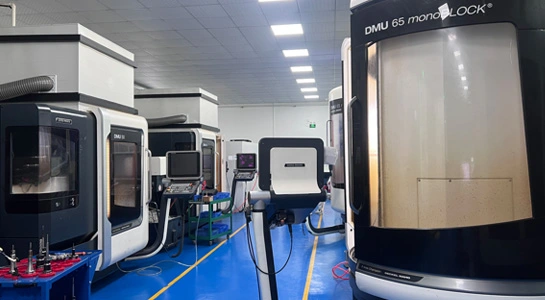
If you choose the right CNC Machining provider, you can be sure that your aluminum parts will meet all of your strict requirements while still being priced competitively and delivered on time. BOEN Prototype specializes in rapid prototyping and low-volume production in both 6061 and 7075 aluminum alloys. We work with OEMs in the auto industry, medical device makers, aerospace developers, and robotics integrators all over the United States. Our highly advanced five-axis machining tools and skilled engineering staff can work with complicated shapes and hold tight tolerances of up to 0.005 inches. Get expert advice on material selection and design optimization for your upcoming CNC Machining application by contacting our team at contact@boenrapid.com to discuss your project needs.
References
1. Davis, J.R. (2001). Alloying: Understanding the Basics. ASM International, Materials Park, Ohio.
2. Kalpakjian, S. and Schmid, S.R. (2014). Manufacturing Engineering and Technology, 7th Edition. Pearson Education, Upper Saddle River, New Jersey.
3. Kaufman, J.G. (2000). Introduction to Aluminum Alloys and Tempers. ASM International, Materials Park, Ohio.
4. Machinery's Handbook, 31st Edition (2020). Industrial Press Inc., New York.
5. Sanders, R.E. (2019). Technology Innovation in Aluminum Products. Journal of Materials Engineering and Performance, Volume 28, Issue 4.
6. Starke, E.A. and Staley, J.T. (1996). Application of Modern Aluminum Alloys to Aircraft. Progress in Aerospace Sciences, Volume 32, Issues 2-3.

How Can We Help?

Your Trusted Partner in Rapid Manufacturing.