How Can Companies Ensure Quality When Outsourcing Manufacturing Overseas?
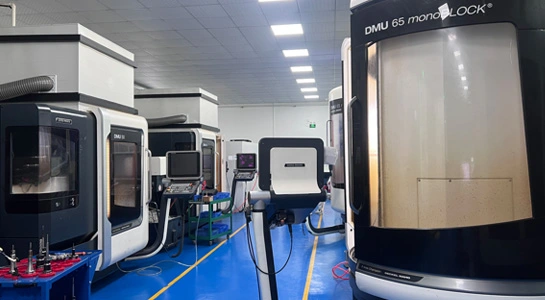
Ensuring quality when outsourcing manufacturing overseas starts with understanding that China Manufacturing has evolved significantly, offering world-class infrastructure and precision capabilities when partnered correctly. Companies succeed by implementing rigorous supplier qualification, establishing detailed quality control protocols, leveraging third-party inspections, and maintaining transparent communication channels. The key lies not in avoiding overseas partnerships but in building structured frameworks that align supplier capabilities with your specific technical requirements, whether you're producing automotive components, medical device prototypes, or aerospace-grade parts. Quality assurance becomes achievable when you combine strategic vetting, continuous monitoring, and collaborative improvement initiatives with the right manufacturing partner.
Understanding Quality Challenges in Overseas Manufacturing
When B2B procurement teams outsource production to international partners, they have to carefully navigate the unique challenges that come with this. Even tho a lot has changed in the last ten years, there are still some problems that need to be fixed.
The Root Causes of Quality Inconsistencies
Even within the same area, production standards are very different between sites. We've seen that many quality problems are caused by bad process documents rather than a lack of expert know-how. Suppliers sometimes put speed ahead of following specifications exactly, especially when they are under a lot of time pressure. This stress leads to problems with measuring correctly, choosing the right materials, and finishing the surface, all of which have an immediate effect on how well the finished product works. One more reason is that customer expectations and seller interpretations of technical drawings aren't always the same. This is especially true when GD&T (Geometric Dimensioning and Tolerancing) standards aren't spelled out in contracts.
Communication Barriers and Their Impact
Business methods that are different from culture to culture can lead to misunderstandings about what quality goals are. In one factory culture, "acceptable tolerance" might mean something very different from the standards needed by North American OEMs for aircraft or medical devices. During specification reviews, small differences in language can make it hard to see important technical details. Time zone differences make it harder to solve problems quickly when they come up during production runs. Setting clear rules for documentation and using visual aids like annotated CAD models has helped us a lot in closing these gaps in understanding.
Financial and Reputational Consequences
Quality problems have big prices that go beyond the loss of production. One batch of non-compliant auto interior parts can cause delays in the release of new cars, which can lead to fines and bad relationships with suppliers. Medical device makers have to deal with strict rules from regulators and the possibility of market bans, which destroy the trustworthiness of their brands. When testing labs find differences in the sizes of prototypes, they lose valuable development time and have to push back the whole project schedule. These domino effects show why investing in proactive quality management is better than putting money into reactive firefighting after problems happen.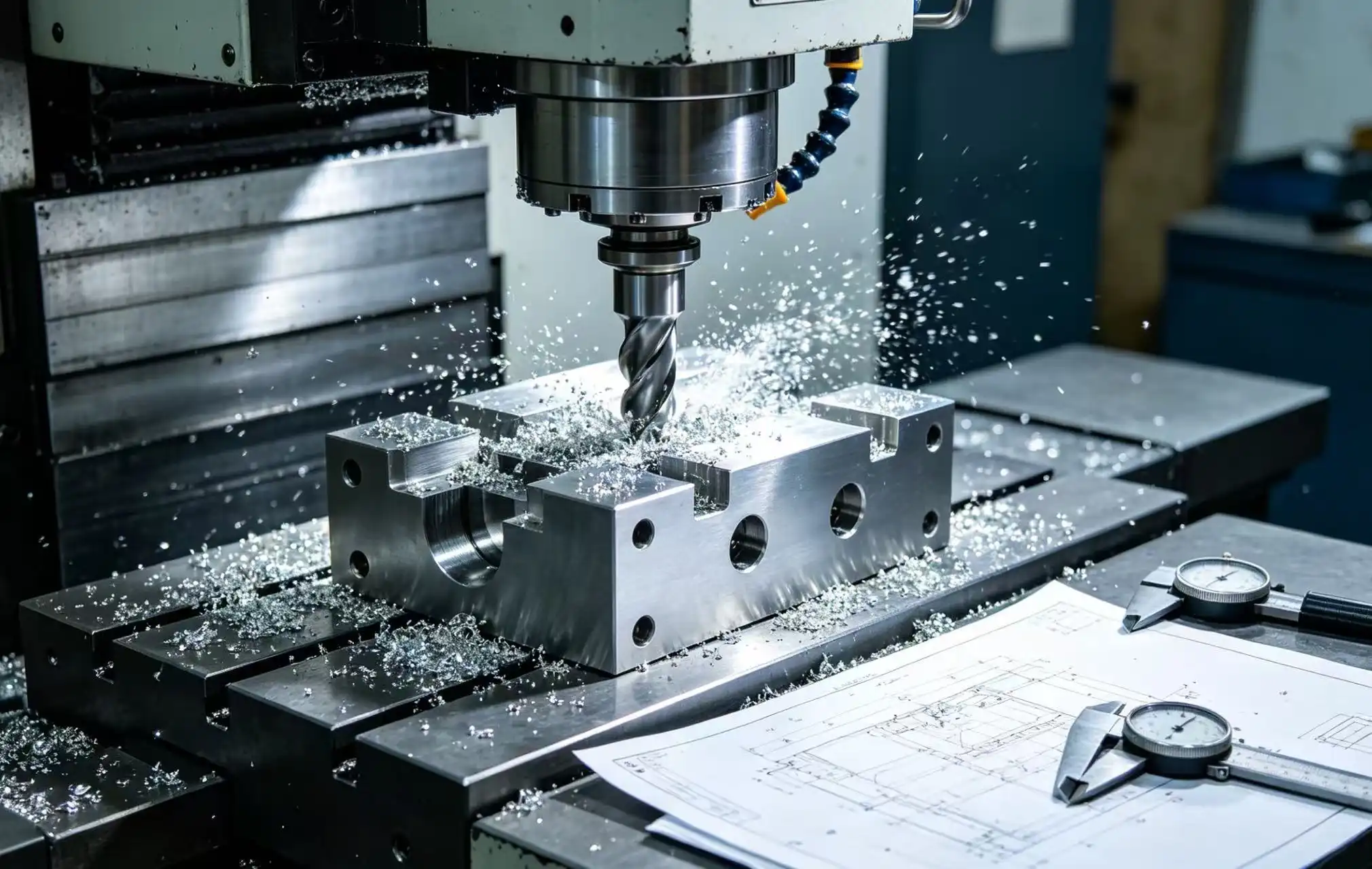
Proven Strategies to Ensure Quality When Outsourcing Manufacturing
To keep up the high quality of production abroad, you need deliberate processes instead of hopeful confidence. The following strategies have worked well for businesses in a wide range of fields, from biotech startups to EV startups.
Rigorous Supplier Qualification Process
Only thorough screening can guarantee a China Manufacturing producing relationship's long-term success. Instead of just pricing comparisons, we recommend thorough assessments that consider many practical factors.
Seller evaluation begins with certification verification. The ISO 9001:2015 certification shows basic quality management processes. Industry standards like IATF 16949 for autos and ISO 13485 for medical items demonstrate significant expertise. Request copies of current certificates and verify with certifying agencies. Independent verification is essential since some dealers exhibit obsolete or false papers.
On-site audits provide operational details not in documentation. Look at equipment calibration records, cleanroom standards for sensitive jobs, and operator training programs when you visit a facility. Check for CMM service and statistical process control charts on manufacturing floors. Well-organised tool management and detailed maintenance plans indicate operational maturity.
Sample testing under controlled settings demonstrates capability. Send the identical technical specs to different providers and evaluate their response times, prototype quality, and communication. Third-party labs should perform destructive testing, dimensional analysis, and material composition checks on samples. This comparison shows which partners have the technical depth your projects need.
Establishing Detailed Quality Standards
Quality issues result from ambiguity. Full specs eliminate comprehension gaps that lead to costly solutions. Technical designs must include comprehensive GD&T callouts, material standards with recognised alternatives, Ra-valued surface polish criteria, and heat treatment parameters if appropriate. Car lighting housings need optical clarity criteria, and medical device samples need biocompatibility papers. Colour and texture matching are required for consumer electronics enclosures. More explicitly describing what you require reduces production shocks. Before starting production, create First Article Inspection (FAI) procedures that detail every measurement point, testing process, and acceptance criterion. This paper specifies contract quality standards for all future work. Include photographs of acceptable and unacceptable conditions for subjective variables like surface defects and parting line clarity.
Implementing Comprehensive Quality Control Procedures
Instead of a final assessment, quality assurance works best with several checks.
Before full production runs, in-process checks catch errors. After filling a mould hole with an injection mould, CNC cutting precise features, or coating, do quality tests. Dimensional verification and random sampling at these intervals prevent errors from accumulating. This method reduces scrap by 30–40% compared to end-of-line verification.
Independent third-party QC services verify supplier honesty to avoid conflicts of interest. Companies like SGS, Bureau Veritas, and specialised technical inspection organisations do on-site manufacturing audits. Detailed photos document the results. Without travelling, their reports show buying teams what's happening in the facility and how compliant things are.
Quality control's future is digital monitoring integration. Modern manufacturing tools' IoT devices monitor injection pressure, temperature profiles, and cycle times in real time. Cloud-based dashboards alert quality managers when process variables exceed permissible limits so they can address them before defects occur. Predicting makes quality management proactive.
Comparative Insights: Manufacturing Hubs and Quality Considerations
To choose where to make things, you need to know how the cost, capability, and quality maturity of each area compare.
China's Manufacturing Infrastructure Advantages
China's decades of economic growth have made its supply chain more complex than any other in the world. Within a 100-kilometer radius of a province, there are often whole ecosystems that cover everything from raw materials to precision cutting to surface processes to assembly services. This combination makes it possible to do many iterations quickly, which is important for testing and small-scale production. Tier-one facilities now use advanced automation on par with European and North American norms, especially in the electronics, aircraft, and automobile industries. The level of quality varies a lot by area and building tier. Usually, quality control is stricter at production centers on the coast that work with foreign OEMs than at sites in the middle of the country that focus on local markets. Being aware of this stratification helps buying teams find the right providers. Since 2020, the country's technical skills have improved a lot thanks to its engineering talent pool and ongoing investments in high-precision equipment.
Alternative Destinations: Vietnam, India, and Mexico
Vietnam attracts businesses looking for alternatives to China because it has low labor costs and is becoming better at making gadgets. As a result, the country's supply chain system is still not as well developed, which could mean that goods have to be imported, which will make lead times longer. Quality management systems are getting better, but they're not as deep as they are in China's well-established factories. India has a lot of talented engineers and is growing its production capabilities, especially in the pharmaceutical and car industries. Problems with infrastructure and differences in rules between regions can make it harder to keep up with operations and quality standards. The country is great at software-integrated manufacturing solutions, but it can be hard to make a lot of precise mechanical parts. Because Mexico is close to U.S. markets, it has better trade agreements and easier logistics. The level of manufacturing in the aerospace and car industries is very high, but most of the suppliers are located in certain areas. The cost of labor has been steadily going up, making Asian alternatives more affordable.
Making Informed Sourcing Decisions
Location choices should be based on your specific needs, not on what other people think. Asian supply lines and automation systems are well-developed, which helps the creation of large amounts of consumer electronics. Facilities with a past of AS9100 certification might be better for low-volume aerospace designs that need a lot of paperwork. Medical device companies look for partners who have experience working safe materials and keeping clean rooms, no matter where they are located. Look at the total landing cost instead of just the piece price. Think about how long it takes to ship, how much it costs to keep inventory, how often things don't work right, and how to protect your intellectual property when considering choices. A slightly higher unit price from a dependable supplier is often more cost-effective than cheaper options that lead to a lot of rejections and delays in the schedule.
Framework for Efficient Procurement and Quality Assurance
Structured ways of working with suppliers lead to consistent results across many projects and types of products.
Leveraging Sourcing Platforms and Due Diligence
Trusted B2B platforms verify business licenses, backgrounds, and supplier reviews to filter suppliers. These platforms reduce due diligence but don't eliminate it. Verify website facts via independent research, trade references, and facilities audits. Determine if potential partners are OEMs with their own resources or ODMs with outside resources. Working with an OEM gives you more control over quality and process aspects. ODM agreements can speed up product launch, but they require close subcontractor monitoring. List all equipment, maximum production volumes, and current capacity for full capacity assessments. Overworked providers struggle to maintain quality. If a facility is 85–95% full, your projects may not have enough bandwidth, and if it's less than 50% full, it may have financial issues that threaten its survival.
Understanding Procurement Variables That Impact Quality
Expectations about lead times effect quality. Suppliers forgo verification or rush setups due to tight schedules, increasing failure risk. Results improve with realistic First Article Inspection, process validation, and corrective action dates. We propose adding 15–20% to lead times for key projects that must be completed without difficulties. Payment terms affect supplier conduct and quality. Net-90 conditions may make it hard for smaller firms to pay, necessitating action. Quality gates like 30% at order, 40% after FAI approval, and 30% after delivery align financial benefits with quality goals. Reliable banks' letters of credit comfort buyers and sellers. Process optimisation and equipment dedication depend on order volume. Prototype runs of 10 to 50 units and production runs of 5,000 or more require various steps. Ensure your provider has process flexibility and knows how much you need during the product's lifecycle. CNC shops can accurately operate in tiny quantities, whereas injection moulding operations need a certain quantity to justify new tools.
Ongoing Supplier Relationship Management
Continuous cooperation improves quality over transactional interactions. Check KPIs including on-time deliveries, first-pass yield rates, customer return rates, and corrective action reaction times every three months. Data-driven discussions improve things and reinforce quality goals. Regular audit plans demonstrate accountability and teamwork. Full annual assessments and six-month process reviews keep quality systems current. Cross-functional teams with engineering, quality, and supply chain experts can provide many perspectives. Working together to better strengthens both sides. When injection-molded items have measurement issues, engaging with suppliers to enhance mould design or process parameters benefits everyone. Sharing technological knowledge and investing in supplier skills offers a business an edge above typical commercial ties.
Case Studies and Practical Tips for B2B Clients
Experiences from the real world show how planned methods to quality work and what not to do.
Automotive Tier-1 Supplier Success Story
A big company that makes lights for cars needed rapid prototyping for next-generation LED housing designs that had to be heat-resistant and clear to the eye. At first, quotes from local sources showed lead times of 8 weeks. They found a specialized Chinese partner that could do advanced injection molding and had optical testing tools on site. They set clear quality standards with thorough design papers that included photometric requirements and thermal cycling procedures. Within three weeks, the provider finished the First Article Inspection, and ongoing design changes went smoothly thanks to clear communication lines. The partnership made production-ready prototypes 40% faster than options made in the United States, while still meeting strict quality standards for cars. Key to success were giving detailed specifications up front, choosing a seller with the right tools, and holding weekly video conferences while the project was being built.
Medical Device Manufacturer's Quality Recovery
A biotech company that makes cases for diagnostic equipment found that the CNC-machined aluminum housings they got from their first overseas supplier were not the right size. Positional errors in critical mounting holes were more than ±0.15mm, which meant that assembly requirements were not met. Instead of giving up on buying from other countries, they came up with a recovery plan that included third-party inspection services, updated GD&T paperwork, and ratings of the suppliers' abilities. They found out that their first partner didn't have the five-axis cutting capabilities they needed for complicated shapes. They set up fixture-based inspection procedures and real-time dimensional reports after switching to a provider with advanced CNC equipment and ISO 13485 certification. Later production runs got 98% first-pass yield rates, showing that good quality systems and matching suppliers can get past initial problems.
Common Pitfalls and Avoidance Strategies
Cost-based decisions without capability evaluation typically fail. Cheap prices generally come from providers without quality tools or systems, resulting in costly repairs. We've seen companies pay three times as much as they saved to fix quality issues caused by bad relationships. Consider the whole cost of ownership, including repairs, delays, and image risk, as well as the unit price. Subpar communication can prevent issues. Misunderstandings are likely when you solely email complex technical conversations. Schedule regular video sessions, use 3D models with notes to explain, and share documents in digital workspaces. Make sure you have documented proof that you understand crucial standards and examples of how you interpreted them. Disagreements are no longer your responsibility without records. Document authorised drawings, material certifications, inspection reports, and email chains. Digital document management systems' version control prevents confusion when specifications change. This paperwork aids quality investigations and warranty claims.
Practical Procurement Checklist
Companies seeking international manufacturing partnerships should consider these factors:
Supplier screening should verify that the company is registered, financially stable (via credit reports), certified, has customer references from similar industries, has up-to-code facilities, and has the technical skills to perform your processes, such as CNC machining, injection moulding, or die casting.
Contract specifications must include precise drawings of technical requirements, a list of acceptable materials, quality standards with inspection schedules, intellectual property protections, delivery terms with late delivery penalties, and dispute resolution.
Inspection protocols must include First Article Inspection processes with dimensions reports and material certifications, in-process inspection plans with digital proof, pre-shipment final inspection forms, and third-party audit acceptance criteria.
Delivery and logistics planning should cover what packaging is needed to safeguard goods during international shipping, who files customs paperwork, how to choose the fastest and cheapest shipping option, and how to examine goods upon arrival.
Conclusion
With these methodical methods, getting goods from other countries goes from being a risky gamble to a strategic advantage that speeds up product creation while keeping costs low. In conclusion, quality control in China Manufacturing factories overseas works best when people plan ahead and don't rely on luck. Companies that put money into rigorously qualifying suppliers up front, set up thorough quality standards, use multi-stage testing systems, and keep working together always reach their technical and business goals. When looked at strategically, the industrial world has a lot to give. When you work with the right partner, you can get both speed and accuracy when making prototypes for cars, medical devices, or aerospace parts. To be successful, you need to make sure that the companies you work with have the right certifications, tools, and quality culture, and that you communicate clearly and keep records throughout the relationship.
FAQ
What are the most effective quality control methods for overseas manufacturing?
The best results come from multistage testing. Before full production starts, do a First Article Inspection and record the dimensions and material certifications. Set up in-process checks at key points in the manufacturing process to find problems early on before they get worse. Hiring an independent third-party inspection service will give you unbiased proof with photos. When suppliers offer Industry 4.0 integration, use digital monitoring systems that keep an eye on process parameters in real time. If you use all of these methods together instead of just one final check, you can cut down on defects by a large amount and fix problems before they get worse.
How can I verify supplier reliability and certifications?
Confidence comes from direct verification thru multiple channels. To find out how long a certificate is valid and when it will be audited, contact certification bodies like ISO or registrars that specialize in your industry. Do facility audits on-site, looking at records of machine upkeep, documents of operator training, and the application of quality systems. Ask companies in similar fields for customer recommendations and check their experiences directly. Credit checking services can help you check if a seller is financially stable. Before committing to bigger volumes, send in test projects that check how well communication works, how accurate technical interpretations are, and how well the work is completed. This thorough due diligence checks to see if the capabilities being advertized are really possible.
What are realistic lead time expectations and their quality impact?
Depending on how complicated they are, prototypes usually take two to four weeks to make, while low-volume production runs take four to eight weeks, which includes the First Article Inspection and any necessary changes. Because of the tight deadlines, suppliers are forced to skip validation steps, which raises the risk of defects. Set aside 15 to 20 percent of your plan for important jobs that need to be done perfectly. Know that lead times are longer than they would be for normal specs if you need complicated shapes, specialized materials, or a very smooth surface finish. When suppliers give quotes that are too short, they usually don't have enough capacity or are cutting corners during execution. Long-term quality results are better when timelines are balanced and allow for proper process setup, proof, and recording.
Partner with BOEN Prototype for Superior Quality Manufacturing Solutions
If you work with the right partner, quality worries shouldn't stop you from taking advantage of the benefits of manufacturing abroad. BOEN Prototype specializes in making precise prototypes and small batches of products for demanding industries like medical devices, aerospace, consumer electronics, cars, and robots. Because we are experts in CNC machining, rapid injection molding, die casting, vacuum casting, and the latest 3D printing technologies, we can handle all of your manufacturing needs for complicated projects that need more than one process. We have strict quality systems that are in line with international standards. During production, we provide full dimensional inspection reports, material certifications, and open communication. Our engineering team has a lot of experience helping customers deal with technical problems from the beginning of the planning process to the end of delivery, making sure that your parts exactly meet your needs. Companies that work with BOEN Prototype can use their advanced production infrastructure, get specialized project management, and get work done quickly without lowering the quality standards. Get in touch with our team at contact@boenrapid.com to talk about your unique testing or production needs and find out how our skills can help you speed up product development while keeping the accuracy your applications need.
References
1. Johnson, M. & Williams, R. (2023). "Global Manufacturing Quality Standards: A Comparative Analysis of International Production Hubs." Journal of Supply Chain Management and Quality Assurance, Vol. 47, Issue 3, pp. 215-238.
2. Chen, L., Rodriguez, P., & Nakamura, K. (2024). "Quality Control Frameworks for Cross-Border Manufacturing: Best Practices in Supplier Management." International Journal of Production Research, Vol. 62, Issue 8, pp. 1847-1869.
3. Anderson, T. S. (2023). "Risk Mitigation in Overseas Outsourcing: A Procurement Professional's Guide to Quality Assurance." Industrial Engineering and Operations Management Press, Third Edition.
4. Patel, S. & O'Connor, D. (2024). "Emerging Technologies in Manufacturing Quality Oversight: IoT, Digital Twins, and Predictive Analytics." Manufacturing Technology Review, Vol. 31, Issue 2, pp. 92-116.
5. Global Manufacturing Competitiveness Institute (2024). "Annual Report on International Production Quality Benchmarks and Regional Manufacturing Capabilities." GMCI Research Publications.
6. Thompson, K., Lee, H., & Morrison, J. (2023). "Case Studies in Successful Overseas Manufacturing Partnerships: Lessons from Automotive, Medical Device, and Aerospace Industries." Strategic Sourcing Quarterly, Vol. 19, Issue 4, pp. 328-357.

How Can We Help?

Your Trusted Partner in Rapid Manufacturing.