How Do I Find a Reliable CNC Machining Supplier in China?
To find a trustworthy CNC machining provider in China, you need a plan that strikes a balance between quality control and cost-effectiveness. China Manufacturing has changed a lot over the years, now giving advanced precision machining services in the medical, aerospace, automotive, and consumer electronics industries. To be successful, you need to carefully check out your suppliers, make sure you understand their technical requirements, and confirm everything with factory audits and sample tests. Procurement professionals can build partnerships that give consistent results and help long-term product development goals by learning about certification requirements, production capacity, and quality control systems.
Understanding the China CNC Machining Industry Landscape
China is the best at making things because it has spent decades building up its factories, technology, and skilled workers. The CNC cutting business has changed a great deal in particular. It used to just make things, but now it has advanced five-axis machining, tight standards, and works with Industry 4.0. Cities with a lot of factories, like Shenzhen, Suzhou, and Dongguan, have become experts in many areas. When it comes to making prototypes for consumer goods, Shenzhen is great, and Suzhou has become a center for making cars and medical devices.
Adding smart plant technologies has made production more consistent. A lot of suppliers now use digital twin simulation, real-time production monitoring, and automated inspection systems to improve the way they do machining. Another big plus is that the products are easy to find. In your area, you can get engineering plastics, aluminium alloys, different grades of stainless steel, and special materials like PEEK and titanium at fair prices.
Technological Advancements Driving Quality
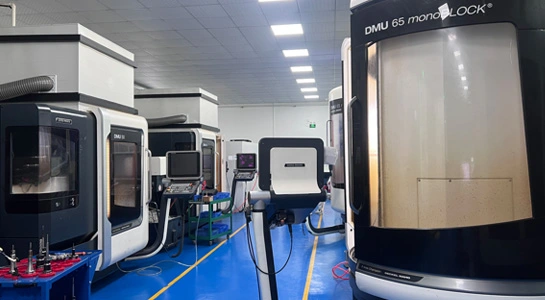
A lot of money has been spent by big companies like DMG MORI, Haas, and Mazak to buy tools for new CNC factories in China. With these machine upgrades, suppliers can now get measurements as accurate as ±0.005mm and surface finishes as smooth as 0.4µm. CMMs and optical inspection systems are used to make sure that parts meet the GD&T standards needed by OEMs and Tier-1 providers in industries that are regulated.
Navigating the Supplier Ecosystem
There are a lot of different kinds of suppliers, from small shops to large factories that are ISO 9001, ISO 13485, and IATF 16949 certified. You can find the right people to work on your project if you know about this range. Small companies often give you freedom and fair prices for trial runs. On the other hand, bigger companies are great at making a lot of things while keeping the quality consistent and using formal paperwork processes.
Key Criteria to Identify a Reliable CNC Machining Supplier in China
A lot of things need to be carefully thot thru in order to find the best business partner. While technical skills are important, the most important things for a project to succeed are dependability and good communication.
Technical Capability Assessment
Make a list of everything you need for China Manufacturing, like the machining processes (3-axis, 4-axis, 5-axis, and turning), the materials you want to use, the limits you need, the surface finish standards you want, and the quantity of parts you need to make. Request that they give you a full list of their tools, the largest parts they can make, the materials they can work with, and any unique processes they offer, like anodising, powder coating, or heat treatment.
First, look for certifications to show that something is good. It shows how to set up basic quality management systems (ISO 9001:2015). Standards for a certain business, like ISO 13485 for medical products or AS9100 for aircraft, show a higher level of compliance. If you get IATF 16949 certification, your supply chain is ready for the auto business. Get copies of recent awards and check them with the groups that gave them to make sure they are correct.
Production Capacity and Scalability
It is important to know how much a source can really do so that production doesn't get stuck as it speeds up. Find out what the tools can make each month, how they work during shifts, and how often they are used. What if a seller is only 90% full? They might not be able to handle big orders or rush orders. Check to see if they won't lose quality when they switch from making a sample to making a small amount of them.
Lead time plans need to match the amount of time you have to make your offering. For CNC prototypes, the normal lead time is two to three weeks. Faster services can cut this time down to five to seven days. It's better to plan for longer periods of time when making production runs, especially when making tools or fittings.
Quality Control Infrastructure
Strong quality systems tell the difference between suppliers who are reliable and those who aren't. Ask them to show you their quality control process in writing. This should include protocols for inspecting incoming materials, checking work in progress, and final inspections. The fact that there are dedicated quality staff, standardized measuring tools, and official inspection records shows that uniformity is important.
Inspection services run by a third party, such as SGS, TÜV, or Bureau Veritas, can provide independent checks during the initial approval of suppliers. Factory audit reports can tell you a lot about how mature an operation is. For example, well-organized workspaces, proper material handling, written procedures, and training programs for employees are all signs of a professional operation.
Communication and Responsiveness
Clear communication routes are necessary for teams to work well together. When you first contact a supplier, look at how responsive they are. Suppliers who give detailed answers to technical questions and acknowledge possible problems show that they are professionally engaged. Language skills are important; project managers and engineers who work for companies that sell to international markets usually speak English.
The different time zones between China and the US can help keep projects on schedule if they are handled well. If you send technical drawings and questions to providers at the end of the workday, they can look them over and reply during their business hours. They'll then send you answers when you get back to work.
Comparing China CNC Machining Suppliers with Other Manufacturing Hubs
To make global sourcing decisions, compare each area's benefits. China has a lot to offer, but looking at other options provides you more knowledge to make good decisions.
Chinese suppliers' cost competitiveness remains a strength. Services are 30%–50% cheaper than in the US or Europe. Due to labour, overhead, and material expenditures. This cost difference is especially important during iterative prototyping, when design modifications require repeated iterations.
Global industrial hubs have become more similar in quality requirements. Chinese suppliers to international OEMs maintain Western-level quality systems. Choosing the right service is crucial. Lower-tier Chinese vendors may struggle to maintain quality, while top-tier manufacturers exceed them.
China's robust China Manufacturing transportation system boosts supply chain efficiency. Major industrial centers are connected to global shipping hubs by well-developed road, rail, and air networks. Container shipping to West Coast ports takes 14–21 days. Air freight can transport items in three to five days if needed.
Vietnam, Mexico, and India provide different trade-offs. Vietnamese workers are cheaper, but its machining facilities and abilities are inferior. North Americans benefit from being near Mexico, which is faster but more expensive. India boasts cheap costs and experienced engineers, but its infrastructure issues might cause inconsistency.
Step-by-Step Process to Source CNC Machining Parts from China
Sourcing that works follows an organized process that lowers risk and keeps the project moving forward.
Define Technical Requirements
Before you contact suppliers, you should make detailed technical documentation. Among these are CAD files in common forms like STEP or IGES, thorough engineering drawings with GD&T callouts, material specifications with grade names, surface finish needs, and forecasts for amount. Clear paperwork gets rid of confusion and lets you give accurate quotes.
Set high guidelines that are relevant to your business. Parts for cars may need PPAP paperwork, medical devices biocompatibility checks, and aircraft parts need to be able to track down materials. By making these expectations clear from the start, suppliers can be sure they can meet regulatory needs.
Identify and Screen Potential Suppliers
There are several ways to find suppliers. Online business-to-business (B2B) sites like Alibaba, Made-in-China, and Global Sources list thousands of manufacturers and let you search for them. Industry trade shows like IMTS and MEDTEC China offer face-to-face chances to meet new people and make connections. Consultants and sourcing agents can help you find sellers who have already been checked out and offer local knowledge.
As a first step, basic qualities like years in business, international experience, appropriate certifications, client references, and a portfolio of similar projects should be looked at. Ask for business profiles, pictures of the building, and case studies that show familiarity with parts that are similar.
Request for Quotation and Evaluation
Send RFQs to three to five qualified suppliers so that you can compare prices. When RFQs are well-structured, they get replies that are similar, which makes review easier. In addition to price, you should look at lead times, payment terms, packaging options, and any extra services that come with the deal, such as inspection reports or material certifications.
Different providers have different ways of setting prices. Some give prices that include materials, machining, finishing, inspection, and packing, while others list each cost separately. Make it clear what each quote means so that similarities are correct. Minimum order quantities (MOQs) are very different. Suppliers who focus on production usually need batch minimums, while prototype experts may take orders for a single piece.
Sample Production and Validation
Order sample parts to make sure they work before committing to mass production. This important step compares what the system can actually do with what it says it can do. Using the right metrology tools, compare samples to drawings, check the quality of the surface finish, make sure the measurements are correct, and make sure the samples work properly in the situations they were meant to be used in.
When you look at a sample in China Manufacturing, you can often find ways to improve the design or the assembly process. Suppliers who work together give feedback on design-for-manufacturing issues that can lower costs or raise quality.
Factory Audit and Verification
Factory audits, whether they are done virtually or in person, are very helpful for understanding how things work. Pay attention to the state of the equipment and how it is maintained, the quality control methods and records kept, the systems for moving and storing materials, the training and skill levels of employees, and the safety and organization standards in the workplace.
When it's not possible to do the auditing yourself, third-party auditing services can do it for you. These papers list the facilities' skills, point out possible dangers, and suggest ways to make things better.
Production Management and Quality Assurance
Set clear rules for how production management can talk to each other. Problems don't get worse when there are regular updates on progress, checks of important milestones, and open lines of communication for expert questions. Ask for pictures or movies that show important parts of the machining process being done and the results of the inspections.
Set up staged inspection procedures so that the first inspection of arriving materials confirms the correct grades and specifications, the second inspection of work in progress finds any differences before it's finished, and the third inspection of the finished product confirms all specifications before it's shipped. For important tasks, you might want to use third-party inspection services to make sure they are correct.
Logistics and After-Sales Support
Arrange shipping methods based on how quickly they need to be sent and how much they cost. Ocean freight is the most cost-effective way to send large packages on flexible schedules, while air freight is best for urgent needs or smaller packages. Knowing Incoterms makes it clear who is responsible for shipping costs, insurance, and getting goods through customs.
Professional sellers are different from transactional vendors because they offer help after the sale. You are protected by clear rules about non-conforming parts, rework processes, and guarantee support. Setting these terms before production stops disagreements.
Building Long-Term Partnerships with Chinese CNC Machining Suppliers
Compared to long-term strategic partnerships, transactional relationships don't offer as many benefits. Stronger ties are built on regular contact. Sharing upcoming product roadmaps, asking suppliers for design feedback, and recognizing good performance are all examples of regular involvement that goes beyond the current needs of the project. This builds a mutual investment in success. Many providers give their best prices, most open terms, and first choice for scheduling to customers who have been with them for a long time.
Understanding other cultures makes working together more effective. Building relationships, respecting hierarchy, and talking to people in a roundabout way are all important parts of Chinese business culture. Taking the time to understand these cultural aspects makes working relationships and solving problems better. Giving constructive comments on problems with quality, delivery performance, and the clarity of communication makes it possible to keep getting better. The best suppliers see feedback not as criticism but as a chance to make things better. A pledge to volume makes suppliers more likely to invest in your success, including process optimization or inventory management systems that help your supply chain.
Conclusion
To find trustworthy CNC machining providers in China, you need to carefully look at their technical skills, quality control methods, and how well they communicate. When suppliers are carefully chosen and managed properly, the China Manufacturing ecosystem has strong advantages in terms of cost, capacity, and technological sophistication. By using structured sourcing processes like laying out clear requirements, carefully screening suppliers, checking capabilities through samples and audits, and setting up strong quality control protocols, procurement professionals can get access to world-class machining services that help develop products in the automotive, medical, aerospace, consumer electronics, and industrial sectors. The best precision, flexibility, and new ideas come from long-term partnerships based on trust, consistent performance, and open communication.
FAQ
What are typical minimum order quantities for CNC machining in China?
MOQs are very different depending on the part's complexity and the supplier's area of expertise. Suppliers that focus on prototypes often take orders for just one piece or as few as five to ten units, which makes them perfect for trying designs and making sure they work. Manufacturers that focus on production usually need at least 50 to 100 pieces to cover setup costs and keep prices low. Higher MOQs may be needed for complex parts that need special tools or fittings so that the cost of the tools can be recouped over time.
How can I be sure that the products I buy from China are accurate and of good quality?
Multiple levels of verification are needed for quality assurance. In the technical documents, you should list the dimensional limits, surface finish requirements, and inspection standards. Ask for thorough inspection reports that include CMM measurement data and certifications of the materials used. For important parts, you might want to use third-party inspection services. Sample production before large sales lets you check that the real powers are what you need. Suppliers who have ISO certifications and formal quality management systems show that they are dedicated to using consistent methods.
What payment methods and terms are standard for international transactions?
A 30% to 50% deposit is usually required upon order confirmation, and the rest is due before the shipment. For bigger deals, a letter of credit can protect both parties, and payment systems like Alibaba Trade Assurance can protect buyers. Customers with whom you already do business may be able to get net payment terms if you can show that you consistently place orders and pay your bills.
Partner with BOEN Prototype for Precision CNC Machining Solutions
BOEN Prototype specializes in providing high-quality CNC machining services for prototypes and small-scale production in a wide range of industries. Our facility has advanced multi-axis CNC machines, as well as rapid injection molding, vacuum casting, and metal fabrication tools to meet all of your product development needs. We serve automotive OEMs, medical device companies, aerospace engineering teams, and robotics companies that need precise parts quickly.
Our team has a lot of experience choosing materials, making designs that are easier to make, and making sure that quality control methods meet international standards. We have the technical know-how and production freedom to help you with your project from the idea stage all the way through production, whether you need working prototypes for validation testing, small batches for market trials, or complex assemblies that need to be made using more than one manufacturing process.
Contact us at contact@boenrapid.com to talk about your CNC machining requirements. We offer free consultations to look over project specs, suggest the best ways to make things, and give you competitive quotes. As a reliable China Manufacturing supplier, we know how important quality, dependability, and quick communication are for B2B relationships to work.
References
1. Smith, J. & Chen, L. (2022). Global Manufacturing Competitiveness: Comparative Analysis of CNC Machining Hubs. International Journal of Production Economics, Volume 245, pp. 108-124.
2. Wang, H. (2023). Quality Management Systems in Chinese Manufacturing: Evolution and International Standards Compliance. Manufacturing Technology Research, Volume 18, Issue 3, pp. 67-89.
3. Rodriguez, M. & Liu, Y. (2021). Supply Chain Risk Management in Cross-Border Manufacturing Procurement. Journal of Business Logistics, Volume 42, Number 4, pp. 445-467.
4. Thompson, R. (2023). Industry 4.0 Integration in Asian Manufacturing: Case Studies from Chinese CNC Facilities. Advanced Manufacturing Technology Review, Volume 31, pp. 234-256.
5. Anderson, P., Zhang, W., & Kumar, S. (2022). Supplier Selection Frameworks for Global B2B Procurement: Empirical Evidence from Manufacturing Industries. International Business Review, Volume 29, Issue 2, pp. 156-178.
6. Lee, K. & Wu, X. (2023). Cost-Quality Trade-offs in Global Manufacturing Sourcing Strategies. Strategic Management Journal, Volume 44, Number 6, pp. 892-918.

How Can We Help?

Your Trusted Partner in Rapid Manufacturing.