Who Can Manufacture Functional Prototypes Before Mass Production?
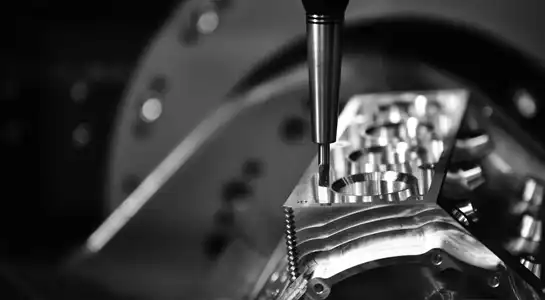
Specialized manufacturers offering Rapid Prototyping services are equipped to produce functional prototypes before mass production begins. These partners typically possess advanced manufacturing capabilities spanning CNC machining, 3D printing technologies (SLA and SLS), vacuum casting, rapid injection molding, and metal forming processes. Unlike traditional machine shops, dedicated prototype manufacturers understand the urgency and precision required during product development phases. They deliver production-grade material options—from engineering plastics like PEEK and POM to aerospace-grade metals such as Titanium and Inconel—enabling engineers to conduct authentic functional validation under real-world stress conditions before committing capital to expensive tooling.
Understanding Functional Prototyping and Its Role Before Mass Production
Product development teams in all kinds of industries have the same problem: how can they make sure that a design works without spending a lot of money on mass production tools that might need expensive changes in the future? Functional prototyping is the most important link between an idea and a real product.
Functional prototypes, on the other hand, are exact copies of how final production parts will work mechanically, thermally, and structurally. They are different from artistic sketches or visual models. When a Tier-1 supplier for the auto industry tests a battery housing part or a medical device maker tests an ergonomic surgical instrument grip, they need prototypes that work the same way as mass-produced versions. It is not possible to get this level of detail from sketches or CAD images alone.
Why Functional Validation Matters
When engineers are making parts for EV powertrains, they need to know how materials react to places with a lot of stress and changes in temperature. Robotics engineers who are making AGV structure frames need samples that show how much weight they can hold. Before approval testing, aerospace teams that are making UAV airframes need to check the weight-to-strength ratios. For each situation, prototypes must be made from materials that are meant to be used in production using methods that keep the mechanical properties of the materials uniform.
Key Technologies Driving Modern Prototyping
Different ways of making things have changed how businesses do pre-production validation. With additive manufacturing, you can make complicated shapes that wouldn't be possible with standard methods. On the other hand, CNC subtractive processes give you the most accurate measurements and best surface finishes. Rapid injection molding makes small amounts of materials that are exactly the same for production. Vacuum casting makes exact copies of small features so that they can be looked at for both looks and function. Which of these technologies to use depends on the needs of the material, the tolerances that need to be met, and the testing goals.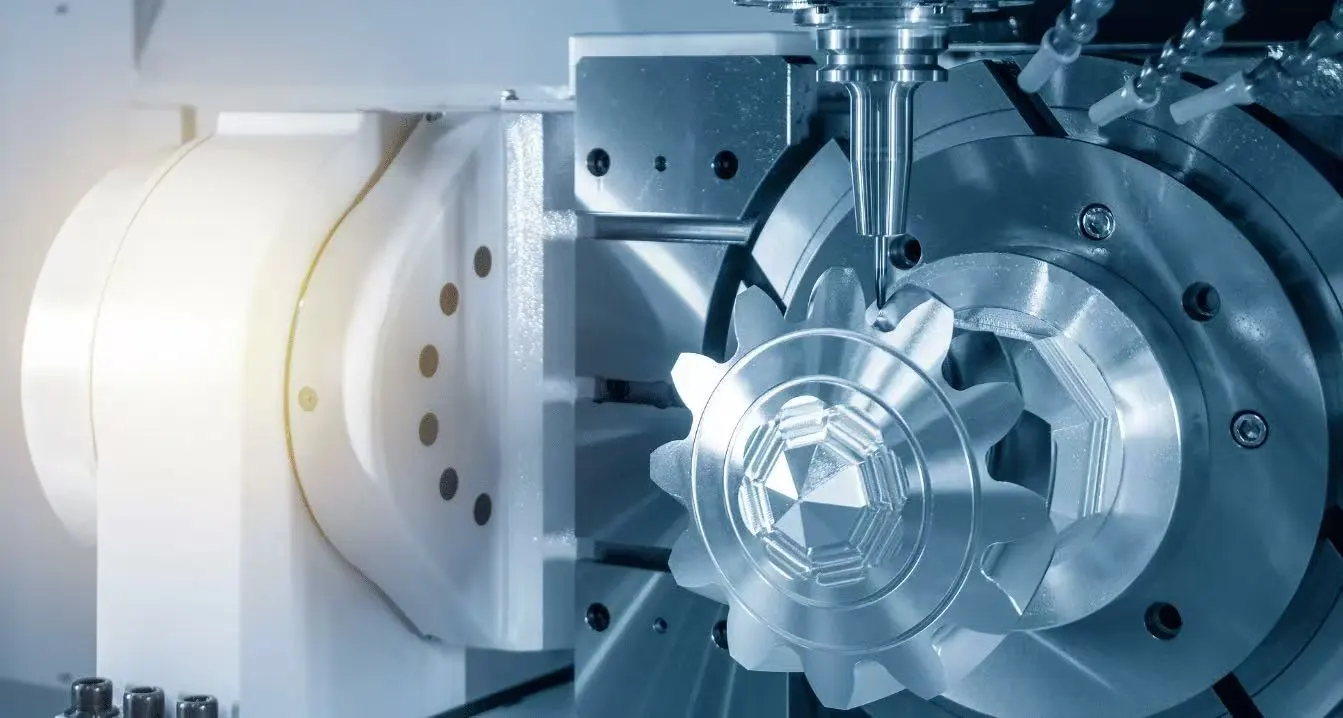
Who Can Manufacture Functional Prototypes? Key Providers and Their Capabilities
The places where Rapid Prototyping are made have changed a lot since the days of small machine shops and university production labs. Product development teams today have a number of different types of providers to choose from, each with its own set of benefits.
Specialized Rapid Prototyping Studios
Professionals who specialize in modeling do nothing but pre-production manufacturing. These facilities keep a wide range of equipment for different types of processes and materials, which lets them suggest the best solutions for each job. Their engineering teams have worked on a wide range of projects, from consumer products enclosures to aircraft structural components. This wide range of contact leads to useful design-for-manufacturing feedback during the prototyping process.
Industrial Manufacturing Suppliers
Larger industrial suppliers often have separate departments for prototyping in addition to their main production departments. This arrangement has special benefits when going from a prototype to production, because the same facility knows how your part has been made in the past and can make the best tooling choices based on that information. Companies in controlled fields like medical devices, aircraft, and automobiles really value this consistency because it means that quality systems and compliance paperwork stay the same throughout development cycles.
Evaluating In-House Versus Outsourced Production
Some companies buy tools and train their staff to do their own testing so they can keep full control over intellectual property and the speed of iterations. This method works well for businesses that make a lot of prototypes and know a lot about specific materials. Most businesses, though, find that outsourcing to experienced partners saves them money, gives them access to more technology platforms, and speeds up the project completion. When it's not a very high-volume prototype, the cost of keeping cutting-edge equipment that works with multiple process technologies rarely supports the initial investment.
Geographic and Industry Specialization
How close you are to manufacturing hubs affects lead times and how well you can work together. Providers that are close to car routes know the exact testing procedures and material certifications that OEMs need. People who work with medical device clusters stay up to date on biocompatibility standards and requirements for sterilization validation. Matching your partner's industry expertise to the specific needs of your field greatly cuts down on development delays and speeds up time-to-market.
The Rapid Prototyping Process: Steps to Producing a Functional Prototype
Learning about the steps used to make a prototype helps procurement teams set realistic goals and work together with their manufacturing partners more efficiently. Rapid Prototyping workflows allow for high-fidelity iteration before final commitment.
Design Preparation and Material Selection
Every good prototype starts with CAD data that has been optimized. Engineers send over solid models that manufacturing teams look over for possible problems, like undercuts that make machining harder, wall thicknesses that affect the quality of casting, or features that are too big for the equipment. This study of the design for manufacturing finds ways to make it easier to make without affecting the usefulness.
The choice of material has a direct effect on how well the sample works. For housings for consumer electronics, Aluminum 6061 is very easy to work with and has a moderate level of strength. Medical tools made of Stainless Steel 17-4 PH don't rust as easily as other types of steel. PEEK engineering plastic can be sterilized over and over again. Titanium Grade 5 gives UAV parts strength-to-weight ratios that are good enough for use in flight. There are dozens of different materials that expert prototype makers can use, and each one has been tested for compliance and known to have certain mechanical qualities.
Manufacturing Execution and Post-Processing
Toolpath programming and machine setup are the first steps in Product Development production. Multi-axis CNC machines take away material with accuracy down to the micron level, and additive systems add levels based on the best settings. During production, operators keep an eye on the accuracy of the dimensions and the quality of the surface, making changes in real time to keep up with specifications.
Post-processing turns parts that have been made or printed into prototypes that are ready to use. To get a certain level of surface roughness, CNC parts are deburred, bead blasted, or polished. Parts made of metal are heated, anodized, or plated, depending on what they need to do. To match the design purpose, additively made parts often need to have their supports removed and their surfaces smoothed out. These steps are very important because the quality of a prototype compared to the final result rests a lot on how well the post-processing is done.
Quality Assurance and Functional Testing
Prototypes go through strict inspection procedures before they are sent out. Coordinate Measuring Machines (CMM) make detailed dimensional reports by comparing complicated 3D shapes to CAD specifications. Optical measure systems check the features of delicate parts without touching them. Assemble fit is checked with thread gauges. Material approvals, like Mill Test Reports and Certificates of Conformance, list the chemicals that make up a material and its mechanical qualities.
Advanced testing makes sure that the functionality works as expected in real-life situations. According to ASTM B117 standards, corrosion resistance is tested with salt spray. Testing for hardness shows that heat treatment works. Profilometry of surface roughness measures friction factors that are important for moving parts. This thorough testing makes sure that samples really show how things will work in production.
Comparing Rapid Prototyping with Traditional Manufacturing Methods
Product creation teams have to figure out how to use different manufacturing methods, each of which has its own pros and cons when it comes to speed, cost, accuracy, and growth. Rapid Prototyping serves as an essential alternative to conventional techniques during development.
Speed and Iteration Flexibility
With traditional tooling methods like injection molding, it can take weeks or months to make mold bases, cut holes, and do test runs before the first articles are sent out. With this schedule, design iterations are too expensive and take too long. Rapid Prototyping doesn't use any tools at all—CNC machines cut parts directly from CAD data, and additive systems build parts without molds by layering them together. This direct-from-digital method cuts down on time from weeks to days, which lets designers make more than one version of a design within the normal budget for development.
Material Properties and Precision
During CNC machining, tolerances are held to be very accurate, usually within ±0.01mm to ±0.05mm, and the full mechanical qualities of mass materials are kept. The strength, stiffness, and heating properties of parts made from Aluminum 7075 or Stainless Steel 316 are the same as those of mass-produced parts. This material accuracy is very important when prototypes need to be able to handle real-world pressure.
With additive manufacturing, you can make internal channels, organic shapes, and consolidated assemblies that aren't possible with traditional methods. But the qualities of a material can change depending on how it was built and how it was treated afterward. Knowing these differences helps teams choose the right technology: additive for complicated shapes that only need average mechanical performance, and CNC for high-stress situations that need materials to behave the same way during production.
Economic Considerations Across Production Volumes
For quantities ranging from a single unit to several hundred pieces, Rapid Prototyping performs admirably economically. If you don't spend money on tools, the cost per unit stays pretty stable no matter how big the batch is. Traditional methods, such as injection casting, cost a lot to set up the tools for, but they offer much lower costs per piece as the number goes up. Depending on the complexity of the part and the choice of material, the cost crossover usually happens between 500 and 2,000 pieces.
Selecting the Right Rapid Prototyping Partner: Criteria and Best Practices
Picking a manufacturing partner has a big impact on development timelines, the quality of prototypes, and the success of the final product. A number of assessment factors should be carefully Rapid Prototyping thought through.
Technical Skills and a Portfolio of Equipment
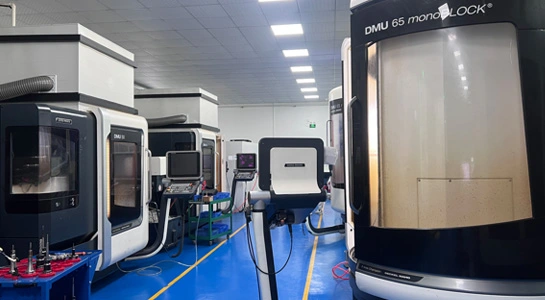
Check out possible partners to see how many production technologies they have. Multi-process capabilities, which include CNC machining, additive manufacturing, casting, and modeling, give you the freedom to change designs and meet new needs as they come up. The quality of the equipment is very important. Facilities that use advanced five-axis machining centers, industrial-grade SLA and SLS systems, and precision inspection equipment consistently get better results than those that use basic equipment.
Industry-Specific Expertise and Compliance
Different industries have very different regulatory needs. Biocompatible materials, cleanroom production settings, and ISO 13485 quality methods are needed to make medical device prototypes. Aerospace parts need to be certified to AS9100 standards and have full material tracking. Automotive producers want PPAP paperwork and guidelines that are in line with IATF. Partners who have worked in your business before naturally understand these standards. This lowers the risk of not meeting them and speeds up the certification process.
Communication and Project Management
Responsive communication and clear project tracking are necessary for collaboration to work well. Leading prototype makers give each project its own project manager, who keeps everyone up to date, looks out for problems before they happen, and coordinates complicated assemblies with many parts. This level of involvement changes the provider relationship from one of transactions to one of collaboration, which allows for a real design partnership throughout the development process.
Lead Time Reliability and Capacity Flexibility
Development plans rarely go exactly as planned. Being able to adapt to tight deadlines or sudden increases in volume is a very important trait. Partners should be judged on how often they meet deadlines and how willing they are to help with urgent needs. Scaling up or down their capacity without sacrificing quality is possible in facilities that have a lot of both equipment and skilled workers.
Conclusion
Choosing the right production partner for working prototypes has a direct effect on the success of product development in every field. Companies that use specialized Rapid Prototyping tools get their products to market faster, with fewer risks, and with faster validation cycles than companies that only use old methods or don't have enough internal resources. When you combine advanced manufacturing technologies with production-grade materials and industry-specific knowledge, you can make samples that really do work like the final product. Working together with skilled prototype makers can help you turn your ideas into tested designs that are ready for mass production, whether you're making car engines, medical tools, space structures, or consumer electronics.
FAQ
What lead times should we expect for functional prototypes?
Standard turnaround times are three to ten business days, but they can be longer or shorter depending on the complexity of the part, the choice of material, and the finishing needs. Simple CNC parts made from common materials like Aluminum 6061 are usually finished in three to five days. It could take 10 to 14 days for complex structures that need multiple steps, rare materials, or a lot of surface finishing. For jobs that need to be done quickly, we offer expedited services that could send parts within 24 to 48 hours if production schedules allow it.
Can prototype tolerances match production specifications?
Of course. CNC development uses the same tools and methods as mass production cutting, but because the tools don't wear out as quickly in short runs, tolerances are often tighter. Standard features keep accuracy of ±0.01mm to ±0.05mm, and high-precision processes reach ±0.005mm for important features. This attention to detail in terms of dimensions makes sure that prototypes accurately show how the production assembly will fit and work.
Which materials work best for high-stress testing applications?
Most high-stress prototype work is done with metal alloys. The corrosion- and strength-resistant properties of Stainless Steel 17-4 PH are very good. The strength-to-weight ratio of Aluminum 7075 is very high. Titanium Grade 5 performs at an aerospace level in harsh environments. The choice of material is based on the type of stress, the environment, and the testing goals. Material suggestions are made by experienced makers based on your useful needs.
How are complex internal features manufactured?
Advanced five-axis CNC machining can work on complicated shapes from more than one angle at the same time. Electrical Discharge Machining (EDM) can make undercuts and holes inside of things that can't be done with regular cutting tools. With additive manufacturing, organic forms and internal pathways are built in. The best way to do something depends on how complicated the feature is, what materials are needed, and how close the tolerances need to be.
Partner with BOEN Prototype for Your Rapid Prototyping Needs
To get through the complicated process of making a functional prototype, you need a manufacturing partner with a wide range of skills, in-depth knowledge of the industry, and a strong dedication to quality. BOEN Prototype specializes in making production-grade prototypes for a wide range of industries, including medical devices, aircraft, robots, consumer electronics, and industrial equipment. Our building has CNC machining, rapid injection molding, vacuum casting, SLA and SLS additive manufacturing, metal pressing, die casting, and compression molding all in one place. This gives you full flexibility as you develop your product. We keep a lot of industrial plastics and aerospace-grade metals in stock, so we can test their real-world functionality before committing to mass production. We can turn around your Rapid Prototyping orders quickly without lowering the quality of the surface or the accuracy of the measurements. Get in touch with our engineering team at contact@boenrapid.com to talk about your project needs and get a detailed quote that fits your development timeline and performance requirements.
References
1. Gibson, I., Rosen, D., and Stucker, B. (2015). Additive Manufacturing Technologies: 3D Printing, Rapid Prototyping, and Direct Digital Manufacturing. New York: Springer.
2. Kalpakjian, S., and Schmid, S. R. (2014). Manufacturing Engineering and Technology. Upper Saddle River: Pearson Education.
3. Pham, D. T., and Dimov, S. S. (2001). Rapid Manufacturing: The Technologies and Applications of Rapid Prototyping and Rapid Tooling. London: Springer-Verlag.
4. Ulrich, K. T., and Eppinger, S. D. (2016). Product Design and Development. New York: McGraw-Hill Education.
5. Groover, M. P. (2013). Fundamentals of Modern Manufacturing: Materials, Processes, and Systems. Hoboken: John Wiley & Sons.
6. Campbell, R. I., Bourell, D. L., and Gibson, I. (2012). "Additive Manufacturing: Rapid Prototyping Comes of Age." Rapid Prototyping Journal, 18(4), 255-258.

How Can We Help?

Your Trusted Partner in Rapid Manufacturing.