How Surface Treatment Improves Mechanical Part Performance?
By changing material surfaces at the molecular and microstructural levels, surface treatment is a crucial engineering procedure that considerably improves the performance of mechanical parts. Components undergo these specialized treatments to enhance hardness, decrease friction coefficients, and improve corrosion resistance for use in demanding industrial applications. Surface treatment is a process that changes the chemistry and topography of a material's surface. This makes it more resilient to things like severe temperatures, repeated stress cycles, and rough working conditions, which would normally cause mechanical parts to break easily.
Understanding Surface Treatment and Its Impact on Mechanical Parts
Surface treatment is a broad term for a set of complex procedures used to improve the performance, longevity, and dependability of mechanical parts by changing their surface qualities. Advanced surface treatments go deeper than traditional coatings, altering the chemical composition and microstructure of materials to increase their corrosion resistance, wear properties, fatigue life, and aesthetic appeal. This is in contrast to standard coatings, which just provide protective layers.
There are three main types of modern industrial techniques: mechanical methods, which introduce compressive stresses, chemical treatments, which create protective conversion layers, and thermal processes, which diffuse strengthening elements into surface zones. Mechanical methods include shot peening and surface rolling. Chemical treatments include anodizing, electroplating, and phosphating. Each method preserves the essential material characteristics of the basic component while addressing certain performance needs.
The Science Behind Surface Enhancement
The capacity to generate regulated gradients in material characteristics from the surface to the core is the key to surface treatments' efficacy. Shot peening is a popular technique in the aerospace industry because it increases fatigue resistance by reducing the likelihood of fracture initiation via the introduction of compressive residual stresses. Aluminum may be chemically treated, such as via anodizing, to produce thick oxide coatings that are impervious to corrosion and retain the electrical insulating qualities necessary for electronic housings.
Those working in procurement and design engineering must have a firm grasp of these principles in order to specify treatments that enhance the durability, dependability, and performance of components in high-stress environments. Factors such as operational conditions, stress patterns, and compatibility with subsequent manufacturing processes must be carefully considered throughout the selection process.
Material-Specific Treatment Considerations
Various treatment approaches elicit distinct responses from different materials. The carburizing and nitriding techniques greatly improve steel components by creating hard, wear-resistant surface layers while maintaining core toughness. Anodizing treatments improve the corrosion resistance and paint adherence of aluminum alloys, allowing them to function optimally in aesthetic applications. Specialized treatments are needed to improve the biocompatibility, surface hardness, and wear properties of titanium components, which are widely used in aerospace and medical applications.
Types of Surface Treatment Methods and Their Benefits
The landscape of surface treatment technologies offers diverse solutions tailored to specific industry requirements and performance objectives. Each method delivers unique advantages while addressing particular challenges encountered in demanding operational environments.
Chemical Treatment Processes
Because they allow for the exact manipulation of surface characteristics by means of regulated chemical reactions, chemical surface treatments are the most adaptable kind. Anodizing adds layers of protective oxide to aluminum, making it more resistant to corrosion and extending the life of components in marine and automotive uses by decades. Architectural components and electronic enclosures are perfect candidates for this method since it produces homogenous, adherent coatings that are highly paint compatible.
Thin metallic coatings that provide corrosion protection, higher conductivity, or increased wear resistance may be deposited by electroplating procedures. Chrome plating is perfect for precision parts and hydraulic cylinders since it is very hard and has a low coefficient of friction. When fasteners and structural components are subjected to conditions with moisture and salt spray, zinc plating provides cost-effective corrosion protection.
Crystalline conversion coatings, produced by phosphating procedures, increase paint adherence and provide short-term protection against corrosion while in production and storage. When applied to painted automobile components, these treatments significantly increase their durability and resistance to environmental pollutants and road salt over the long term.
Mechanical Surface Enhancement
Surface topography and favorable stress patterns may be altered by mechanical treatments without affecting chemical composition. Shot peening is a technique that greatly enhances fatigue life by subjecting surfaces to controlled media streams, which create compressive residual stresses. Important sections of aircraft landing gear, engines, and car suspensions that experience cyclic loads must undergo this treatment.
By applying a regulated amount of pressure, surface rolling operations may produce work-hardened surfaces that are smooth and have better dimensional precision. Improved wear resistance and decreased friction in bearing surfaces and precision components are outcomes of these treatments, which also increase hardness by decreasing surface roughness.
Thermal Treatment Applications
A progressive transition from hard, wear-resistant surfaces to tough, ductile cores is achieved using thermal surface treatments, which disperse strengthening materials into surface layers. By adding carbon during carburizing, steel may be heated to a surface hardness level higher than 60 HRC without sacrificing core toughness. Gears, bearings, and other parts that need to be impact robust and wear resistant are perfect candidates for this combination.
A coating of highly hard, corrosion-resistant steel is created without dimensional distortion by diffusing nitrogen into steel surfaces at moderate temperatures. This process is known as nitriding. When it comes to precision components, this treatment is essential for ensuring dimensional stability.
Comparative Analysis: Choosing the Right Surface Treatment for Your Needs
To make informed procurement selections, one must have a thorough grasp of the subtle distinctions between surface treatment alternatives, taking into account aspects such as anticipated longevity, budgetary limitations, the possibility of rework, and the need to comply with environmental regulations. There has to be a balance between short-term performance requirements and long-term operating expenses and maintenance concerns throughout the decision process.
Material-Specific Selection Criteria
Anodizing, which produces protective oxide coatings with outstanding corrosion resistance and aesthetic appeal, offers distinctive chances to improve the surface of aluminum components. Anodizing is perfect for architectural components, electrical enclosures, and consumer items that need protection and aesthetics since it allows for color variations while keeping dimensions precise.
Numerous treatment options are available for steel components, allowing them to be tailored to specific application needs. The carburizing or nitriding procedures provide hard, wear-resistant surfaces while maintaining core toughness, allowing high-stress components such as gears and bearings to work at their best. Zinc or chrome plating creates a protective layer against chemical and moisture assault and is useful for components that are exposed to harsh conditions.
Environmental and Regulatory Considerations
To be in line with regulatory norms in North America and Europe, modern surface treatment options must take environmental compliance concerns and developing green technology into account. Concerns about the environment are putting more constraints on traditional chromium-based therapies, which is prompting the development of new technology that provide similar results while having less of an effect on the environment.
As an eco-friendly substitute for hexavalent chromium treatments, trivalent chromium methods nevertheless provide superior corrosion protection. Coating systems that use water effectively lower emissions of volatile organic compounds (VOCs) without sacrificing performance compared to those that use standard solvents.
Cost-Performance Optimization
When calculating the ROI of surface treatments, it's important to look at both the short-term processing costs and the long-term value, which is measured by things like component life extension and decreased maintenance needs. Physical vapor deposition and other premium treatments may have a greater starting cost, but their long lifespan makes them more cost-effective in high-use cases.
Practical selection criteria shown by real-world examples lead purchasers to solutions that strike a balance between performance, cost-efficiency, and sustainability. Brake parts for cars have particular treatments to make them resistant to corrosion and keep the exact dimensions that are needed for performance and safety. Treatments that provide electromagnetic shielding and long-term aesthetic appeal are necessary for electronic component housings.
About BOEN Prototype and Our Advanced Surface Treatment Solutions
The extensive surface treatment services offered by BOEN Prototype, a leading expert in prototypes and low-volume manufacturing, improve the performance of mechanical parts in a wide range of sectors. We have a wealth of knowledge in a variety of industries, including robotics, consumer electronics, automotive, aerospace, medical devices, and consumer electronics, where surface treatment is essential for meeting stringent performance requirements.
Comprehensive Treatment Capabilities
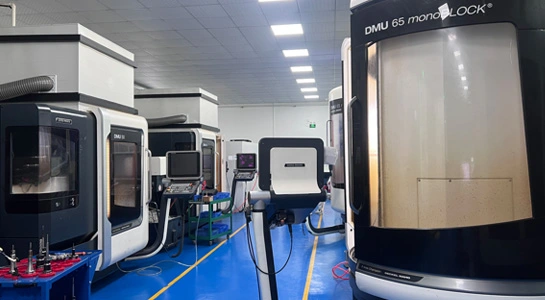
Housed in our state-of-the-art building are the machines that perform mechanical surface enhancement, electroplating, chemical conversion coating, and anodizing. Our greatest concern is maintaining uniformity in output from one run of production to the next. Specialized coatings for biocompatibility-sensitive medical device applications, aluminum anodizing for electronic enclosures, and precise chrome plating for hydraulic components are all within our expertise.
Customers that need to evaluate the functioning of treated components may simplify their development cycles with our quick prototyping capabilities and surface treatment services. Simplified supply chains and quicker time-to-market are the outcomes of our all-encompassing solutions, which expedite surface treatment processes via the use of CNC machining, injection molding, and 3D printing.
Industry-Specific Expertise
Our automotive customers trust us for parts like interior trim, lighting housings, and engine components that need to be more resistant to corrosion and look good at the same time. Our certifications guarantee conformity with industry quality standards, and we comprehend the rigorous demands of automotive applications.
Our extensive understanding of biocompatible surface treatments allows us to assist medical device manufacturers in meeting demanding regulatory standards while simultaneously improving the performance of their components. Without sacrificing the biocompatibility that is crucial for medical uses, our treatments provide corrosion protection and wear resistance.
Customers in the aerospace and unmanned aerial vehicle industries rely on our meticulous surface treatments to strengthen vital components against corrosion and strain. We have quality processes in place to guarantee consistent, verifiable outcomes and comprehend the rigorous demands of aerospace applications.
Technical Innovation and Quality Assurance
Improvements in process control and environmental sustainability are driven by our dedication to technical progress. Through effective chemical management and waste reduction programs, we strive to minimize our environmental impact, and our investment in state-of-the-art monitoring systems guarantees that our treatments are consistently of high quality.
As part of our all-inclusive customer service, we provide consulting services to assist customers choose the best therapies for their unique needs. In order to find treatment solutions that improve component performance while keeping costs and schedules in check, our technical team collaborates closely with design engineers.
Conclusion
For improving the performance of mechanical parts in a wide range of industrial applications, surface treatment is an essential technique. Component longevity, operational dependability, and cost-effectiveness may be greatly enhanced with the right treatments chosen and applied. Surface treatment technologies will be crucial in helping companies fulfill the rising performance demands of mechanical components while being compliant with environmental regulations and competitive in terms of cost.
FAQ
1. How does surface treatment specifically improve corrosion resistance in mechanical parts?
Surface treatment improves corrosion resistance by creating protective barriers or altering surface chemistry to resist electrochemical reactions that cause corrosion. Anodizing aluminum creates dense oxide layers that prevent moisture and contaminants from reaching the base metal. Electroplating deposits sacrificial metal layers that corrode preferentially, protecting the underlying substrate. Chemical conversion coatings like phosphating create crystalline layers that inhibit corrosion initiation while providing excellent paint adhesion.
2. What factors should I consider when choosing between anodizing and electroplating for aluminum components?
The choice between anodizing and electroplating depends on specific performance requirements and operating conditions. Anodizing provides excellent corrosion resistance, electrical insulation, and color options while maintaining dimensional precision. Electroplating offers the ability to deposit various metals for specific properties like enhanced conductivity or magnetic characteristics. Consider environmental exposure, electrical requirements, aesthetic needs, and dimensional tolerances when making this selection.
3. Should I outsource surface treatment or develop in-house capabilities?
Outsourcing surface treatment often provides access to specialized expertise, advanced equipment, and regulatory compliance without significant capital investment. Reputable service providers maintain quality certifications and environmental compliance while offering technical support for process optimization. In-house capabilities may be justified for high-volume applications or when treatment parameters require frequent adjustment. Consider volume requirements, technical complexity, quality control needs, and capital investment when making this decision.
Partner with BOEN Prototype for Superior Surface Treatment Solutions
BOEN Prototype delivers exceptional surface treatment services that transform your prototypes and low-volume production parts into high-performance components. Our comprehensive capabilities span anodizing, electroplating, chemical conversion coating, and mechanical enhancement processes across aluminum, steel, and advanced materials. With decades of experience serving automotive, aerospace, medical device, and electronics industries, we understand the critical importance of surface treatment in achieving demanding performance specifications. Contact our technical team at contact@boenrapid.com to discuss how our advanced surface treatment manufacturing solutions can enhance your component performance while meeting aggressive development schedules.
References
1. Davis, J.R. "Surface Hardening of Steels: Understanding the Basics." ASM International Materials Engineering Handbook, 2019.
2. Thompson, K.L. and Martinez, R.A. "Anodizing Process Optimization for Enhanced Corrosion Resistance in Aerospace Applications." Journal of Surface Engineering, 2021.
3. Chen, W.H., Anderson, M.P., and Roberts, D.K. "Comparative Analysis of Chemical Surface Treatments for Automotive Component Durability." International Materials Science Review, 2020.
4. Brown, S.M. "Electroplating Technologies for Medical Device Manufacturing: Quality and Biocompatibility Considerations." Medical Manufacturing Technology Quarterly, 2022.
5. Wilson, A.R., Kumar, V.S., and Zhang, L. "Environmental Compliance in Modern Surface Treatment Operations: Green Technologies and Regulatory Trends." Environmental Engineering in Manufacturing, 2021.
6. Taylor, P.J. and Lee, H.K. "Mechanical Surface Enhancement Techniques: Shot Peening and Surface Rolling Applications in High-Stress Components." Advanced Manufacturing Processes Journal, 2020.

How Can We Help?

Your Trusted Partner in Rapid Manufacturing.