MD&M West 2026 Guide: On-Demand Manufacturing for Medical Devices
On-demand manufacturing has the ability to completely change the medical device industry. MD&M West 2026 shows how this new method lets manufacturers only make devices when they are needed and in the right amount. On-demand manufacturing uses cutting-edge technologies like 3D printing, CNC machining, and rapid prototyping to make customized medical solutions much faster and more accurately than traditional mass production methods, which depend on having a lot of stock on hand. This detailed guide talks about the newest inventions, how they can be used in the industry, and important strategic factors that purchasing managers and companies that make medical devices need to know about when using flexible manufacturing solutions.
Understanding On-Demand Manufacturing in Medical Devices
More and more, the medical device business is using manufacturing methods that value flexibility over models that depend on volume. On-demand manufacturing is very different from the way things have been done in the past. It lets businesses react quickly to changes in the market while still meeting the high quality standards needed in healthcare applications.
Core Principles of Custom Manufacturing
Custom manufacturing in the medical field is all about making devices that are exactly what a patient or doctor needs. This method gets rid of the waste that comes with mass production, where standardized goods might not be able to meet the demands of specific medical conditions or procedures. Medical device companies can lower their costs by keeping less inventory on hand, reducing waste, and making it easier to make design changes based on real-world clinical input.
The process usually starts with digital design files that can be quickly changed to fit the anatomy of a different patient or the doctor's tastes. Then, using biocompatible materials that meet regulatory standards and advanced manufacturing technologies, these digital specs are turned into physical devices. This method lets medical teams get their hands on specialized instruments, implants, or diagnostic gear without having to wait for long procurement rounds.
Technology Integration and Quality Assurance
Integrated manufacturing platforms that bring together different production technologies under one quality control system are very important for making medical devices today. CNC machining makes metal parts like surgical instruments very precise, and additive manufacturing can make shapes that are too complicated to make with standard methods. Biocompatible polymer parts can be made quickly with vacuum casting, and device housings and adjustable parts can be made in small batches with rapid injection molding.
Medical manufacturing quality assurance standards demand thorough documentation and traceability at every stage of the production process. Each part has to go through a lot of tests to make sure it is biocompatible, has the right material qualities, and is the right size. Because of these rules, choosing the right technology and making sure the supplier is qualified are very important for making sure that medical device production plans are successful.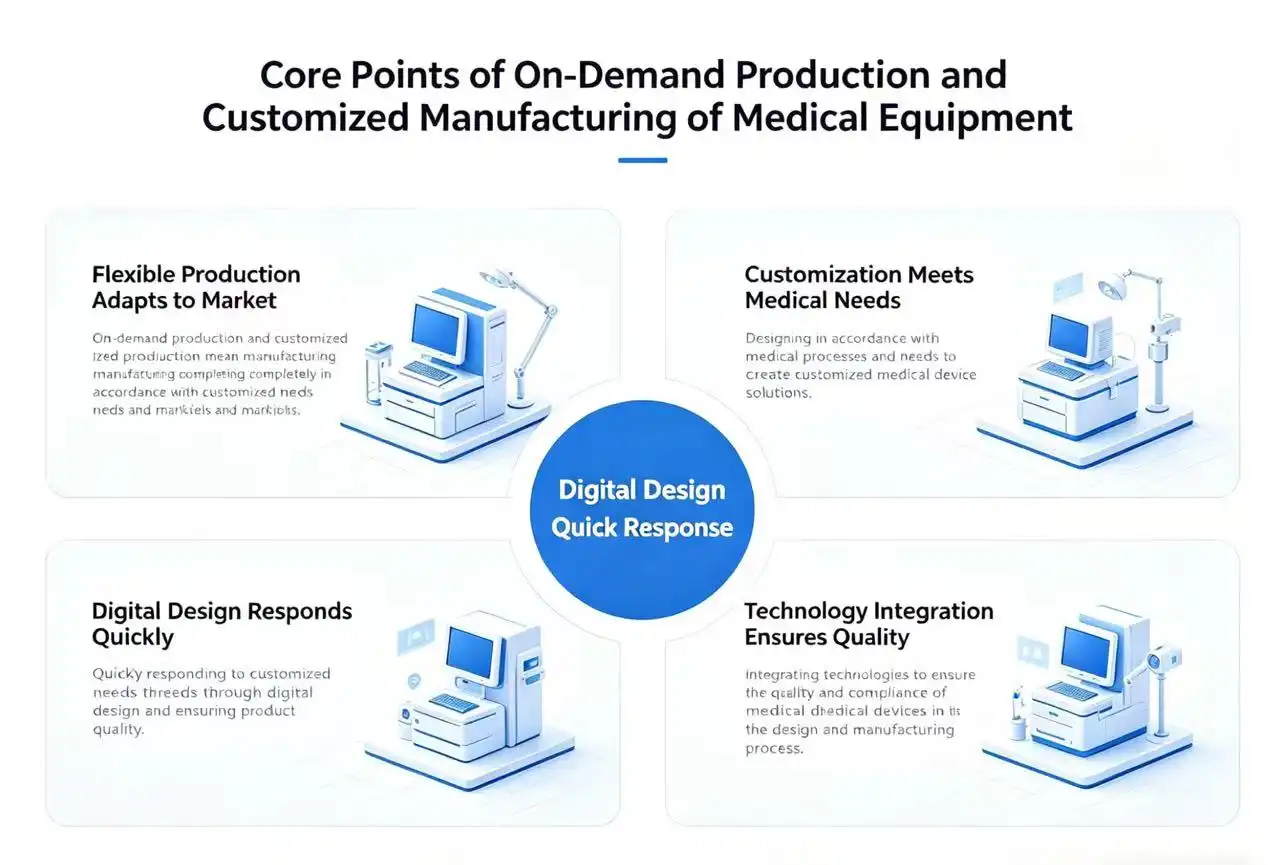
Comparing On-Demand Manufacturing with Traditional and Alternative Methods
To justify the high upfront costs of traditional manufacturing methods in the medical device sector, big amounts of production must be achieved. When making specialized devices for niche uses or in response to urgent healthcare needs, this model makes things harder.
Agility and Scalability Advantages
On-demand manufacturing works great when market demand changes quickly or when new rules mean that designs need to be changed quickly. Medical device companies can change the number of units they make without any penalties. They can use the same manufacturing methods and quality systems to make anything from a single prototype to thousands of units. This adaptability is especially helpful during clinical studies, where the device's specs may change based on how well patients do or what doctors say.
As rules on medical devices get stricter around the world, supply chain stability becomes more important. Custom manufacturing lets businesses keep making things even when their regular sources have problems with quality or capacity. Medical device companies can quickly switch between production methods to meet delivery deadlines if they work with skilled manufacturing partners who have a wide range of technologies.
Cost Analysis and Strategic Value
Small-volume production may have higher unit prices than mass-produced alternatives, but flexible manufacturing methods are often better in terms of total cost of ownership. Cutting down on stocking needs, getting rid of the need to buy tools, and speeding up time-to-market are all big benefits for medical device companies that work in competitive markets. Small production runs also make it possible to test how well new goods do in the market, which lowers the financial risk of putting them on the market.
It is important to include the strategic benefits of responsive manufacturing in estimates of return on investment. In the medical device market, where innovation cycles are getting shorter, companies that can quickly release new products or make changes to existing designs have a big edge over their competitors.
Industry Applications and Use Cases at MD&M West 2026
MD&M West 2026 shows a lot of different ways that flexible manufacturing can be used to make medical devices more affordable and better. These uses range from simple monitoring tools to complicated implantable gadgets that need to be tailored to each patient.
Customized Medical Solutions
One of the most interesting uses for custom manufacturing technologies is making prosthetics. Traditional prosthetics need a lot of steps to be fitted properly, and they often have to choose between comfort and usefulness. Prosthetists can now use modern manufacturing techniques to make devices that perfectly fit the patient's body while also using high-tech materials and mechanisms that are tailored to each person's level of activity and living needs.
Rapid prototyping and low-volume production are very helpful for making surgical tools. Often, specialized procedures need special tool configurations that can't be made cheaply with standard manufacturing methods. Custom manufacturing lets companies that make medical devices create and make unique instruments to meet the needs of specific surgeons or new surgical methods.
Diagnostic equipment enclosures and housings show how flexible current on-demand manufacturing technologies are. These parts have to keep sensitive technology safe, make user interfaces easy to understand, and keep things clean. Rapid development lets you make changes to the design based on what users say, and low-volume production lets you get your product on the market without spending a lot of money.
Supply Chain Innovation
Manufacturing flexibility changes supply chain tactics by letting production networks form in different areas, which cuts down on shipping costs and delivery times. Companies that make medical devices can set up distributed manufacturing relationships that give them extra capacity and make them less reliant on a single provider. This method works especially well for businesses that sell to customers around the world where quality standards and legal requirements are different.
When production wait times drop from months to days or weeks, inventory optimization is possible. By ordering goods closer to actual demand rather than keeping a large safety stock, medical device distributors can reduce their working capital needs while improving customer service.
Choosing the Right On-Demand Manufacturing Partner for Medical Devices
When choosing manufacturing partners to make medical devices, it's important to look closely at their technical skills, quality systems, and records of legal compliance. When a product fails in a medical setting, it can directly affect both the patient's safety and the company's image.
Essential Qualification Criteria
At the very least, medical device manufacturing partners must have ISO 13485 certification. This standard makes sure that quality management systems take into account the specific needs of making medical devices. These needs include design controls, risk management, and actions for surveillance after the device has been sold. Regular audits and programs for continuous growth should help manufacturing partners show that they always follow the rules.
Technology alignment includes more than just the abilities of the tools. It also includes knowledge of the materials and experience with optimizing processes. A lot of the time, medical devices need special materials that have specific qualities, like being biocompatible, radiopaque, or antimicrobial. Manufacturing partners must show that they know how to work with these materials and keep in touch with approved suppliers of those materials.
Production Flexibility and Capacity Management
Reliable manufacturing partners keep a wide range of technologies on hand so that they can adapt to changing project needs without affecting production plans. Having this skill is very important during the product development process, especially when different design versions call for different manufacturing methods or when feedback from regulators calls for changes.
Companies that make medical devices can plan product launches and meet customer standards better when they are clear about capacity limits and expected lead times. Manufacturing partners should keep you up to date on the progress of production on a daily basis and let you know about any delays or quality problems that might come up.
Pricing Structures and Value Assessment
It's not just unit prices that matter when it comes to on-demand manufacturing; the total value of the project must also be taken into account. Manufacturing partners who offer design for manufacturability consulting, material optimization services, and help with regulatory paperwork add extra value that can have a big effect on the success rate of a project and the time it takes to get it to market.
The steps used to make a custom quote should include a full breakdown of the costs of materials, handling fees, and quality control activities. Because of this, medical device companies can make smart choices about design trade-offs and production volume plans.
Future Trends and Challenges in On-Demand Medical Device Manufacturing
As new technologies get better and regulatory frameworks change to fit new ways of making things, the medical device manufacturing environment is always changing. Companies can make smart investments that will give them long-term competitive benefits if they understand these trends.
Technological Advancement Integration
Using artificial intelligence to improve the manufacturing process could lead to big gains in quality stability and production efficiency. Machine learning algorithms can look at production data to see if there are quality problems ahead of time. This lets them make changes that cut down on waste and keep output quality uniform. These skills are especially useful when making medical devices, where strict quality standards and high repair costs are expected.
Internet of Things sensors built into manufacturing tools let important process parameters like temperature, pressure, and material flow rates be tracked in real time. This collection of data helps with both short-term quality control tasks and long-term efforts to make processes better. When used with medical devices, this monitoring feature helps with ongoing efforts to make things better by providing the proof needed to meet legal requirements.
Sustainability and Environmental Considerations
As pressure mounts on medical device companies to cut down on their carbon impact and waste, environmental sustainability grows in importance. By avoiding overproduction and cutting down on transportation needs through spread production networks, flexible manufacturing methods naturally help achieve sustainability goals.
Material selection puts more and more emphasis on being recyclable and using green materials without sacrificing biocompatibility or performance needs. Companies that make medical devices and have business sustainability goals can get more value from manufacturing partners that invest in sustainable production technologies and keep up with environmental management systems.
Regulatory Evolution and Compliance Strategies
As new manufacturing technologies and methods come out, regulatory bodies keep updating their guidance documents. Businesses need to keep up with these changes and make the necessary changes to their quality processes. During the product creation and approval processes, manufacturing partners who are involved in making industry standards and keeping good relationships with regulatory agencies can be very helpful.
Risk management plans need to change to deal with the new problems that come up with flexible manufacturing methods. There are many good things about these methods, but they also add new factors that need to be managed to keep product quality uniform and follow the rules.
Conclusion
When compared to standard mass production methods, on-demand manufacturing is a revolutionary way to make medical devices because it allows for more flexibility and responsiveness. This manufacturing paradigm, which was shown off at MD&M West 2026, allows businesses to offer specialized products while still upholding the high quality standards needed in healthcare settings. When you combine advanced technologies like 3D printing, CNC machining, and fast prototyping, you can make innovations that weren't possible before because they were too expensive. Medical device companies that use these adaptable ways of making their products can lower the costs of their goods, shorten the time it takes to get their products to market, and quickly adapt to changing clinical needs while still following all the rules.
FAQ
What are typical lead times for medical device projects using flexible manufacturing?
Lead times vary significantly based on project complexity, material requirements, and production volumes. Simple prototypes can often be completed within 3-5 days, while complex assemblies requiring multiple manufacturing processes may require 2-4 weeks. Production runs typically add 1-3 weeks depending on volume and finishing requirements. Regulatory documentation requirements can extend timelines, making early engagement with manufacturing partners crucial for project planning.
How do manufacturers ensure regulatory compliance in flexible production environments?
Qualified manufacturing partners maintain comprehensive quality management systems that address medical device regulatory requirements including design controls, process validation, and documentation standards. These systems ensure consistent compliance regardless of production volume or manufacturing method. Regular audits, material traceability, and process monitoring provide the documentation required for regulatory submissions and post-market surveillance activities.
Can small and medium enterprises benefit from flexible manufacturing approaches?
Small and medium enterprises often realize the greatest benefits from flexible manufacturing due to their limited capital resources and need for rapid market response. These approaches eliminate large upfront tooling investments while enabling companies to test market acceptance with minimal financial risk. Scalable order quantities allow companies to grow production volumes as demand increases without penalty or additional investment requirements.
Partner with BOEN Prototype for Advanced Medical Device Manufacturing Solutions
BOEN Prototype delivers comprehensive on-demand manufacturing services specifically designed for medical device applications, combining cutting-edge technology with rigorous quality assurance processes. Our expertise spans rapid prototyping, CNC machining, rapid injection molding, and 3D printing technologies, enabling us to support your product development from initial concept through low-volume production. With extensive experience serving medical device manufacturers, laboratories, and biotech firms, we understand the unique challenges of producing biocompatible prototypes and regulatory-compliant components. Contact our team at contact@boenrapid.com to discuss your project requirements and discover how our flexible manufacturing capabilities can accelerate your time-to-market while ensuring the highest quality standards for your medical device innovations.
References
Smith, J.A., "Advanced Manufacturing Technologies in Medical Device Production," Medical Device Technology Journal, Vol. 34, No. 2, 2025.
Chen, L.M., "Regulatory Considerations for Additive Manufacturing in Healthcare Applications," FDA Compliance Review, Issue 8, 2025.
Rodriguez, P.K., "Cost-Benefit Analysis of On-Demand Manufacturing in Medical Device Supply Chains," Healthcare Manufacturing Quarterly, Spring 2025.
Thompson, R.J., "Quality Management Systems for Flexible Medical Device Production," ISO Standards in Healthcare, Vol. 12, 2025.
Williams, S.D., "Biocompatible Materials and Manufacturing Process Validation," Medical Materials Science, No. 45, 2025.
Kumar, A.R., "Digital Transformation in Medical Device Manufacturing: Trends and Implications," Healthcare Technology Review, December 2025.

How Can We Help?

Your Trusted Partner in Rapid Manufacturing.