Prototyping to Production: Common Manufacturing Mistakes to Avoid
One of the hardest parts of product creation is moving from the prototype to production. A lot of companies have trouble with this change because they don't realize how hard it is to go from one approved prototype to thousands of uniform, high-quality units. To avoid mistakes that cost a lot of money and cause schedule and budget problems, the change needs to be carefully planned, tested, and backed up by smart partnerships. If you know about these common mistakes and use tried-and-true methods, you can make the difference between a good product launch and a failed market start.
Understanding the Prototyping to Production Process
From an idea to a product that is ready for the market, there are several important steps that must be taken. In the first step, prototype development, ideas are turned into real models that test design concepts and functions.
The Core Stages of Product Development
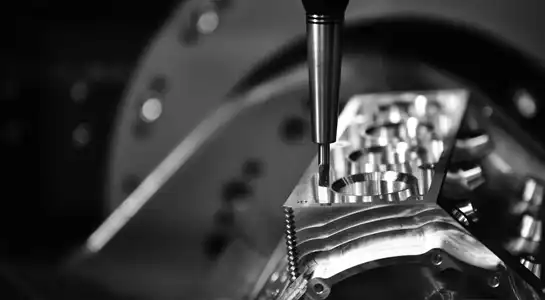
Conceptualization is the first step in making a prototype. This is where tech teams describe the product's main purpose and find out what customers want. After that comes the design work, which starts with rough ideas and ends with thorough CAD models that show the sizes, tolerances, and materials that will be used. Rapid prototyping technologies, such as CNC machining and 3D printing, speed up this step so that teams can make models quickly for testing.
Testing and Refinement Cycles
As proof of concept, physical prototypes let designers make sure that goods work the way they're supposed to. Engineers test materials, structures, and features to make sure they meet performance standards, longevity standards, and safety standards. This iterative process finds design flaws early on, when they are easier and cheaper to fix than after the product has been made. Getting feedback from stakeholders during these stages helps improve functionality and usability before the plans are finalized.
From Pilot to Mass Manufacturing
Once the proof is complete, pilot production tests the manufacturing method on a small scale. These small numbers show if designs can keep the same level of quality when made over and over again. Before full-scale ramp-up starts, pilot runs also find out what tools are needed, how long cycles take, and where possible bottlenecks might happen. Knowing about these steps helps people who work in buying and engineering set realistic deadlines and make sure that resources are used correctly throughout the development cycle.
Common Manufacturing Mistakes to Avoid in Prototyping to Production
Several major mistakes often stop the process of going from a pilot to mass production. Teams can protect project timelines and budgets by taking preventative steps once they are aware of these problems.
Skipping Comprehensive Design Validation
Going quickly through the proof steps causes big problems later on. Some teams think that a prototype that works means that the product is ready for production. However, this doesn't take into account important differences between one-time creation and repeated manufacturing. It may not be possible to regularly make parts that work perfectly in a hand-assembled prototype because of tight tolerances, complicated geometries, or problems with the assembly routine.
Plan should be carefully looked over before buying tools to make sure it can be made from prototype to production. These tests look at every part and step of the building process to find problems that could happen during production. Engineers check to see if parts are easy to shape, make, or cast, if putting them together can be done by hand or with machines, and if there are ways to test the quality.
Underestimating Production Costs and Timelines
Cost modeling and time plans that aren't done well often lead to budget overruns and scheduling delays. Because low-volume creation methods are very different from mass manufacturing methods, prototype costs rarely show how much it costs to make a product in large quantities. Injection molding might be used to make a part that was made from a solid billet during testing. This would require expensive tools that weren't planned for during the prototype phase.
In-depth financial modeling should take into account the costs of tools, the total price of materials, the amount of work that needs to be done, the cost of quality control, and the wait time for suppliers. Production schedules need to include times for making tools, inspecting the first product, improving the process, and ramping up. Procurement teams need accurate forecasts to get the money they need and set start dates for products that can be reached.
Selecting Inappropriate Manufacturing Partners
When you choose the wrong supplier, you end up with potential mismatches that hurt quality and service. Some businesses pick partners based only on price, without checking out their professional skills, quality systems, or ways of communicating. A supplier with a lot of experience with consumer items might not have the right certifications and methods for medical devices or car parts.
A good assessment of a seller looks at more than just cost. Technical capacity reviews should make sure that possible partners have the right tools, process knowledge, and material understanding. Quality system audits check to see if providers have strong checking and corrective action systems in place. Communication evaluation checks to see if problems like language hurdles, different time zones, or cultural differences could make it hard for people to work together.
Overlooking Process Differences Between Prototype and Production Methods
Making prototypes often requires very different techniques than making finished products. Subtractive methods, such as CNC machining, and additive methods, such as 3D printing, are often used for prototypes because they are fast and flexible without the need to buy expensive tools. Injection molding, die casting, and pressing are common ways of making things. These methods require expensive tools but produce more at a lower cost per unit.
Because of these changes to the process, the material's qualities, surface finishes, accuracy in measurements, and manufacturing needs are all affected. Because of differences in crystallinity, orientation, and mechanical features, a part that was 3D printed in nylon might not work the same way when it is injection molded in the same material. Often, changes need to be made to the design in order to make it work with production methods while keeping the performance qualities that were tested during testing.
Best Practices to Ensure Successful Transition from Prototype to Production
Moving from a prototype to production is much more likely to go smoothly if you focus on detailed planning and building strong relationships. Teams can deal with complexity and keep their promises about quality and time with these tried-and-true ways.
Implementing Rigorous Testing Protocols
Before committing to production, ideas are put through thorough testing programs to make sure they work in the real world. To make sure a product will last, it is put through environmental testing that includes changes in temperature and humidity, vibration, and shock. Functional testing makes sure that goods work right across their entire working range. By putting samples through more intense stress conditions, accelerated life testing suggests how reliable something will be in the long run.
Not only should the product itself be tested, but also the shipping, installation, and packing methods. Drop tests make sure that goods can handle being handled during distribution. Studies on assembly show that workers can correctly put things together without a lot of training or special tools. These attempts to validate find problems while keeping answers relatively cheap to put into action.
Conducting Thorough Cost Analysis and Risk Assessment
By using detailed financial models, you can see the real costs of production and find ways to cut costs. A material cost study should look at how much something costs at the expected amount, how easy it is to get from different sources, and what alternatives might be available. Process cost modeling breaks down production into separate steps so that expensive steps that could be done in a different way can be found.
Risk assessment finds possible problems and comes up with ways to fix them. Supply chain analysis shows where one source could fail and where other sources should be checked out. A technical risk assessment finds the parts of a plan that could lead to problems with quality or production. Financial risk modeling looks at how changes in costs affect making money in different number situations.
Building Strategic Supplier Relationships
Strong relationships with suppliers give internal resources more skills and abilities. Including manufacturing partners early on in the design process lets you use their understanding of how to make things to make ideas that are easier to make. Suppliers often offer different materials, changes to the design, or better ways to do things that cut costs without affecting function.
Collaboration goes beyond technical issues and includes openly talking about what can be done, what can't be done, and what limits are in place. Sharing quality measures, holding regular status talks, and working together to solve problems all help build trust and alignment. When problems come up out of the blue and quick action is needed, these relationships are very helpful.
Leveraging Advanced Tools and Technologies
Today's software and automation make contact easier and cut down on mistakes during the transfer process. Product lifecycle management tools keep design paperwork up to date, keep track of changes, and make sure that everyone working on the project has the most up-to-date information. Simulation software can guess how plans will work and how production methods will act before they are actually put into action.
Digital manufacturing technologies, such as rapid prototyping services, let you make changes quickly and keep getting better. By making useful parts out of materials meant for mass production, CNC machining, vacuum casting, and rapid injection molding fill the gap between prototypes and production tools. With these tools, teams can fully test ideas and train assembly staff before committing to final tooling.
Case Studies: How Leading Companies Avoided Prototyping to Production Pitfalls
Real-life examples show how strong relationships and smart planning can help with common transition problems.
Automotive Component Scaling Success
An electric vehicle (EV) company that was making battery cases had to go from making prototypes out of CNC-machined aluminum to making a lot of them out of die-cast metal. There were a lot of problems with the change because die casting has different needs for wall thickness, draft angles, and cooling than machined parts.
The business hired a manufacturing expert with experience in both development and production. During the prototype phase, this expert reviewed the design to make sure it could be made. Early input helped figure out what changes needed to be made to the geometry of the prototypes so that they could be cast. Before committing to production tooling, the team made several iterations using rapid tooling to test the new designs. Finding conflicts after production casting was finished would have required expensive redesigns and changes to the tools. This method avoided those problems.
Medical Device Production Coordination
As a medical device company moved from testing prototypes to mass production, they had to deal with strict government rules and complicated supply chains that included many part sources and contract assembly services. Different providers had different schedules and quality standards, which made it hard to coordinate and could have slowed down the market start.
From the prototype to production, the company set clear quality standards, planned shipping times, and made sure that everyone knew how to talk to each other through a structured supply management program. Problems with integration were worked out in regular talks with a lot of people, before they caused delays. The business also bought detailed record-keeping tools that kept track of all the design changes, quality data, and legal compliance made by all of its vendors. That was it! The supply line was now more flexible, and all the parts that made it to the assembly plant were up to code.
How to Choose the Right Prototype to Production Partner
Choosing the right factory partner is a key factor in the success of a project. When choosing, it's important to give careful thought to a number of important factors.
Assessing Technical Capabilities and Expertise
Partners in manufacturing should show that they have experience with similar materials, methods, and goods. Companies that work with cars need different skills than companies that work with medical products or consumer electronics. Technical reviews should make sure that possible partners have the right tools, know how the material works, and keep up with process control systems that make sure continuity.
Knowledge about a certain industry is very useful because it helps you understand things like quality standards, legal requirements, and regular problems. Partners who have worked with medical devices before know how to do biocompatibility testing, validate sterilization, and follow FDA quality system rules. Aerospace suppliers know how to do non-destructive tests and how to make sure that materials can be tracked.
Evaluating Service Breadth and Integration
Offering a wide range of services makes project management easier by lowering the number of providers that need to be coordinated. When partners offer both rapid prototyping and actual manufacturing, designs don't have to be sent from one company to another, which speeds up the process. Design support, prototyping, tooling, production, and assembly are all integrated to create smooth processes that cut down on communication problems and time delays.
Check to see if possible partners offer services that work well together and help with product creation. Some production experts help with design, give advice on choosing materials, and suggest ways to improve processes so that ideas are better and costs are lower. These services add value and speed up development times by expanding internal capabilities.
Reviewing Reputation and Track Record
Reliability, quality, and customer happiness can all be learned from an organization's name in its field. Use trade magazines, industry groups, and suggestions from other people in the same field to find possible business partners. Case studies and comments from customers show how businesses deal with problems, talk to customers, and keep their promises.
Quality badges show that standards are being met in a planned way. Getting ISO 9001 approval shows that you know how to handle quality effectively. Certifications that are specific to an industry, like ISO 13485 for medical equipment or IATF 16949 for cars, show that quality systems are up to par. Check report records and quality measures to see if partners live up to the standards they say they do.
Conclusion
Making it from prototype to production requires careful planning, an honest look at the problems that might come up, and smart partnerships with manufacturing experts who have done it before. Avoiding common mistakes like not validating enough, underestimating costs, and choosing the wrong provider can help protect project schedules and budgets while also making sure the quality of the result. Best practices, such as careful testing, risk assessment, and strong teamwork with suppliers, lay the groundwork for successful product launches. The right production partner has the technical know-how, wide-ranging skills, and tried-and-true methods to turn validated prototypes into goods that are ready for market quickly and cheaply.
FAQ
How long does the transition from prototype to production typically take?
Usually, how long does it take to go from the prototype to production? The length of a timeline depends a lot on how complicated the product is, what regulations need to be followed, and how it is made. Simple market goods that can be made with simple injection molding might be ready in three to six months, but complicated medical devices that need to be certified might take twelve to eighteen months. Starting to plan early and sticking to realistic deadlines takes the pressure off and gives you enough time to test and improve.
What strategies minimize risks during manufacturing scale-up?
How can the risks of production scale-up be kept to a minimum? To lower the risk, it's important to test prototypes thoroughly, choose manufacturing partners with a lot of experience, and keep communication open throughout the process. Full validation finds flaws in the design before it is committed to production. Using providers who have experience in the right field makes sure that they know what the quality standards are and what the rules are. Regular reviews of the situation and open conversations about problems help solve problems quickly when they come up.
Can rapid prototyping services replicate final production characteristics?
Can rapid prototyping services copy the end product's features? Rapid prototyping technologies are great at speeding up design changes and letting you test things out early on, but they do have some problems. CNC machining and vacuum casting are two methods used to make functional parts out of materials that are meant to be used in production and have properties that are very close to those of the end product. But some production methods, like injection molding, change the qualities of materials in small ways because they change how fast they cool and how the molecules are arranged. Manufacturing partners with a lot of experience know about these differences and take them into account when optimizing designs.
Partner with BOEN Prototype for Seamless Manufacturing Transitions
BOEN Prototype specializes in helping businesses with all stages of product creation, from testing the idea to mass production. Our wide range of skills includes CNC machining, rapid injection molding, vacuum casting, and several 3D printing technologies. This lets us make smooth changes that keep the integrity of the design while improving production efficiency. We provide the technical know-how and high-quality systems that different businesses need, such as automobiles, medical devices, consumer goods, robotics, and aerospace. Together with your engineers, our experienced team finds possible production problems early on, suggests design improvements, and puts in place cost-effective solutions that speed up time-to-market. As a reliable provider from prototype to production, we can turn things around quickly without lowering the quality standards. Get in touch with us at contact@boenrapid.com to talk about your project needs and find out how our unified approach can help you make your product idea a reality.
References
Anderson, M. (2022). Design for Manufacturing Excellence: Bridging Prototype and Production Gaps. Industrial Engineering Press.
Chen, L., & Rodriguez, P. (2023). "Supply Chain Risk Management in New Product Introduction." Journal of Manufacturing Systems, 68, 234-251.
Harrison, T. (2021). Rapid Prototyping and Production: Modern Manufacturing Strategies. Technical Publishing International.
Kumar, S., & Williams, R. (2023). "Cost Modeling Frameworks for Prototype-to-Production Transitions." Manufacturing Economics Quarterly, 45(2), 112-134.
National Institute of Standards and Technology. (2022). Manufacturing Process Selection Guidelines for Product Development. U.S. Department of Commerce.
Peterson, J., & Nakamura, H. (2021). "Quality Management Systems in Scaled Manufacturing Operations." International Journal of Production Research, 59(8), 2445-2467.

How Can We Help?

Your Trusted Partner in Rapid Manufacturing.