Rapid Prototyping vs Rapid Tooling: Which Should You Choose
Whether you use rapid prototyping or rapid tooling depends on the stage of your project and the number of items you need to make. Rapid prototyping is great for trying ideas and validating designs early on because it lets teams make changes quickly and find problems before spending resources. Rapid tooling, on the other hand, lets you make small batches with production-grade tools, filling the gap between prototypes and full production. If you know when each method gives you the most value, you can make the difference between a smooth product launch and costly delays in competitive markets like medical devices, consumer electronics, and automotive.
Understanding Rapid Prototyping and Rapid Tooling
Rapid Prototyping: Speed and Iteration
Making physical models straight from CAD data has changed how teams check that plans work. Engineers can hold working parts just days after finishing designs with technologies like Fused Deposition Modeling (FDM), Stereolithography (SLA), and Selective Laser Sintering (SLS). FDM makes parts by extruding layers of thermoplastic filament. It can work with a wide range of materials, such as ABS, PLA, and engineering-grade alloys, and is easy to use. FDM is still the best way to test the functionality of mechanical parts and make sure they are ergonomically correct, even though the precision isn't as good as other methods.
Lasers are used to fix liquid photopolymer resins in SLA, which gives the parts a better surface finish and more accurate measurements. Because of this, SLA is the best material for samples of medical devices that need to be tested for biocompatibility or for market goods that need to look good. Lasers are used in SLS to fuse powder materials together, making strong parts without the need for support structures. This is especially helpful for robotics and aerospace uses that need parts with complex shapes.
In addition to additive manufacturing, CNC machining makes samples from solid blocks of material, which has great qualities and can hold tight tolerances. Molds made of silicone are used in vacuum casting to make copies of parts out of polyurethane resins that look like industrial plastics. Teams can match technology to specific validation needs because there are many development methods. This is true whether they are checking form, fit, or function.
Rapid Tooling: Bridge to Production
Rapid tooling solves a different problem: making working parts in large enough numbers that prototyping can't afford but not enough to make the investment in standard hard tooling worthwhile. With soft tooling, you can do injection molding, die casting, or compression molding with metal molds or 3D-printed tooling pieces that are much cheaper and take less time to make than hardened steel tools.
This method works really well for sample production runs, trying the market, or keeping early customer promises while production tools are being improved. A Tier-1 automotive supplier might use rapid prototyping services and rapid tooling to make 500 lighting housings for testing, while an industrial equipment maker might use it to make 1,000 enclosure parts for a limited release. The parts made are exactly the same as the ones that will be used in production. This gives real performance data that samples can't match.
With additive molding, metal 3D printing is used to make curved cooling channels in molds, which speeds up the production process and makes the parts better. Combining traditional cutting with additive methods, hybrid approaches improve tool performance while keeping costs low. The choice of molding strategy is based on the complexity of the part, the materials that need to be used, and the production volume goals.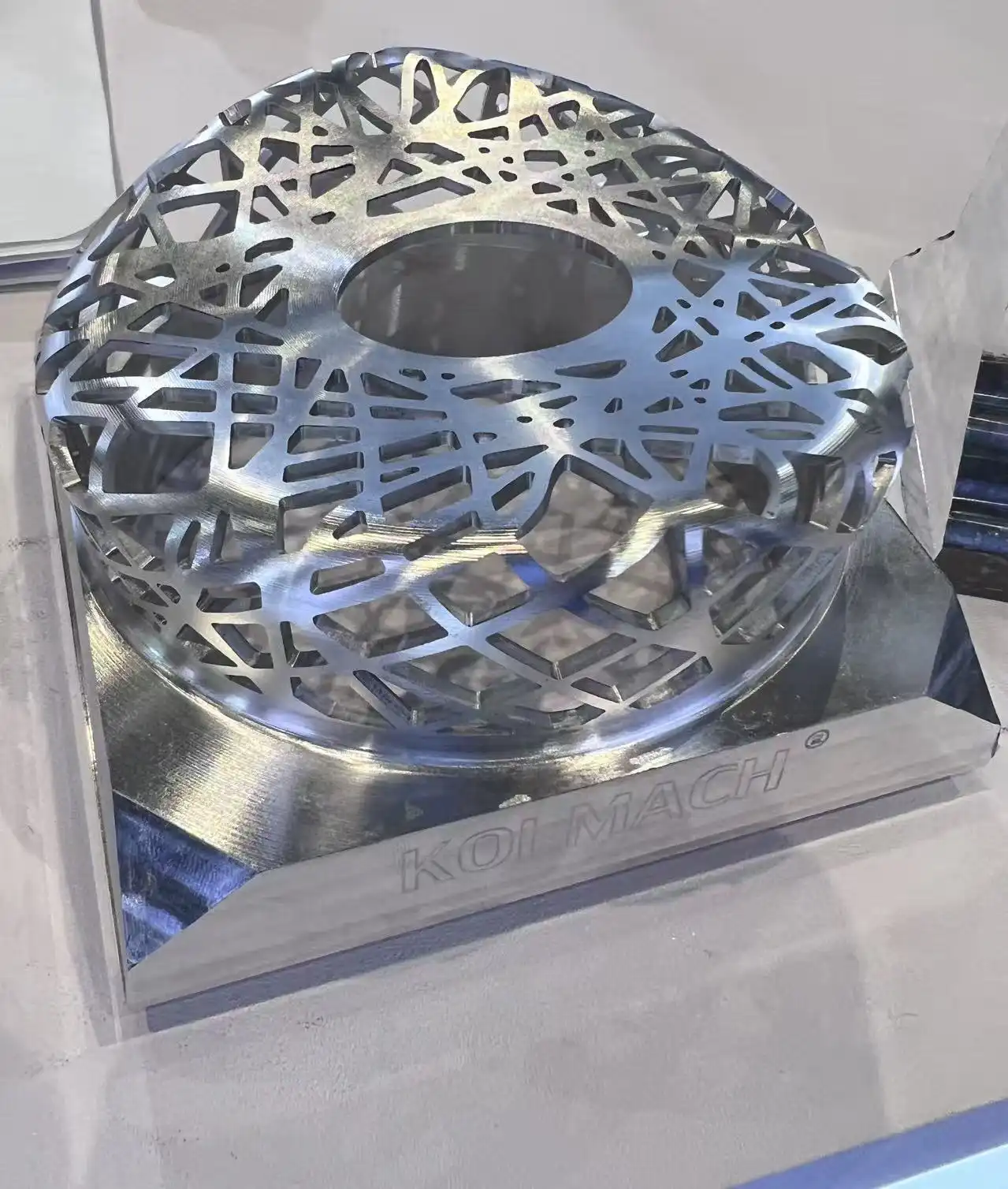
Rapid Prototyping vs Rapid Tooling: Core Differences and Use Cases
Process Speed and Economics
Prototyping is the fastest way to make single parts or small batches. Using SLA, a complicated container design can go from CAD file to real part in 24 to 48 hours. This lets the design be changed more than once in a week. This speed is very important early on in the development process, when plan changes happen a lot. When ordering less than 25 units, where per-part prices are still reasonable without having to spend money on tools, there are clear economic benefits.
For rapid tooling to work, you have to pay for the cast making up front, which changes the cost structure. Initial tooling could take two to four weeks, but prices drop a lot for parts that are ordered in amounts above 50 to 100. A machined sample of an aircraft part that costs $180 might only cost $35 per unit when made in large quantities of 200. The breakeven analysis relies on the shape of the part, the choice of material, and the total amount that needs to be made.
Material Performance and Application Scenarios
Even though prototyping materials have come a long way, there are still some differences between sample resins and metals or thermoplastics used in production. Because they are made layer by layer, SLA parts don't have the same power all over, which makes them less useful for mechanical stress tests. Medical device designers often find that even if a sample shows that the design is ergonomically sound, the biocompatibility or cleaning compatibility of the materials needs to be checked with the production materials.
With rapid tooling, parts are made from real production materials like polycarbonate, glass-filled nylon, liquid silicone rubber, aluminum alloys, or zinc alloys. This authenticity is very important when checking for thermal performance, chemical protection, or long-term stability. An EV company that is trying the housings for battery management systems needs to be sure that the materials will be able to handle thermal cycling and impact loads that are the same as those that will be used in production.
It's easy to see how application cases split up. Design validation, stakeholder displays, user testing, and early functional proof are all dominated by prototyping and rapid prototyping services. A company that makes smart home devices might use SLA to make 15 different versions of a case design before deciding on the final look and the best way to put it together. Tooling is needed when moving on to pre-production proof, trial production, field testing with real parts, or filling the first orders from customers while the production tooling is being finished.
Accuracy and Scalability Considerations
Dimensional precision is very different between systems. When it comes to small parts, SLA can get limits of ±0.004 inches, while FDM can usually get ±0.020 inches. CNC machining is better than both for key measurements because it keeps the tolerances at or below 0.002 inches. The precision of rapid tooling rests on the quality of the tools and the control of the process. Generally, it matches or beats prototype methods while making parts that are repeatable from cavity to cavity.
Scalability comes with its own set of problems. Adding more tools to increase output is one way that prototyping technologies grow horizontally, but it doesn't make the economy more efficient. Making 500 parts through SLA costs about 500 times as much as making one part. As the number of units made goes up, the cost of each unit goes down greatly because the investment in the mold is spread out over the whole production volume. The point of change is different for each part and material, but it usually happens between 50 and 200 units.
How to Choose Between Rapid Prototyping and Rapid Tooling: A Decision Support Framework
Evaluating Production Volume Requirements
Volume is the main thing that makes the choice. For projects that need less than 25 units, prototyping is usually the best option because it cuts down on tooling costs and wait times. Between 25 and 250 units is a gray area where it's important to do a careful cost analysis. Things like the size of the part, how complicated its geometry is, and the material needs can greatly change the center point.
When you go over 250 units, rapid tooling usually gives you better costs and part performance. This idea is shown by a robotics company that is making an AGV chassis component: the first five samples were made using SLS to check the design geometry and assembly connections. For functional testing of 50 units, aluminum soft tooling was used for injection molding to make parts out of the required glass-filled nylon. This staged method made the best use of both time and money for growth.
Assessing Material and Performance Needs
Most of the time, material needs determine the right way. Parts made from materials that meet production standards are needed by testing labs that check for mechanical qualities, heat performance, or regulatory compliance. While prototype materials may come close, they rarely match the performance traits of production materials. When ISO 10993 biocompatibility testing is needed for a medical device, it has to use the real production resin. This means that rapid tooling is needed even though the volumes are smaller.
On the other hand, sample materials work perfectly for checking the design of user interfaces, building steps, or the way something looks. Companies that make consumer electronics often make housing samples in different colors and finishes to see how well they will sell. The strength of the materials doesn't matter in this case. Knowing which aspects of a product need to be validated helps with choosing materials and methods of production.
Timeline and Budget Constraints
Prototyping is best for meeting urgent needs when time is limited. When there is a design review in three days, the only choice that makes sense is rapid SLA printing. But when judging a timeline, the whole project arc should be taken into account. Spending two weeks on rapid tooling could speed up later stages if many of the same parts are needed for multiple versions or long testing periods.
When looking at a budget, it's important to look at the total costs of the program, not just the beginning costs. A $4,500 soft tool that can make 200 units at $18 each costs $8,100, while 200 SLA parts that cost $65 each cost $13,000. The method that uses tools saves $4,900 and produces better material features. When parts fail during tests on prototypes, they need to be redesigned many times, which costs a lot of money when parts made of production material would have lived.
Matching Supplier Capabilities to Project Needs
Choosing the right partner has a big effect on how the job turns out. Suppliers who focus on certain industries have a lot of experience choosing materials, following design-for-manufacturing rules, and meeting quality standards that are important to your industry. Automotive providers know how to meet PPAP standards; aerospace partners know how to get AS9100 approval; and medical device makers make sure they follow ISO 13485.
When figuring out someone's capabilities, they should look at a variety of tools, materials, quality control methods, and how quickly they can turn things around. We provide rapid prototyping services while keeping CNC machining, several types of 3D printing, injection molding, die casting, and vacuum casting all under one roof. This makes it easy to move from the prototyping phase to the tooling phase. This integration gets rid of the contact problems and schedule slip-ups that happen when projects are split between multiple providers.
Leading Technologies and Service Providers in Rapid Prototyping and Tooling
Equipment and Technology Landscape
There are well-known stars in the additive manufacturing ecosystem whose technologies set the standards for the business. Stratasys was the first company to use FDM technology, and the company keeps improving industrial systems with soluble supports and building materials. Formlabs made SLA more accessible by making desktop systems that produce results that are comparable to those in the industrial world. Their bigger Form 3L system can handle large build numbers. EOS is the most popular SLS software for metal and polymer uses, especially in the medical and aerospace fields that need certified materials.
3D Systems has complete options for SLA, SLS, and metal printing, and their materials have been tested to work in tough situations. HP's Multi Jet Fusion technology is becoming more popular in consumer goods and the automotive industry because it allows high-speed printing of polymers with great mechanical qualities. Desktop Metal and Markforged are two companies that are making metal additive manufacturing better. They have made it possible for rapid tooling inserts with conformal cooling channels to be made.
CNC machining uses well-known platforms from Haas, Mazak, and DMG Mori. The output and accuracy depend on the platforms' five-axis capabilities and automatic features. Arburg, Engel, and Fanuc all make injection molding tools that can be used for rapid tooling uses and accurate process control. The world of technology is always changing, and hybrid systems that use both additive and subtractive methods are becoming very useful for making complicated tools.
Selecting the Right Service Provider
We look at more than just a provider's list of tools. We also look at their subject knowledge and how well they can integrate processes. For automotive projects, providers need to know how to do dimensional variation analysis, DFMEA, and validation procedures. For aerospace uses, you need to be registered with AS9100, be able to track materials, and be able to do non-destructive tests. When making medical devices, you need cleanrooms, safe material certifications, and documents in a design history file.
Turnaround dependability is what sets great partners apart from competent sellers. On-time delivery is always possible thanks to planning for capacity, having extra tools on hand, and managing the supply chain. In-process inspection, final dimensional proof, and material approval documents should all be part of quality assurance methods. If a supplier is ready to talk about design teamwork and manufacturing optimization, it shows that they care about the success of the project in more ways than one.
Suppliers used to be chosen based on how close they were, but now digital collaboration tools and efficient transportation make it possible for businesses to work together across long distances. Check how responsive contact is, how open project management is, and how easy it is to get expert help. Referrals from clients in related fields are a great way to learn about how well someone performs under pressure in the real world.
Case Studies: Successful Deployments of Rapid Prototyping vs Rapid Tooling
Automotive Lighting Housing Development
A Tier-1 provider that was making LED lighting parts for a new platform for electric vehicles had to work with short development schedules. Initial design ideas were quickly changed using SLA samples, leading to 12 different designs in six weeks in order to improve optical performance and heat management. Each version took about 36 hours to make and cost about $145. This allowed for weekly reviews of the design.
Once the design was finalized, the team used rapid prototyping services and needed 300 housings to try and confirm how they would fit into the car. The seller bought a two-cavity mold to switch to aluminum soft tools for injection molding. It took three weeks to make the tools, but each part only cost $28 when made of the specific polycarbonate material with UV protectors. The total cost of the job was $43,500 if SLA production had continued, but it only cost $22,000 for the tools and $8,400 for the parts. More importantly, the molded parts correctly showed how the production material would work when it was tested for impact and thermal cycling.
Aerospace UAV Component Validation
A group of aerospace engineers working on a commercial drone needed structural brackets to connect the motor modules to the body. The first samples were made with SLS in nylon to test the geometry and assembly interfaces. Over the course of four weeks, eight versions were made. Finite element analysis was used to confirm that the design-proven parts worked, but there were still questions about how well the aluminum metal would hold up against shaking and temperature changes.
The team didn't go straight to expensive production die casting tools; instead, they ordered rapid metal tools for low-pressure casting. Over the course of six weeks, this method made 150 test pieces out of the specific A380 metal. Flight testing showed problems with stress concentration that FEA hadn't seen coming, so the shape had to be changed. Because the soft tooling could handle EDM changes to fix stress stems, the whole tool didn't have to be made from scratch. This adaptability saved about 12 weeks and stopped mistakes that cost a lot of money in production tooling. This shows how rapid tooling lowers the risk of going from research to production.
Medical Device Ergonomic Testing
A company that makes medical devices had to test the ergonomics of a mobile testing tool with a wide range of users. Using vacuum casting, the industrial design team made 25 different enclosures. The parts were made of shore-hardness-matched polyurethane and were meant to look like the overmolded grip. Healthcare professionals tested the prototypes in simulated use settings and gave comments that led to three improvements in the design.
Once the ergonomic design was complete, regulatory tests had to be done on parts made from the real production materials to make sure they were biocompatible and could be sterilized. Injection molding of 200 pieces in medical-grade plastic with antimicrobial additives was made possible by a soft tool. These parts helped with ISO 10993 testing, rapid aging studies, and sending samples to the government for review. The staged method cut down on development costs and made sure that validation was done with real materials. This sped up FDA clearance by getting rid of any questions about material equality.
Conclusion
Your project's stage, volume needs, and evaluation goals should help you decide between rapid prototyping and rapid tooling. When speed and freedom are most important, like during iterative design creation, prototyping really shines. Tooling is needed when moving from prototyping to production, which needs real materials and cost-effectiveness at low numbers. Many projects that go well use both methods in turn, taking advantage of the best parts of each at the right time in the development process. Knowing these differences helps with better use of resources, faster time-to-market, and better product sales in areas like healthcare, consumer electronics, automotive, and aerospace. There are more choices for manufacturing than ever before. To be successful, you need to carefully and strategically match your skills to your needs.
FAQ
What materials work best for functional prototyping versus rapid tooling?
Functional prototyping uses engineering-grade resins, nylon powders, and metals or thermoplastics that can be machined and have qualities similar to those of the final material. There are now high-temperature, tough, and flexible SLA resins that can be used for industrial tests. Using rapid tooling, parts are made from real production materials like polycarbonate, ABS, glass-filled nylon, liquid silicone rubber, aluminum alloys, and zinc. This makes sure that the performance is real.
How quickly can we expect parts from each approach?
Parts from prototyping are sent out in 24 to 72 hours, based on the technology, shape, and wait time. CNC machining takes longer for parts with complicated shapes, but SLA and SLS can make parts with complicated shapes overnight. For rapid tooling, making the mold takes two to four weeks. Once that's done, parts start arriving within days as the molding processes finish. Total time needed varies on the number of iterations and the total volume.
Can prototype parts serve for functional testing?
Prototypes are good for a lot of useful tests, like making sure the parts fit together right and testing the user experience. For tests that depend on the material, like those that check temperature performance, chemical resistance, impact strength, or regulatory compliance, production-specification materials are needed. This means that rapid tooling is needed. Figure out which aspects of the product need to be confirmed in order to choose the right production methods.
Partner With BOEN Prototype for Expert Rapid Prototyping and Tooling Solutions
To get through the complicated process of product creation, you need a manufacturing partner who knows the specific needs of your business. We are BOEN Prototype, and we help OEMs, Tier-1 suppliers, EV companies, medical device makers, and aerospace creators all over the United States with both rapid prototyping and rapid tooling. Our combined facility has CNC machining, SLA, SLS, vacuum casting, rapid injection molding, die casting, and compression molding tools, so it's easy to go from the first idea to low-volume production.
Our engineering team has a lot of experience with both materials and processes, so they can help you with your toughest manufacturing problems, whether you're testing a new medical device design or getting ready for sample production of an automotive part. We've helped robotics makers make sure that structural parts fit together perfectly, helped aerospace teams get certified, and sped up the launches of consumer goods by making quick samples that look good.
Get in touch with our team at contact@boenrapid.com to talk about your project needs with a rapid prototyping maker with a lot of experience. We'll help you figure out the best way to do things, suggest materials that meet your performance standards, and send high-quality parts on time so that your program can keep going. Let's make your ideas come to life quickly, accurately, and reliably, just like your market needs.
References
Gibson, I., Rosen, D., & Stucker, B. (2015). Additive Manufacturing Technologies: 3D Printing, Rapid Prototyping, and Direct Digital Manufacturing. Springer.
Kalpakjian, S., & Schmid, S. R. (2014). Manufacturing Engineering and Technology. Pearson Education.
Pham, D. T., & Dimov, S. S. (2001). Rapid Manufacturing: The Technologies and Applications of Rapid Prototyping and Rapid Tooling. Springer-Verlag.
Gebhardt, A. (2012). Understanding Additive Manufacturing: Rapid Prototyping, Rapid Tooling, Rapid Manufacturing. Hanser Publications.
Kamrani, A. K., & Nasr, E. A. (2010). Rapid Prototyping: Theory and Practice. Springer Science & Business Media.
Hilton, P. D., & Jacobs, P. F. (2000). Rapid Tooling: Technologies and Industrial Applications. CRC Press.

How Can We Help?

Your Trusted Partner in Rapid Manufacturing.