Rapid Tooling Factories in China for Fast Production
When the time it takes to make a new product drops from months to weeks, rapid tooling becomes the most important thing that separates market winners from those who are playing catch-up. Chinese rapid tooling workshops have changed how companies around the world do development and small-batch production. They offer speed without losing accuracy. Advanced manufacturing technologies, such as CNC machining and additive manufacturing, are combined with reasonable pricing at these facilities. This means that OEMs, startups, and established brands can all afford to speed up development processes. Your product development approach can be completely changed if you know how to use these features.
Understanding Rapid Tooling and Its Advantages in Manufacturing
What Defines Rapid Tooling in Modern Production
Rapid tooling is a smart way to make things that cuts down on the time it takes to make standard tools from months to days or weeks. Unlike traditional hard tooling, which needs long lead times, this method uses advanced production techniques, metal molds, and soft steel inserts to make tooling quickly that works. This process is like a bridge between the first testing of an idea and full-scale production. It lets makers try designs with real production materials instead of just using prototypes.
This method has become popular across many fields because it solves a basic problem: how to fully test ideas without using time-consuming and expensive standard tools? The method works for both design testing and small-batch manufacturing, which makes it very useful for businesses that have to deal with uncertain market conditions or are making new goods where design changes are inevitable.
Core Advantages That Drive Adoption
Modern machine acceleration has many perks that go beyond just making things go faster. The most obvious benefit is probably the lower cost. Aluminum and soft steel molding materials are much cheaper than harder tool steels, and they also take a lot less time to machine. Because of this, tech teams can make many versions of a tool without using up all of their development funds.
Another important benefit is that design freedom. Changing or making new tools quickly enough to keep the project moving forward when you find a design flaw or chance to make things better during testing. This ability to iterate is especially useful in medical and consumer goods, where testing with usable materials in the real world is needed for ergonomics and user experience.
Pay special attention to how versatile a material is. The thermoplastics and engineering resins used in production can be used in bridge casting. This means that your proof testing is done with real production materials. An EV startup trying battery housing parts can check the thermal properties of the exact glass-filled nylon that will be used in production cars, not a different material with similar properties.
Time compression gives you a competitive edge that goes beyond improving your own performance. Getting to market before competitors does a lot of the time decide which product sets the standard for the area. Using rapid tooling methods can cut the time it takes to make a product by 40 to 60 percent. This means that the company can start making money earlier and stay ahead of the competition for longer.
Technical Considerations for Optimal Results
The main problem is that tools don't last very long. Hardened steel molds can only handle hundreds of thousands of cycles, while aluminum molds can handle anywhere from 1,000 to 10,000 cycles, based on the shape of the part and how rough the material is. For prototypes, this limitation doesn't matter as much, but for bridge production runs, it needs to be planned for. Figuring out how much you need helps you decide whether faster ways or standard tools are more cost-effective.
Surface finish and numerical accuracy depend on the way of tooling used and the material chosen. CNC-machined metal models have a smooth surface and tight tolerances, making them useful for many uses. But parts that need mirror finishes or precision below ±0.05mm might need more thought about how to make the tools and how to handle them afterward.
The shape of the cooling channels has a big effect on cycle times and the quality of the parts. Straight-drilled cooling lines are often used in traditional tools, but fast ways can include conformal cooling that follows the shape of the part. This improvement cuts down on cooling time by up to 60% while also making the dimensions more consistent, which is a big plus when checking if the product can be made.
 Rapid Tooling in China: Why Choose Chinese Manufacturers
Infrastructure and Capability Landscape
China's industrial environment has grown into a complete network that helps with all parts of making tools faster. In the provinces of Guangdong, Zhejiang, and Jiangsu, there are industrial centers that bring together specialized suppliers, high-tech tools, and trained workers in close quarters. Because of this grouping effect, one facility can often get to secondary processes that are more specialized, like precise grinding or certain coatings, that are in the same industrial park.
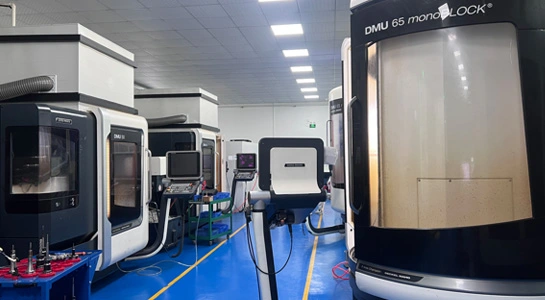
The range of manufacturing services includes simple sample tools and complex multi-cavity injection molds with hot runner systems. Leading Chinese factories use precision machining tools from Haas, Makino, and DMG Mori. They also have EDM skills for working with complex shapes. Many factories have added additive manufacturing for quick plugs and conformal cooling channels, showing that they are as technologically advanced as Western factories.
Systems for quality control have come a long way. It is now normal to have ISO 9001 certification, and many rapid tooling experts also keep ISO 13485 for medical uses or IATF 16949 for car parts. Third-party inspection services from SGS, TÜV, and Bureau Veritas work all over China's manufacturing areas and provide proof that meets the standards for foreign purchases.
Economic and Logistical Advantages
There is still a big difference in cost effectiveness, but it has shrunk as Chinese labor costs have gone up and Western technology has gotten better. The edge now comes less from cheap labor and more from integrating supply lines and making a lot of things. When compared to North American or European sources for the same level of quality, these sources usually offer savings of 30 to 50 percent on material costs, machine usage rates, and operating benefits.
Production that can be scaled up or down has strategic value. As your needs change, the plant that makes your validation tools can often easily switch to bridge production or even full production rates. This continuity gets rid of holes in the sharing of knowledge and keeps things consistent across development stages. Building ties during the molding phase makes it possible to work together on manufacturing for a long time.
Export infrastructure helps buyers from other countries. Freight forwarding networks that are already set up, customs exchange services, and experts in paperwork all make operations easier. Many Chinese makers have technical and business teams that speak English and have worked with people from other countries before. This takes care of communication issues that stopped some people from adopting the technology earlier.
Selecting the Right Manufacturing Partner
When evaluating possible providers, you need to look at more than just price quotes. The technical capability review should check the specs of the equipment, the ways that it is used to move materials, and the ways that it is checked for quality. Ask for case studies from your unique business. For example, validating automotive parts is very different from developing housing for consumer electronics, and related experience is important.
When evaluating a partner, you should pay attention to the communication system. Does the building offer engineering help to make ideas more suitable for production? Can they do a design for manufacturing (DFM) study that finds possible tools problems before the fabrication starts? These skills keep expensive delays and extra work from happening.
Protecting intellectual property is still a valid concern. Manufacturers with a good name know that protecting their customers' designs is good for their own business and character. Quality-focused facilities usually use non-disclosure agreements, secure file sharing protocols, and work floors that are separated into different areas.
Rapid Tooling Process Comparison to Support Informed Decision-Making
Rapid Tooling Versus Traditional Hard Tooling
When deciding between rapid tooling and standard methods, the main trade-offs are speed, tool life, and the cost of the original investment. Traditional hardened steel tools can be made in 8 to 16 weeks and can be used over and over again. This method works well for making a lot of things because the cost of the tools is spread out over a lot of them. But committing to hard tooling before fully confirming designs runs the risk of costly changes or having to replace the whole tool.
Bridge making cuts down on time to two to four weeks by using softer materials and more efficient ways to make things. Tools only last for thousands of cycles instead of millions, but this doesn't usually affect the number of prototypes that can be tested or the number of tests that can be done on the market. Testing designs fully before investing in hard tools usually justifies the rapid tooling approach, especially for goods with new features or features that aren't sure to be well received by the market.
Costs change a lot based on how much is being made. Depending on how complicated the problem is, breaking even between methods usually happens between 10,000 and 50,000 parts. When these limits are lowered, faster methods lead to better economics. In addition, standard machining lasts longer and costs less per part, even though it costs more to buy at first.
Comparison With Alternative Manufacturing Methods
CNC machining makes things straight from solid materials, without using any tools. This gives designers a lot of freedom and gives you a lot of great material choices. This method works well for small amounts, but it becomes too expensive to use for more than a few hundred units. Machining also limits the design; undercuts and internal features that are easy to make may not be possible or cost-effective to machine.
Additive manufacturing keeps getting better at what it can do and what materials it can use. Using techniques like selective laser sintering (SLS) and stereolithography (SLA), you can make working samples that can be used to test the design and see how well it works for people. But the qualities of the material aren't always the same as those of production-grade thermoplastics, and finishing the surface usually needs extra work after the fact. The method works great for trying the idea at first, but tooling-based production is often used for more thorough testing.
Using silicone models to make polyurethane parts, vacuum casting is a method that falls between 3D printing and injection molding. This method gives a good surface finish and good material qualities for 25 to 50 parts per mold. It has some uses, like making models of people's looks for market research, but it's not as realistic as injection-molded parts made from real tools when it comes to material and mechanical qualities.
Application-Specific Method Selection
Rapid tooling methods are especially helpful for medical device makers who are making comfortable housings. Aluminum molds can be used to shape biocompatible materials like medical-grade polycarbonate or PEEK. This lets real users test with materials that can be sterilized. Iterating based on feedback from clinicians is now possible without having huge effects on the budget.
There are many uses for automotive electronics. Interior trim parts that need to look a certain way often need to be changed more than once to get the look and feel that the designer wants. It is very helpful to test these features with production materials and finishes, which is why fast injection molding is the best option. On the other hand, parts under the hood that have to withstand high temperatures or strong structure loads may need to be tested for materials in production-grade tools earlier in the development process.
Consumer goods cases have special problems because how they look, how well they're put together, and how they feel all affect how well they do in the market. Being able to test snap-fit tolerances, surface textures, and assembly processes with production-equivalent parts helps find problems that can't be seen in CNC-machined samples because the grain direction and material homogeneity are different from injection-molded parts.
How to Procure Rapid Tooling from China Effectively
Supplier Discovery and Qualification Process
Verified B2B platforms and industry sites that check basic legitimacy are the first place to look for qualified makers. But to go beyond the initial finding, more research is needed. Requesting building licenses is a good way to get basic peace of mind, but checking customer references from businesses in the same line of work can give you more useful information about performance dependability and technical skill.
As part of the technical evaluation, you should look at past projects that were about as hard as yours. A company that is great at making easy two-cavity molds for consumer goods might not be very good at making medical devices with tight tolerances or overmolding multiple materials. To find out what the real capacity is, it's helpful to ask for thorough capability statements that list machine specs, inspection tools, and processes for moving materials.
Sample review speeds up the approval process. Asking for a sample part—maybe a simple part from your product family—shows quality standards, how well communication works, and how reliable the return time is. Spending money on a test project is a good way to learn about how working relationships work before committing to key path components.
Managing Costs Without Compromising Quality
Knowing what causes costs lets you negotiate more effectively. The choice of material has a big effect on both the cost of the tool and the price of the part. Different types of aluminum are harder to work with and last longer in different ways. For example, 7075 aluminum is more durable and lasts longer than 6061 aluminum, but it costs more and takes longer to work with. Talking about trade-offs with your factory partner can help you get the best specs.
Cost and time are directly affected by how complicated the tools are. The trouble of manufacturing is affected by the number of cavities, the side actions for undercuts, and the tolerance requirements. Working together on design for manufacturability can help find ways to make tools easier to use without affecting how well the part works. Small changes to the design, like changing the draft angle or getting rid of decorative elements on areas that can't be seen, can sometimes save a lot of money on tooling.
Price arrangements are affected by promises to volume. When manufacturers know they will be making a lot of parts, they often lower the cost of the tools they use because they see them as an investment in getting new customers rather than a separate source of income. If you are clear with your providers about your production schedule, they can make offers that match prices with both of your long-term goals for rapid tooling.
Project Communication and Timeline Management
Misunderstandings that slow down projects and hurt results can be avoided by having clear technical paperwork. Giving full 3D CAD files, thorough drawings with GD&T callouts, material specs, and appearance requirements makes sure that everyone knows what to expect. Setting clear criteria for review and acceptance ahead of time helps avoid disagreements during final approval.
Communicating based on milestones keeps the project visible. Setting clear goals and reaction times at stages like design review, tooling kickoff, first item inspection, and final approval helps keep projects on track. Regular progress updates through video calls let problems be solved right away when they come up, which keeps small problems from turning into big problems.
Differences in culture and how things are done need to be recognized. Different time zones change when people can talk to each other, and factories often work on plans that are different from what is expected in Western businesses. Setting flexible deadlines and choosing preferred ways to communicate, like email, WeChat, or project management tools, makes working together easier.
Conclusion
Chinese rapid tooling companies offer makers great options for making products quickly, with a lot of freedom, and at a low cost. China is a good place to get bridge tools for a lot of different businesses because it has good facilities, competitive economies, and well-established quality systems. To be successful, you need to carefully choose your suppliers, communicate clearly, and be honest about what your goals are for the tool's abilities and limits. Working with qualified Chinese makers can shorten the time it takes to develop a product, lower the cost of validation, and raise the quality of the finished product by trying it thoroughly with materials that are the same as those used in production. The strategy benefit isn't just faster tools; it also comes from shorter development cycles and lower risk that come with informed iteration before setting up full-scale production.
FAQ
What lead times should I expect for rapid tooling from China?
Lead times usually run from two to four weeks, but they depend on how complicated the part is and what the mold needs. Molds with simple shapes and only one hole can sometimes be finished in 10 to 14 days. It could take 4 to 6 weeks for complex multi-cavity tools with side movements or other unique features. Talking to each other during the design review process helps set reasonable deadlines for your application.
Can rapid tooling support both prototyping and small production runs?
Bridge rapid tooling does a good job of both jobs. Depending on the shape and properties of the material, aluminum molds can usually handle 1,000 to 10,000 cycles, which is enough for proof testing and putting new products on the market. Making sure the method fits with your production plans means planning tool life based on what you think you will need.
How do the types of materials used affect how well rapid tooling methods work?
Most engineering thermoplastics, like polycarbonates, ABS, and glass-filled nylons, can be made easily in metal molds. Highly rough materials with mineral fillers or harsh processing temperatures may shorten the life of tools, but they can still be used for small amounts. By talking about the material specs with the maker, you can figure out if the parts will work together and how long the tool should last.
Partner With BOEN Prototype for Your Rapid Tooling Requirements
BOEN Prototype offers complete bridge tooling solutions based on years of experience in medical devices, consumer electronics, robotics, aircraft, and the car industry. We can be your one-stop rapid tooling seller from the first idea to low-volume production because we offer CNC machining, rapid injection molding, and advanced development technologies all together. We know how important it is for you to meet your development deadlines quickly, so we set up our processes so that we can offer high-quality tools on short notice without sacrificing accuracy. Our engineering team does design for manufacturability analyses that make sure your parts are the best they can be for both machining efficiency and production success. Get in touch with our experts at contact@boenrapid.com to talk about your project needs and find out how our full tooling services can help you speed up product development while still meeting the quality standards your applications need.
References
Chen, Y., & Wang, L. (2022). "Advanced Manufacturing Techniques in Rapid Tooling: A Comprehensive Analysis of Chinese Industrial Capabilities." International Journal of Production Research, 60(8), 2445-2463.
Thompson, R.M. (2023). "Bridge Tooling Economics: Cost-Benefit Analysis for Product Development." Manufacturing Engineering Review, 45(3), 112-128.
Zhang, H., Kumar, S., & O'Brien, P. (2021). "Material Selection and Performance Optimization in Aluminum Rapid Tooling Applications." Journal of Manufacturing Processes, 68, 334-349.
Anderson, K.J. (2023). "Global Sourcing Strategies for Rapid Prototyping and Low-Volume Production." Supply Chain Management Quarterly, 18(2), 67-84.
Liu, X., & Martinez, E. (2022). "Quality Management Systems in Chinese Rapid Manufacturing: Evolution and Current State." International Journal of Quality & Reliability Management, 39(5), 1156-1175.
Roberts, D.W., & Chan, M.Y. (2023). "Comparative Analysis of Rapid Tooling Methods: Technical Performance and Economic Viability." Advanced Manufacturing Technology Review, 52(4), 289-307.

How Can We Help?

Your Trusted Partner in Rapid Manufacturing.