What Manufacturing Partner Can Support Robotics Prototypes and Low-Volume Production?
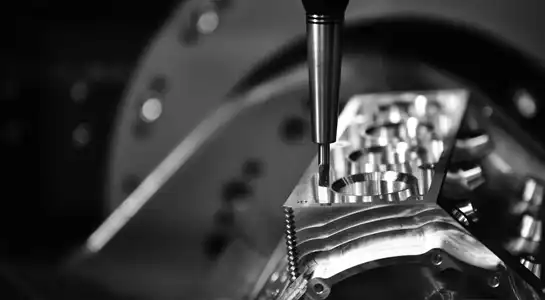
A manufacturing partner capable of supporting robotics prototypes and low-volume production must combine deep technical expertise with flexible production capabilities. At BOEN Prototype, we specialize in delivering precision-engineered components for robotics applications through advanced CNC machining, rapid injection molding, 3D printing, and vacuum casting. Our integrated approach supports robot manufacturers, AGV/AMR developers, and system integrators who demand strong, precise, and lightweight structural parts that perform reliably throughout rigorous testing and deployment phases.
Understanding the Challenges in Robotics Prototyping and Low-Volume Production
Robotics systems development has its own set of problems that make it different from other manufacturing projects. The design stage is where things get complicated. Engineers have to find a balance between mechanical precision and electronic integration while keeping costs low.
Rapid Design Iterations and Material Selection
Continuous improvement is required for Robotics growth processes. Engineers try many versions of a design to find the best one for weight distribution, structural stability, and how well the parts fit together. It's important to choose the right materials. For structural frames, metal alloys are stronger than they are heavy, and aluminum alloys provide strength-to-weight advantages, while industrial plastics like ABS and nylon make housings and moving parts last longer. We have seen that Robotics projects that go well usually need three to five prototype iterations before the designs are finalized. Each cycle gives us new information about where the mechanical stress points are and how to make the assembly tolerances.
Managing Tight Timelines and Evolving Specifications
When fighting in fields that move quickly, like autonomous mobile robots or joint automation, time pressure gets worse. As testing shows performance gaps or as client needs change during the project, specifications change. Partners in manufacturing need to be able to change quickly without lowering quality standards. To be this flexible, you need advanced systems for planning production and tech teams with a lot of experience who can spot possible changes to the design before they mess up plans.
Ensuring Functional Reliability in Prototypes
Robotics parts, unlike attractive samples, have to be able to handle mechanical stress, changes in temperature, and repeated motion cycles. For functional validation to work, samples must accurately reflect the final production features. Tolerance levels are very important. For example, a gripper device might need to be able to place itself accurately to within ±0.05mm, and sensor housings need to have precise mounting interfaces. The right manufacturing partner has the tools to measure things and the quality control procedures to make sure that these strict requirements are met throughout production.
Key Criteria for Choosing a Manufacturing Partner for Robotics Projects
To find the right manufacturing partner, you need to carefully consider their technical skills and operational advantages that are relevant to automation and Robotics.
Technical Capabilities for Complex Component Fabrication
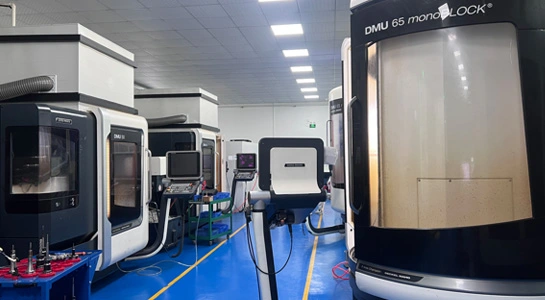
Robot assemblies are made up of many different parts, such as precision-machined metal brackets and injection-molded sensor enclosures. Your manufacturing partner should be skilled in a number of different output methods. We can do CNC milling and turning, sheet metal fabrication, die casting, and a number of additive manufacturing processes. This variety makes it possible to make whole systems without having to get parts from different suppliers. This cuts down on the work that needs to be done to coordinate everything and the chance of quality problems.
Flexibility in Small-Batch Scalability
Robotics projects don't usually start with large amounts of work to be done. Early users may need 50 units to test in the field. As market validation progresses, this number may rise to several hundred. The best partner makes it easy to switch from small numbers for prototypes to low-volume production without big price hikes or longer wait times. With our fast tooling, we can make runs of 10 to 10,000 units at a low cost, using soft tooling techniques that balance investment needs with production volume needs.
Quality Control Standards and Certifications
Quality assurance is a must when parts affect how well or safely a robot works. At the very least, manufacturing partners should have quality management systems that are written down and certified to ISO 9001 standards. Additional approvals like ISO 13485 for Medical Robotics or AS9100 for Aerospace Applications may be necessary, depending on your application area. Along with certifications, you should also ask about inspection tools like coordinate measuring machines (CMMs), optical comparators, and the ability to test materials to ensure consistent quality in production.
Industry Knowledge and Responsive Communication
Robotics and automation experience shows that a partner understands the problems you're facing. During design-for-manufacturing reviews, partners who know about how to mount servo motors, how to manage cables, and how to keep temperatures down can offer useful insights. It's also important to have quick contact routes and engineering help for when questions about the design come up during production.
Comparing Manufacturing Solutions for Robotics Prototypes and Low-Volume Production
Different manufacturing approaches work better for different Robotics projects. Knowing these differences will help you choose the best partner.
Traditional Contract Manufacturers Versus Specialized Robotics Partners
General contract makers can do a lot of things, but they might not know much about the problems that come up in Robotics. They are great at making things in large quantities, but they often have trouble with the short development cycles and teamwork required for Robotics. Expert partners have worked on many Robotics projects and have accumulated knowledge of thermal expansion in aluminum robot frames, vibration dampening needs, and design changes that make it easier to manufacture without affecting functionality.
Custom Fabrication for Unique Robotics Applications
Robot makers often have to deal with parts that aren't available in normal catalogs. For unique patterns, custom manufacturing becomes necessary. We've helped clients make custom end-effectors for industrial manipulators that needed special shapes and mixes of materials. Custom fabrication lets people come up with new ideas instead of pushing designs to fit the limits of manufacturing. However, this level of freedom needs engineers to work together to balance the goals of the designs with the realities of production.
Balancing Cost Efficiency with Quality Requirements
When compared to mass production, low-volume production comes with its own cost problems. These forces can be lessened by choosing the right materials and industrial processes. Vacuum casting can make parts that look like injection-molded ones, but it costs less and only needs to be done in small quantities (less than 500 units). Even though it costs more per unit, CNC machining from billet material gives structure parts great mechanical qualities. Your production partner should give you clear cost analyzes that compare different process choices. This will help you make decisions that are in line with your budget and performance needs.
How Advanced Manufacturing Partners Support End-to-End Robotics Development?
Delivering combined solutions that speed up your Robotics development timeline is part of comprehensive manufacturing support, which goes beyond simply making parts.
Functional Prototype Validation and Testing Support
Prototypes aren't very useful unless they accurately show how the final product will be made. We give you material approvals, dimensional inspection records, and mechanical testing data that prove the sample works. This paperwork helps your internal validation processes and gives you objective proof when you show designs to people who matter or to regulatory bodies. Some partners offer assembly services, sending full subassemblies that are ready to be put together with your robot systems. This saves engineers valuable time during important stages of development.
Integration of Robotics-Specific Components
Robots today are made of complex mechanical structures that are connected to advanced electronics, sensors, and actuators. Manufacturing partners who understand these integration needs make component connections that can fit wire cables, have mounting holes for sensors, and have features for getting rid of heat. In order to prevent structural parts from impeding assembly or lowering performance, we work closely with Robotics engineers.
Accelerated Time-to-Market Through Concurrent Engineering
In the very competitive Robotics business and Industrial Equipment industry, speed is very important. Advanced partners are involved in the design process and do reviews called design-for-manufacturing that look for problems that might happen during production before the prototyping phase starts. This method to concurrent engineering cuts down on costly rework processes and shortens the time it takes to complete a project. Our engineering team often offers different materials, changes to the shape, or new ways to make things that stay true to the design while making them easier to make and cheaper.
Post-Production Services and Lifecycle Support
Robotics goods change over time through firmware updates, mechanical tweaks, and improvements for the next version. Manufacturing partners who keep design documentation and tooling up to date make it easy to make changes to designs quickly and keep production going as your volume needs grow. This continuity is helpful when going from small test runs to mass production, because it avoids the problems and quality risks that come with switching producers in the middle of a product's lifecycle.
Real-World Applications: Robotics Manufacturing Success Stories
Examples from real-world settings show how strategic manufacturing relationships turn Robotics ideas into goods that are ready for sale in a wide range of industries.
Industrial Robot Arm Structural Components
A robot maker from the Midwest came to us and said they needed structural parts for a new joint robot arm. For their design to work, they needed high-strength aluminum extrusions and joint housings that were precisely machined to keep tolerances of less than ±0.03mm. We used CNC machining to make the first prototypes, which let us quickly test the design. As the testing went on, we switched from machined parts to die casting for the main structure parts and continued to machined parts for the precision joints. This hybrid approach balanced their need to cut costs with their need for high performance, and they were able to deliver 200 units for their pilot production run within the tight time frame they needed for their market launch.
Autonomous Mobile Robot Housing and Sensor Mounts
AGV company that was making warehouse automation robots needed long-lasting cases that would protect the electronics and fit different kinds of sensors. Their design had complicated shapes with built-in wire routing and modular ports for adding sensors. We suggested using rapid injection molding using glass-filled nylon because it is very resistant to impact and keeps its shape. During DFM reviews, we helped them improve the modular design so that they could set up different sensor pairs without having to rethink the base housing. This flexibility was very important because their customers' needs changed during field testing, which would have caused months of delays in redesigning and retooling.
Medical Robotics with Biocompatible Requirements
Surgical robot designers have to follow stricter rules about materials and cleaning than those used in most workplace settings. A client who was making minimally invasive surgical tools needed sample parts made from medical-grade materials that had been certified to be biocompatible. We made parts with medical-grade PEEK and aluminum alloys that can withstand being sterilized, and we gave them full material traceability and certification paperwork to back up their regulatory submissions. Our strict quality standards and cleanroom manufacturing setting made sure that the parts we made met the high standards needed for medical uses.
Conclusion
Robotics development success is largely determined by choosing the right manufacturing partner. Because Robotics systems are so complicated, they need partners who are technically flexible, knowledgeable about their industry, and willing to work with them quickly. Instead of buying parts from different sources, advanced capabilities that cover multiple production technologies allow for full component solutions. Robotics-specific quality assurance procedures make sure that prototypes correctly test designs and that low-volume production gives consistent results. Through design-for-manufacturing insights that stop expensive late-stage design changes, manufacturing partners who participate during the design phase speed up development timelines, reducing the time-to-market for competitive Robotics goods.
FAQ
What qualifications should I verify when evaluating robotics manufacturing partners?
Make sure you have the ISO 9001 quality management certification as proof that your methods and quality control systems are recorded. Verify pertinent industry-specific certifications, such as ISO 13485 for Medical Robotics or AS9100 for Aerospace Applications, depending on your application sector. In addition to certifications, you should also look at practical skills by visiting the facility or seeing sample parts that show the precise tolerances and high-quality surface finish that your designs need.
How do manufacturing partners manage design changes during prototype development?
Established partners use engineering change order (ECO) methods to keep track of design changes, update production paperwork, and let their production teams know about the changes. This methodical approach keeps things from getting confusing and makes sure that each sample version matches the latest design requirements. Partners who are responsive keep their production schedules flexible so that changes to the design can be made without incurring too many penalties for delays.
Can low-volume manufacturing partners scale production as my robotics product gains market traction?
Reliable partners plan ways to grow from the start of their work together. They talk about tooling plans that balance the initial investment with expected future volume. For example, they might start with soft tooling that can make hundreds of units and create parts that can work with hard tooling when the volume justifies the investment. As your business grows, this kind of planning ahead lets you make smooth changes without having to move your factories.
Partner with BOEN Prototype for Your Robotics Manufacturing Needs
Throughout the product development cycle, BOEN Prototype provides the specialized capabilities Robotics Developers and System Integrators Need. Our wide range of manufacturing technologies, such as CNC machining, rapid injection molding, die casting, vacuum casting, and both SLA and SLS 3D printing, allow us to meet a wide range of component needs from a single source. Robotics applications for industrial automation, AGV/AMR systems, collaborative robots, and specialized robotic devices are all areas in which we have developed expertise. Our engineering team works closely with your designers to give them design-for-manufacturing ideas that make parts easier to make while still meeting performance standards. We provide quality parts with the quick turnaround times that the Robotics market needs, whether you need working samples for proof testing or low-volume production to help you get your product on the market. Get in touch with our staff at contact@boenrapid.com to talk about how BOEN Prototype can help you with your upcoming Robotics project as a reliable manufacturer.
References
1. Smith, J. & Chen, L. (2022). Advanced Manufacturing Technologies for Robotics Applications. Industrial Automation Press.
2. Rodriguez, M. (2021). "Design for Manufacturing in Robotics: Best Practices and Case Studies." Journal of Manufacturing Systems and Robotics, 18(3), 145-162.
3. Thompson, R. & Patel, K. (2023). Prototype Development Strategies for Autonomous Mobile Robots. Robotics Engineering Publications.
4. International Organization for Standardization (2021). Quality Management Systems for Robotics Manufacturing: Implementation Guide. ISO Technical Standards.
5. Williams, A. (2022). "Material Selection and Processing Methods for Low-Volume Robot Production." Manufacturing Technology Review, 29(4), 78-95.
6. Anderson, P. & Liu, Y. (2023). Scaling Robotics Production: From Prototype to Commercial Manufacturing. Advanced Manufacturing Institute.

How Can We Help?

Your Trusted Partner in Rapid Manufacturing.