What Tolerances Can Precision CNC Machining Achieve?
Depending on the part shape, material qualities, and machine capabilities, precision CNC machining reliably produces tolerances ranging from 0.001" (0.025mm) to 0.0002" (0.005mm). For crucial applications in the manufacture of aerospace and medical devices, advanced multi-axis CNC centers with heat compensation systems and high-resolution encoders may achieve even finer tolerances of ±0.00005" (±0.0013mm). Precision CNC machining is the recommended production technique for components needing stringent dimensional control and functional dependability due to these exceptional accuracy levels.
Understanding Precision CNC Machining Tolerances
Precision CNC machining is a cutting-edge manufacturing technique that uses computer-controlled machine tools to create components with remarkable dimensional precision. CNC technology uses preprogrammed instructions to operate cutting tools with exceptional consistency and reproducibility, in contrast to traditional manual machining techniques that mainly depend on operator skill and experience.
Core Principles of CNC Tolerance Achievement
Knowing how many factors interact throughout the machining process is the cornerstone of attaining tight tolerances. Because any vibration or deflection during cutting operations immediately affects the final item dimensions, machine stiffness is essential. To reduce these undesired motions, modern CNC machining centers use sophisticated spindle designs, granite bases, and precise linear guides.
Another important aspect influencing the accomplishment of tolerance in precise CNC machining is temperature management. Dimensional differences that impair precision may be introduced by thermal expansion of the workpiece and machine components. Climate-controlled settings and thermal compensation systems, which monitor temperature variations and modify equipment placement appropriately, are implemented in advanced facilities.
The attainable tolerances are greatly influenced by the condition and choice of tools. Compared to conventional high-speed steel substitutes, carbide cutting tools with exact edge geometries hold their edge longer, producing more consistent surface finishes and dimensional precision across lengthy production runs.
Industry Standards and Tolerance Classifications
To successfully explain tolerance requirements, manufacturing experts depend on established standards. While the American National norms Institute (ANSI) offers complimentary norms that are widely used in North America, the International Organization for Standardization (ISO) offers globally recognized recommendations for geometric dimensioning and tolerancing.
Tighter tolerances are indicated by lower numbers in the ISO tolerance grades, which go from IT01 to IT18. The IT6 through IT8 grades, which correspond to tolerances between ±0.0002" and ±0.001" for the majority of common part sizes, indicate normal precision machining capabilities. These categories assist procurement teams in defining suitable tolerance specifications without over-engineering parts that would needlessly raise production costs.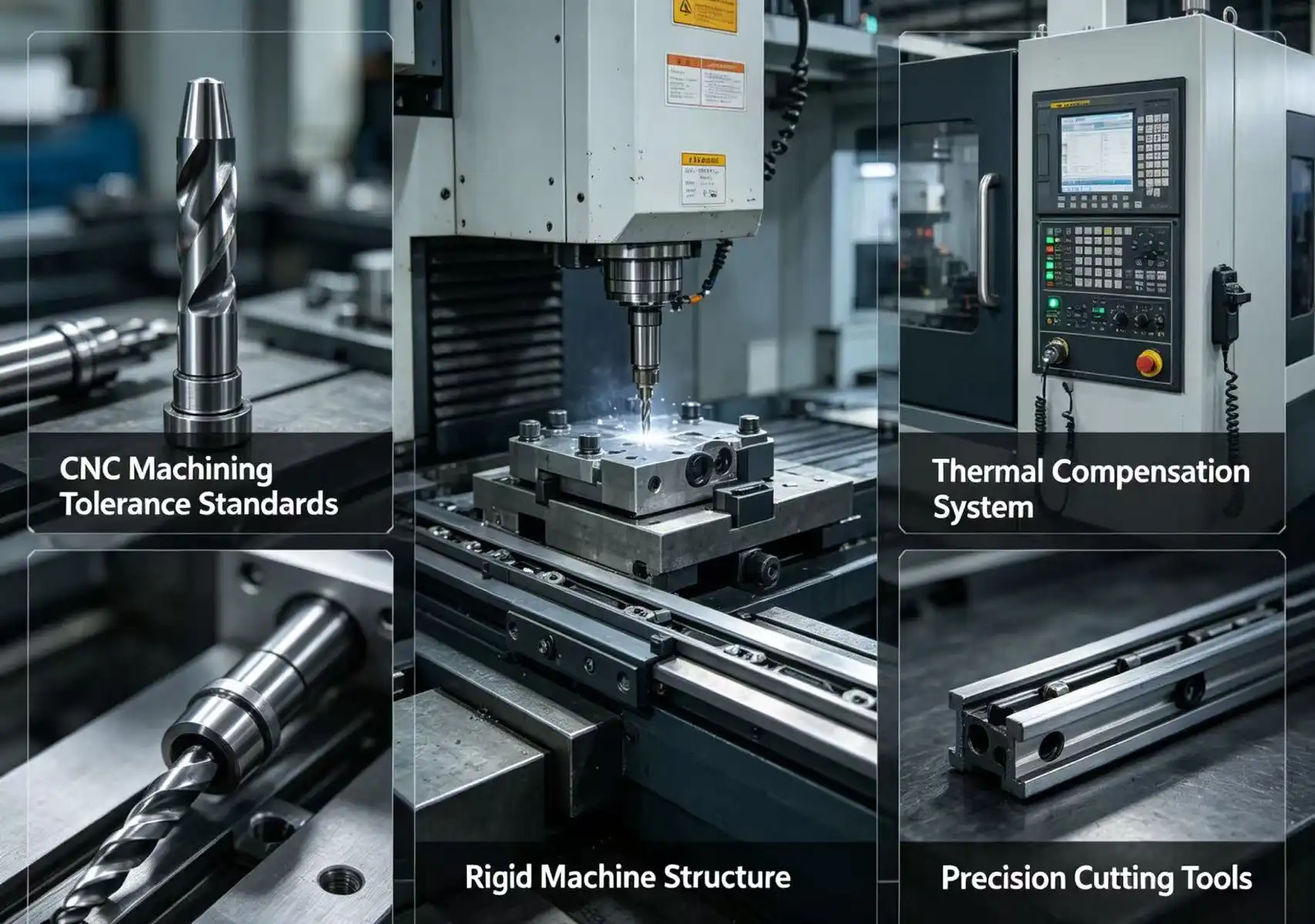
The Precision CNC Machining Tolerance Process: Step-by-Step Analysis
Achieving consistent tolerances requires careful attention to each stage of the machining workflow. The process begins with thorough design analysis to identify critical dimensions and establish appropriate tolerance allocations based on part functionality and assembly requirements.
Design Optimization and Toolpath Programming
Design intent is converted into exact machine instructions using computer-aided manufacturing (CAM) software. Expert programmers maintain optimal cycle times by optimizing toolpaths to decrease cutting pressures and reduce tool deflection. Surface quality and dimensional accuracy are directly impacted by the strategic choice of cutting parameters, such as spindle speed, feed rate, and depth of cut.
Sophisticated algorithms that account for tool wear and deflection are included into advanced CAM systems. By calculating the best approach angles and cutting techniques, these systems minimize the possibility of dimensional variations brought on by tool deflection or part distortion.
Machine Setup and Calibration Protocols
The basis for achieving tolerance in precision CNC machining is established by proper machine setup. Before starting production, skilled machinists check machine geometry and spindle accuracy using precise measuring instruments. In order to detect any backlash or positioning problems that can compromise component quality, laser interferometry devices monitor positioning accuracy over the whole machine envelope.
Workholding techniques are just as crucial to preserving tolerances. Workpieces are secured using hydraulic clamping systems, precision vises, and specialized fixtures without creating stress concentrations that can cause deformation during or after machining. While preventing distortion that might jeopardize dimensional accuracy, proper clamping force distribution guarantees that pieces stay stable throughout the cutting process.
Quality Control and Measurement Techniques
The most precise way to confirm the dimensions of machined parts is using Coordinate Measuring Machines (CMM). These advanced devices measure part characteristics with accuracy usually higher than the tolerances being checked using precision probes. Prior to components deviating from allowable tolerance limits, statistical process control approaches assist in identifying patterns in dimensional variation.
The most recent development in quality assurance technology is represented by in-process monitoring systems. In order to identify any quality problems during machining processes, these systems continually monitor cutting forces, vibration patterns, and sound emissions. Operators can make quick modifications thanks to real-time feedback, which prevents non-conforming components from being produced.
Comparing Precision CNC Machining Tolerances with Other Manufacturing Methods
Procurement experts may make well-informed judgments on production techniques by knowing the relative capabilities of various manufacturing processes. When precise tolerances are needed, CNC machining has clear benefits over other methods.
Traditional Machining Limitations
Manual machining procedures are intrinsically constrained by human capabilities and significantly depend on operator expertise. Tolerances less than ±0.005" are difficult for even skilled machinists to reliably maintain over many pieces. Repeatability is further compromised by operator variability and fatigue effects, rendering conventional approaches inappropriate for high-precision applications.
While CNC machining often produces finishes between 16 and 63 microinches Ra, manual processes usually provide surface finishes that vary from 125 to 500 microinches Ra. Secondary finishing processes are often eliminated as a result of this surface quality improvement, which lowers manufacturing costs and time.
Additive Manufacturing Considerations
Rapid prototyping has been transformed by 3D printing technologies, however they are severely constrained when precise tolerances are needed. While metal printing methods usually provide ±0.003" to ±0.005" precision, the majority of polymer-based additive procedures attain tolerances in the ±0.005" to ±0.010" range. Compared to precise CNC machining, these comparatively loose tolerances are caused by problems with layer adhesion and thermal distortion during the printing process.
Although post-processing procedures may increase additive manufacturing tolerances, functioning components often need the machining of crucial features. For best results, this hybrid method combines the accuracy capabilities of CNC machining with the geometric flexibility of additive manufacturing.
Cost-Benefit Analysis for Tolerance Selection
Tighter tolerances need more advanced machinery, knowledgeable workers, and extra quality control procedures, all of which raise production costs. To optimize component specifications, engineering teams must strike a compromise between functional objectives and financial limitations. Because of slower cutting rates, more operations, and more inspection requirements, a dimensional tolerance that is twice as tight usually results in a twofold rise in machining costs.
Value engineering exercises assist in distinguishing between components that can tolerate looser specifications without sacrificing operation and those that really need strict tolerances. Opportunities to cut expenses without sacrificing product performance are often found by this study.
Materials and Industries Leveraging High-Precision CNC Tolerances
Because different physical qualities affect machinability and dimensional stability, material selection has a considerable effect on attainable tolerances. Procurement teams may choose suitable suppliers for certain applications and establish reasonable expectations by being aware of these traits.
Common Materials and Tolerance Capabilities
With the right setup and tools, aluminum alloys can regularly achieve tolerances in the ±0.0005" range, making them one of the most machinable materials. Because of its superior thermal conductivity, the material dissipates heat during cutting operations, lowering the possibility of thermal expansion that might impair precision. Higher cutting rates and feeds are possible while preserving superior surface finishes because to aluminum's comparatively low strength.
Because of its work-hardening properties and higher cutting pressures needed for material removal, stainless steel poses more difficulties in precise CNC machining. With the right cutting tools and conditions, tolerances in the range of ±0.001" to ±0.002" are usually feasible. In order to avoid work hardening and preserve dimensional accuracy, proper coolant application becomes essential.
Although titanium alloys have remarkable strength-to-weight ratios, precise tolerances must be achieved via sophisticated machining techniques. Because of the material's limited heat conductivity and chemical reactivity with cutting instruments, regular tool changes and cautious cutting conditions are required. For titanium components, tolerances of ±0.002" to ±0.003" are considered common.
Industry-Specific Tolerance Requirements
Critical flight components often need ±0.0005" or greater precision, making the aircraft sector one of the industries with the strictest production tolerances. To guarantee performance and safety, engine parts, landing gear assemblies, and flight control surfaces must adhere to strict requirements. Because the components are crucial, these applications make the extra expense of precise machining worthwhile.
Tight tolerances and biocompatibility standards provide special obstacles in the manufacture of medical devices. When employing specialty materials that may be challenging to produce, surgical tools, implants, and diagnostic equipment often need tolerances in the range of ±0.0005" to ±0.001". The manufacturing process is made more complicated by regulatory compliance.
Precision CNC machining is used in the automobile sector for safety-critical systems, transmission parts, and engine components. The huge volume of automobile manufacturing necessitates outstanding repeatability and process control, even though tolerances are often less strict than in aerospace applications.
Enhancing Procurement Decisions for Precision CNC Machining Services
It's important to carefully consider the capabilities, quality systems, and prior experience with comparable applications when choosing a precision machining provider. To achieve effective relationships, procurement managers need to evaluate more than just fundamental machining skills.
Supplier Assessment Criteria
Machine tool capabilities provide the foundation for tolerance achievement. Modern CNC machining centers equipped with linear scales, thermal compensation, and high-resolution feedback systems demonstrate a supplier's commitment to precision manufacturing. The age and condition of equipment directly impact achievable tolerances and production reliability.
Quality management systems reveal how suppliers maintain consistency across production runs. ISO 9001 certification represents a baseline requirement, while industry-specific standards like AS9100 for aerospace or ISO 13485 for medical devices indicate deeper expertise in regulated markets. Documented procedures for calibration, preventive maintenance, and statistical process control demonstrate systematic approaches to quality assurance.
Metrology capabilities determine how accurately suppliers can verify part dimensions in precision CNC machining. CMM equipment with current calibration certificates and trained operators ensures reliable measurement results. The ratio of inspection equipment accuracy to part tolerances should typically exceed 10:1 to provide confidence in measurement results.
Communication and Documentation Practices
Clear communication between buyers and suppliers prevents misunderstandings that could compromise part quality or delivery schedules. Detailed drawings with properly applied geometric dimensioning and tolerancing eliminate ambiguity about critical requirements. Supplier review of specifications before production begins helps identify potential issues and establish realistic expectations.
Sample approval processes provide opportunities to verify supplier capabilities before committing to full production volumes. These pilot runs reveal how well suppliers understand requirements and execute manufacturing processes. Any dimensional discrepancies or quality issues can be addressed before large quantities are produced.
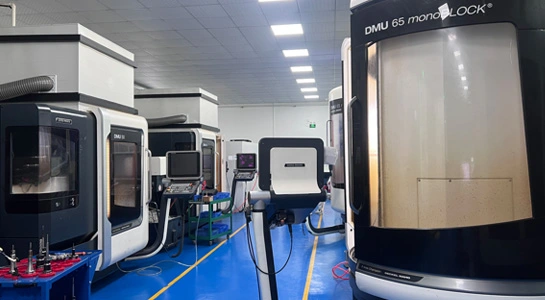
BOEN Prototype exemplifies excellence in precision CNC machining through our advanced manufacturing capabilities and comprehensive quality assurance protocols. Our state-of-the-art machining centers consistently deliver tolerances of ±0.0005" across diverse materials and geometries. We specialize in rapid prototyping, low-volume production, and custom manufacturing solutions that serve automotive, medical, aerospace, and electronics industries. Our experienced engineering team collaborates closely with clients to optimize designs for manufacturability while maintaining strict tolerance requirements.
Conclusion
Precision CNC machining delivers exceptional tolerance capabilities that enable the production of high-quality components across diverse industries. Understanding the factors that influence tolerance achievement, from machine capabilities to material properties, empowers procurement professionals to make informed decisions about manufacturing partners and specifications. The systematic approach to quality control and process optimization ensures consistent results that meet demanding application requirements. As technology continues advancing, precision machining capabilities will expand further, offering even greater accuracy and reliability for critical applications.
FAQ
1. What tolerance ranges can precision CNC machining typically achieve?
Modern precision CNC machining consistently achieves tolerances between ±0.001" and ±0.0005" for most applications, with specialized setups capable of reaching ±0.0002" or tighter. The achievable tolerance depends on factors including part size, material properties, feature geometry, and machine capabilities. Critical dimensions on smaller parts often achieve tighter tolerances than larger components due to reduced thermal effects and machine deflection.
2. How does material selection affect tolerance capabilities?
Different materials present varying challenges for precision machining due to their physical properties. Aluminum and brass machines easily with excellent tolerance capabilities, while hardened steels and exotic alloys like titanium require more conservative approaches that may limit achievable tolerances. Material thermal expansion, work hardening tendencies, and cutting tool compatibility all influence the final dimensional accuracy.
3. How do precision CNC machining tolerances compare to additive manufacturing?
CNC machining typically achieves tolerances 3-5 times tighter than additive manufacturing processes. While 3D printing excels at complex geometries and rapid prototyping, CNC machining remains superior for applications requiring dimensional precision. Many manufacturers combine both processes, using additive manufacturing for initial prototypes and CNC machining for production parts requiring tight tolerances.
4. What inspection methods verify precision machined tolerances?
Coordinate Measuring Machines (CMM) provide the most accurate tolerance verification, with measurement uncertainties typically 10 times better than the tolerances being checked. Optical comparators, micrometers, and gauge blocks offer alternative measurement approaches for specific features. Statistical process control techniques help monitor tolerance trends across production runs to ensure consistent quality.
5. How do tight tolerances affect manufacturing costs?
Tighter tolerances generally increase manufacturing costs due to slower cutting speeds, additional setup time, more frequent tool changes, and increased inspection requirements. Doubling tolerance precision often doubles machining costs, making value engineering essential to balance functional requirements with budget constraints.
6. What factors should procurement teams consider when selecting precision machining suppliers?
Key evaluation criteria include machine tool capabilities, quality management systems, metrology equipment, operator training, and relevant industry certifications. Suppliers should demonstrate consistent tolerance achievement through process capability studies and provide comprehensive quality documentation. Experience with similar materials and applications indicates expertise that translates to successful project outcomes.
Partner with BOEN Prototype for Precision CNC Machining Excellence
Precision CNC machining excellence awaits through our proven manufacturing capabilities and unwavering commitment to quality. BOEN Prototype delivers consistent tolerances of ±0.0005" across aluminum, steel, titanium, and advanced engineering plastics, supporting your most demanding applications in automotive, medical, aerospace, and electronics sectors. Our comprehensive services encompass rapid prototyping, low-volume production, and custom manufacturing solutions backed by rigorous quality assurance protocols. When you need a reliable precision CNC machining supplier that understands your tolerance requirements, contact our engineering team at contact@boenrapid.com to discuss your project specifications and receive a detailed quote tailored to your unique requirements.
References
1. Boothroyd, Geoffrey, and Peter Dewhurst. "Product Design for Manufacture and Assembly: Revised and Expanded." CRC Press Manufacturing Engineering Series, 2011.
2. Kalpakjian, Serope, and Steven Schmid. "Manufacturing Engineering and Technology: Precision Machining Processes and Tolerance Achievement." Pearson Education, 2019.
3. Machinery's Handbook Editorial Staff. "Machinery's Handbook: Tolerances and Fits for Precision Manufacturing." Industrial Press, 30th Edition, 2016.
4. American Society of Mechanical Engineers. "Geometric Dimensioning and Tolerancing Standards for CNC Machining Applications." ASME Y14.5-2018 Standard, 2018.
5. Trent, Edward M., and Paul K. Wright. "Metal Cutting Technology: Precision and Tolerance Control in Modern Manufacturing." Butterworth-Heinemann, 4th Edition, 2020.
6. Society of Manufacturing Engineers. "Precision Machining Technology Handbook: Tolerance Achievement and Quality Control Methods." SME Technical Publications, 2021.

How Can We Help?

Your Trusted Partner in Rapid Manufacturing.